
It happened on a rainy Tuesday. A stray dog toy, a slippery rug, and suddenly my dominant right arm was encased in six pounds of heavy plaster. That first night, I stood in front of the bathroom mirror, toothbrush clutched in my trembling left hand, feeling like a toddler learning to walk. I tried to move the brush, but my brain just wouldn’t send the right signals. I ended up with minty foam on my nose, a sore jaw, and teeth that still felt fuzzy. It is incredibly humbling how quickly a basic daily routine becomes a mountain when you lose your primary hand. If you are currently staring at your sink wondering how on earth you are going to keep your smile bright without further injury, I have been there, and I have got you. We are going to look at the shortcuts, the specific tools, and the mental shifts that make brushing with a broken arm not just possible, but actually effective so you can continue maintaining oral health during your recovery.
Why Your Non-Dominant Hand Feels Like a Clumsy Stranger
The biggest mistake I made in those early days was trying to force my left hand to mimic the exact movements of my right. I thought I could just ‘try harder.’ Instead, I ended up scrubbing way too vigorously to compensate for my lack of coordination, which led to a familiar problem where your gums throb after brushing too vigorously. You cannot brute-force your way to a clean mouth when you are injured. You have to work smarter. This is especially true for those who might already be prone to irritation; for instance, the way your gums turn red and puffy during pregnancy, an injury can also make your mouth feel more sensitive than usual. My lightbulb moment came when I stopped trying to move the toothbrush and started moving my head instead. By holding the brush still and tilting my face, I regained the control I thought I had lost. Does it look a bit silly? Absolutely. But does it work? Every single time.
Is it actually possible to get a deep clean with one hand?
Many people worry that they will end up with cavities or need expensive cosmetic dentistry work once the cast finally comes off. It is a valid fear. However, the American Dental Association emphasizes that it is the consistent mechanical removal of plaque that matters most, not the complexity of the movement. If you can reach the surface, you can clean it. Have you ever had to manage your entire morning routine with your ‘wrong’ hand? It is a circus act, isn’t it? Let me know in the comments if you have found a trick that worked for you. For me, the secret was realizing that teeth cleaning techniques and benefits change when your physical capabilities do, and that is perfectly okay.
Anchor Your Body Before You Start
The first lesson I learned the hard way—specifically, after dropping my toothbrush into the toilet on day three—is that your non-dominant arm lacks the fine motor ‘gps’ your brain is used to. You can’t just stand there and swing. You need an anchor. I started bracing my left elbow firmly against the bathroom counter. This creates a stable pivot point, transforming your shaky arm into a steady lever. Think of it like using a tripod for a camera; once the base is still, the focus becomes much sharper. This physical stabilization is one of the most overlooked gentle teeth cleaning best practices for sensitive gums because it prevents those accidental, painful stabs into your soft tissue when your hand inevitably slips.
Stop Scrubbing and Start Tilting
When you use your ‘good’ hand, your wrist does all the complex micro-movements. Your non-dominant hand is more like a blunt instrument. My breakthrough came when I stopped trying to make my left wrist perform gymnastics. Instead, I held the brush perfectly still and moved my head. By nodding or turning my face side-to-side, I could control the pressure and angle with much higher precision. I remember one morning trying to reach my back molars; I was getting so frustrated I almost gave up, until I realized that if I just tilted my chin up and moved my jaw toward the brush, the bristles slid right into place. It’s a bit of a dance, but it is the fastest way to implement teeth cleaning secrets to achieve a bright smile in under 30 minutes without feeling like you’ve run a marathon. 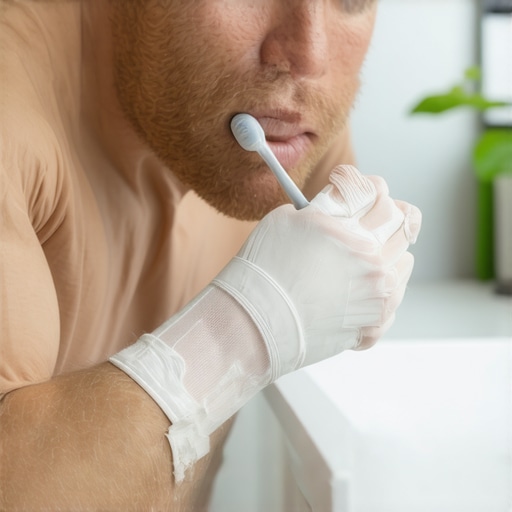
Power Up Your Routine with the Right Tools
If you are still using a manual brush with a broken arm, you are playing the game on ‘Hard Mode.’ Switch to a high-quality electric toothbrush immediately. The brush does the vibrating and rotating for you, so your only job is to guide it slowly along the tooth line. This is where you need to be careful about your equipment; you must how to choose the right toothbrush bristle strength for your gums because an electric motor combined with stiff bristles and a clumsy hand can lead to recession. I personally found that a sensitive-head attachment was a lifesaver during those first few weeks when my coordination was still at a preschool level.
Switch to a Water Flosser to Save Your Sanity
Traditional string flossing with one hand is essentially impossible unless you are a professional magician. I spent twenty minutes one night trying to wrap floss around my fingers before I broke down in tears of frustration. That was the night I ordered a water flosser. It is a total game-changer for anyone with limited mobility. You just point the nozzle and let the pressurized water do the work. Beyond the ease of use, there are significant physiological perks, as seen in the benefits of using a water flosser for patients with gum disease, which is a risk when your cleaning routine becomes less frequent due to injury. It clears out the debris that your clumsy left-handed brushing inevitably misses, keeping your breath fresh and your gums tight while your dominant arm heals.
When my arm was in that cast, I became obsessed with the feeling of my teeth. I thought if I could just get them to feel perfectly smooth and ‘squeaky,’ I was winning the battle against plaque. However, this is where most people—myself included—fall into a dangerous trap. There is a common belief that ‘clean’ means ‘scrubbed to a polish,’ but in my experience, that squeaky sensation is often the sound of you stripping away the acquired pellicle, a thin layer of proteins that actually protects your enamel. Falling for this is one of the biggest oral health myths debunked for the modern patient.
The Invisible Trap of Brushing After Acidic Meals
The ‘Oops’ factor here is timing. In my rush to be efficient with my non-dominant hand, I would brush immediately after my morning grapefruit or coffee. This is a massive mistake. Acid softens the enamel, and if you go in with a brush—especially if you are struggling with coordination and applying uneven pressure—you are essentially sandpapering your teeth. This is precisely why we recommend waiting thirty minutes to brush after eating fruit or anything acidic. According to a study in the Journal of Dentistry, brushing too soon after an acidic challenge can lead to significant tooth structure loss that no amount of cosmetic dentistry can easily ‘undo’ without invasive work.
Does your cleaning routine cause long-term yellowing?
It sounds counterintuitive, doesn’t it? But if you are scrubbing too hard to compensate for an injury or simply out of habit, you might be wearing down your white enamel to reveal the yellowish dentin underneath. This is often the reason your teeth look yellow even though you brush twice daily. For those of us with naturally thinner surfaces, it is vital to learn how to whiten your teeth if you have naturally thin enamel using chemical rather than mechanical means. Have you ever noticed your teeth looking darker despite brushing more? Let me know in the comments if you’ve fallen into the ‘harder is better’ trap; I’d love to hear how you adjusted your routine.
Stop Chasing the Squeak
The nuance that experts understand—and the rest of us often miss—is that oral health is about chemistry, not just friction. When you use a soft-bristled brush and a gentle touch, you are preserving the tooth’s integrity while still disrupting the biofilm. If you treat your mouth like a kitchen floor that needs a deep scrub, you’re going to end up with sensitivity that lasts long after your broken bone has healed. Focusing on gentle teeth cleaning best practices for sensitive gums isn’t just for people with gum disease; it is the gold standard for anyone who wants their natural teeth to last a lifetime.
Once you move past the initial frustration of fumbling with your off-hand, the conversation shifts from survival to sustainability. You realize that keeping your mouth clean while in a cast isn’t a one-week sprint; it’s a marathon that requires the right equipment. I quickly discovered that standard dental tools aren’t designed for someone with only one functioning arm. For example, have you ever tried to unscrew a tiny toothpaste cap with your teeth while holding a brush in your left hand? It’s a recipe for a mess. I eventually switched to a pump-action toothpaste dispenser, which allowed me to apply the paste with a single downward press. This is a perfect example of how family dentistry tips that make oral care effortless and effective can be adapted for anyone facing physical challenges.
Equip Your Bathroom for Success
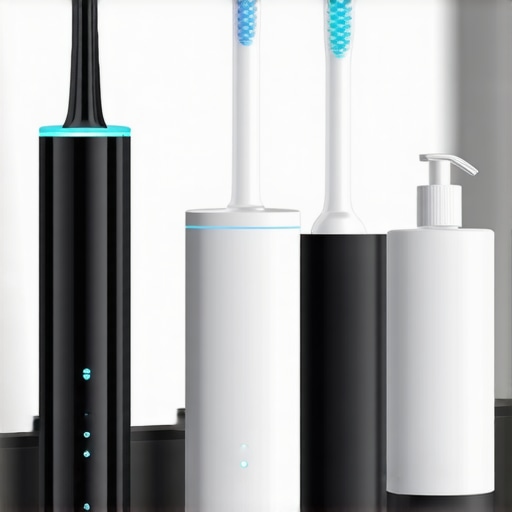
The most important tool in my arsenal became a high-end electric toothbrush with a pressure sensor. When you’re using your non-dominant hand, you lose the subtle tactile feedback that tells you when you’re pressing too hard. My brush would light up red the second I got too aggressive, which helped me avoid the discomfort often discussed when people ask how to manage tooth sensitivity after a professional scale and polish. I also invested in a ‘floss holder’—a pre-strung plastic tool—because traditional string floss was out of the question. According to a systematic review in the Journal of Clinical Periodontology, powered toothbrushes with oscillating-rotating technology significantly reduce plaque and gingivitis more effectively than manual brushing, especially for those with limited dexterity. This isn’t just a convenience; it’s a clinical necessity for recovery.
How can I maintain my oral health during a long-term injury?
Consistency is your best friend when your physical abilities are compromised. I found that I had to be more diligent than ever about the environment where I kept my tools. When you’re struggling with coordination, you’re more likely to drop things or leave them in damp spots on the sink. I had to learn the best way to keep your bathroom toothbrush clean to ensure I wasn’t introducing bacteria into my mouth while my immune system was already busy healing a broken bone. If you’re a parent, this is also a great time to implement preventive tips for long-lasting dental health for families, as it shows your kids that even when things get tough, your health remains a priority.
Prepare for the Next Generation of Dental Tech
Looking ahead, I predict we are going to see a massive surge in AI-integrated dental tools designed specifically for accessibility. We are already seeing brushes that map your mouth on a smartphone app, but the next step will be haptic feedback systems that guide your hand in real-time, correcting your angle and speed. This will be a game-changer not just for the injured, but for elderly patients and children alike. For now, the secret is to rely on what works: high-quality electric tools and the top 5 secrets to maintaining perfect oral health as a family, which always starts with making the process as frictionless as possible. My big tip for you today? Try the ‘Wall Brace’ tonight. Lean your shoulder against the bathroom wall while you brush; the extra stability will immediately improve your precision.
The Raw Truth About What Six Weeks in a Cast Taught Me
Living with a physical limitation, even a temporary one, changes how you see your body’s daily mechanics. Here are the lightbulb moments that stayed with me long after the plaster was cut off:
- Patience is a cleaning tool. When you can’t rely on speed, you rely on placement. I realized I had been rushing my routine for years. Slowing down, even out of necessity, actually led to a better clean.
- Force is the enemy of enamel. We often equate hard scrubbing with cleanliness. My injury forced me to be gentle, which ironically solved several oral health myths debunked in my own mind—like the idea that you need elbow grease to remove plaque.
- Equipment matters more than you think. I used to think a basic brush was good enough, but specialized tools are about accessibility and long-term protection, especially when your coordination is down.
#IMAGE_PLACEHOLDER_E#
My Survival Kit for One-Handed Hygiene
If you are currently navigating this, don’t just tough it out. These specific tools saved my smile during those frustrating weeks:
- Pump-Action Toothpaste: This allows you to load your brush without the two-handed struggle of a tube. It is one of those preventive tips for long-lasting dental health for families that works for everyone, not just the injured.
- High-Frequency Electric Brush: Look for one with a pressure sensor. Since your left hand might be clumsy, you need the brush to tell you when you are being too rough. Remember to choose the right toothbrush bristle strength for your gums to avoid recession.
- The Water Flosser: It is the only way to effectively manage interdental cleaning with one hand. I trust it because it mirrors the benefits of using a water flosser for patients with gum disease, providing a deep clean without the manual dexterity of string floss.
Your Smile is Worth the Extra Effort
A broken bone is a setback, but it doesn’t have to be the end of your dental progress. By adapting your technique and leaning on the right technology, you can come out of that cast with teeth that are just as healthy as the day of your accident. You are simply learning a new way of maintaining oral health under pressure. Keep it slow, keep it gentle, and keep it consistent. Have you ever had to manage your morning routine with an injury or a physical limitation? What was the hardest part for you? Let me know in the comments below!