
I stood in my bathroom last Tuesday, squinting at the base of my favorite electric toothbrush, and felt my stomach do a slow, nauseous roll. There it was—a thick, blackish-pink sludge pooled in the bottom of the ceramic holder. It wasn’t just toothpaste. It was a thriving ecosystem of mold and bacteria living inches from where I put my mouth every morning. I used to pride myself on a great routine, but I’d been making a massive mistake for years. I was so focused on [maintaining oral health](https://gentlesmiledentist.com/maintaining-oral-health-expert-advice-for-a-lifetime-of-healthy-teeth) that I completely ignored the very tool I was using to do it. Have you ever dared to look inside your toothbrush holder or under that little rubber seal on your electric brush? It’s a wake-up call we all eventually face. Today, I’m going to share exactly how I cleaned up my act (literally) and why the way you’re currently storing your brush might be doing more harm than good. [image]
The Biohazard in Your Bathroom Cabinet
For a long time, I thought I was being extra hygienic by using those little plastic travel caps on my brush at home. I figured it blocked out the ‘bathroom air.’ In reality, I was creating a tiny, humid greenhouse for germs to multiply. Because the bristles couldn’t air out, they stayed damp for hours, which is basically an invitation for every microbe in a five-foot radius to move in. It’s one of those [oral health myths debunks](https://gentlesmiledentist.com/oral-health-myths-debunked-what-you-need-to-know-in-2025) that I had to learn the hard way through a nasty case of gum sensitivity. You might even find that your gums feel weird or itchy, which can sometimes be a sign of bacterial overload. If you’ve ever wondered [why your gums feel itchy after a deep dental cleaning](https://gentlesmiledentist.com/why-your-gums-feel-itchy-after-a-deep-dental-cleaning), imagine what daily exposure to a dirty brush is doing to your mouth’s ecosystem. It’s not just about the gross-out factor, either; it’s about protecting your investment in your smile. Whether you’re into [family dentistry](https://gentlesmiledentist.com/family-dentistry-building-a-foundation-of-healthy-smiles-for-all-ages) or you’ve spent thousands [enhancing confidence with cosmetic dentistry](https://gentlesmiledentist.com/enhancing-confidence-with-cosmetic-dentistry-what-to-expect), a dirty brush can undo all that hard work by reintroducing pathogens every time you ‘clean’ your teeth.
Do UV sanitizers actually work or are they just expensive nightlights?
This is the question I get most often from my neighbors. With all the gadgets out there, it’s easy to be skeptical. While some high-end models do kill a significant percentage of bacteria, the truth is that most of us don’t need a $100 laser box if we just follow the basic physics of airflow and cleanliness. You don’t need a laboratory-grade cleanroom; you just need to stop making the ‘mistake of the damp bristles.’ Even the [ultimate guide to teeth cleaning techniques](https://gentlesmiledentist.com/the-ultimate-guide-to-teeth-cleaning-techniques-and-benefits) won’t save your enamel if your brush is a breeding ground. Did you know that the American Society for Microbiology has reported that toothbrushes can be contaminated with fecal coliform bacteria—mostly due to the ‘toilet plume’ effect when we flush with the lid up? It sounds like a horror movie, but it’s a reality of modern plumbing. I’m going to show you the simple, three-step routine I use now to keep my brush pristine without spending a fortune on gadgets. We’ll talk about the right way to rinse, the best place to store your gear, and how often you really need to toss that brush in the bin. Trust me, once you see the difference, you’ll never look at your toothbrush the same way again.
Master the three-minute post-brush purge
Keeping your toothbrush clean isn’t about expensive chemicals; it is about mechanical action. After you finish brushing, don’t just give the bristles a half-hearted splash under the tap. Think of your brush like a high-end paintbrush. If you don’t rinse the paint out from the very base of the bristles, it hardens and ruins the tool. Use your thumb to vigorously flick the bristles under warm running water until every trace of toothpaste and debris is gone. This is a foundational habit in family dentistry because it prevents the buildup of biofilm that can lead to re-infecting your mouth. I learned this the hard way when I realized the ‘pink stain’ on my brush was actually Serratia marcescens, a bacteria that loves damp environments.
Shake it like you mean it
Once the brush is clean, the enemy becomes moisture. Most people just set the brush down dripping wet, which is like leaving a wet towel in a gym bag. I’ve started a habit of ‘the double-tap’—tapping the brush handle against the edge of the sink five times to force water out of the bristle bundle. If you are using gentle teeth cleaning best practices for sensitive gums, you likely have softer, denser bristles that trap water even more easily. Shaking them out is the only way to ensure they dry before your next session. 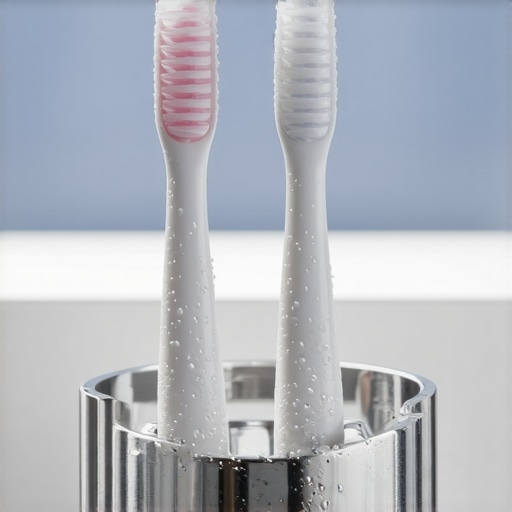
Give your brush some breathing room
Airflow is your best friend. You must store your toothbrush upright in a holder that allows the head to be completely exposed to the room’s air. Avoid those cute little ceramic holders with the tiny holes at the bottom—they are essentially Petri dishes that collect ‘brush sludge.’ I used to use a travel cap at home to keep it ‘protected,’ but I was actually creating a humid greenhouse for microbes. If you need to know how to keep your toothbrush clean when you travel, remember that the cap is only for the suitcase; as soon as you hit the hotel, that brush needs to stand free. This simple shift in maintaining oral health can significantly reduce the bacterial load you introduce to your mouth every morning.
Protect your brush from the toilet plume
We need to talk about the ‘aerosol effect.’ Every time you flush with the lid up, microscopic particles are launched into the air. If your brush is within four feet of the toilet, it is a target. The fix is simple: close the lid before you flush. If your bathroom layout makes that impossible, store your brush in a cabinet, but only if that cabinet has enough ventilation to let the brush dry. This is a vital part of family dental care hacks to keep your kids smiling daily, as children are less likely to remember the lid-down rule. It protects the work you’ve invested in, whether that is a simple cleaning or enhancing confidence with cosmetic dentistry by keeping the oral environment stable.
Sanitize the handle once a week
We often forget the part we actually touch. The handle of an electric toothbrush, especially near the buttons and the seal where the head attaches, is a magnet for grime. I once tried to ‘deep clean’ my entire electric brush by soaking the motor unit in a bowl of vinegar. It was a disaster; the vinegar ate through the seal and the motor started buzzing on its own at 2 AM like a ghost was brushing its teeth. Now, I use a cotton swab dipped in 70% isopropyl alcohol to wipe down the handle and the charging base once a week. It takes thirty seconds and keeps the ‘bathroom sludge’ from ever forming. Following the ultimate guide to teeth cleaning techniques and benefits includes keeping your equipment as pristine as your technique.
Stop brushing so fast after your morning coffee
Most of us were taught that ‘clean’ means ‘scrubbed,’ but when it comes to your smile, that mindset can be surprisingly destructive. One of the most common mistakes I see—and one I was guilty of for years—is brushing immediately after eating. We think we’re being proactive, but if you’ve just had coffee, fruit, or a sports drink, your enamel is actually in a temporary ‘softened’ state due to the acid. Brushing right then literally scours away your tooth structure. This is why we recommend waiting thirty minutes to brush after eating fruit or anything acidic. It gives your saliva time to neutralize the pH and remineralize the surface. Doing less, for a moment, actually does more for how regular teeth cleaning can prevent major dental issues in the long run.
The enthusiasm trap that ruins your gums
The ‘Oops’ factor in oral care often comes from pure enthusiasm. I’ve encountered many people who are so dedicated to family dentistry tips that make oral care effortless that they end up with receding gums from over-brushing. If you’re using a hard brush or applying too much pressure, you aren’t just removing plaque; you’re pushing your gum line back. This is why your gums recede faster if you use a hard-bristled brush. It’s a slow-motion disaster that often requires enhancing confidence with cosmetic dentistry to fix later on. Always opt for gentle teeth cleaning best practices for sensitive gums, focusing on technique rather than force. 
Are ‘natural’ whitening trends doing more harm than good?
I get asked about charcoal toothpaste and DIY lemon juice rinses constantly. While they might provide a temporary brightening effect, they are often incredibly abrasive. A significant study published in the Journal of the American Dental Association (JADA) cautioned that there is insufficient clinical evidence to support the safety and efficacy of charcoal-based dentifrices, noting they may actually increase the risk of enamel abrasion. Essentially, you’re sandpapering your teeth to get a temporary glow, which leads to how to whiten your teeth if you have naturally thin enamel becoming a much harder problem to solve. Before you try a viral hack, look into the truth about oil pulling for whiter teeth and healthy gums or other evidence-based alternatives. Have you ever fallen into this trap of trying a ‘natural’ remedy only to end up with sensitive teeth? Let me know in the comments.
Once you stop making the common mistakes I mentioned earlier, the next step in maintaining oral health is curating the right toolkit. For years, I thought a manual brush and a spool of string was the gold standard, but the data—and my own dental bills—eventually proved me wrong. If you are serious about preventive tips for long-lasting dental health for families, you have to look at the tools you use daily as long-term investments. I’ve switched to a system that focuses on efficiency rather than just ‘scrubbing harder.’
Why I finally swapped my string for a water flosser
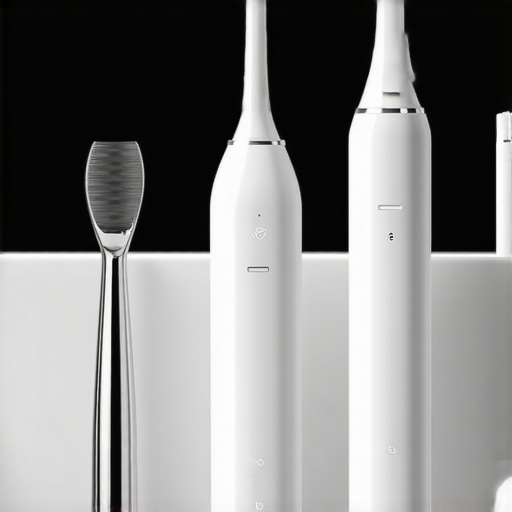
I resisted the water flosser for a long time because I thought it was a messy gimmick. However, after seeing the results on my own gum health, I’m a convert. Using a water flosser is one of the most effective family dental care hacks to keep your kids smiling daily because it’s actually fun for them to use. For adults, the benefits of using a water flosser for patients with gum disease are backed by significant research. Specifically, the Cochrane Library’s meta-analysis of oral hygiene trials suggests that powered cleaning devices, when used correctly, can significantly reduce gingival inflammation more effectively than manual string flossing in many patients. I personally use mine on a medium-high setting (around 7 or 8) to ensure I’m flushing out the sulcus without traumatizing the tissue.
How do I maintain my dental work over time?
If you have recently invested in your smile, whether through enhancing confidence with cosmetic dentistry or functional repairs, maintenance is your new best friend. To keep those results, you must think about how regular teeth cleaning can prevent major dental issues. I recommend a stainless steel tongue scraper—it is more hygienic than plastic and lasts a lifetime. Scaping removes the volatile sulfur compounds that cause bad breath and prevents bacterial recolonization of your teeth. If you have work like veneers, you must learn how to maintain your porcelain veneers so they last twenty years, which involves non-abrasive pastes and a dedicated nightguard if you grind your teeth.
The AI toothbrush revolution is closer than you think
Looking ahead, I predict that oral health will become much more data-driven. We are already seeing cosmetic dentistry innovations you can’t miss this year, but the real shift is in ‘smart’ home care. New brushes now use pressure sensors and 3D mapping to tell you exactly where you’re missing plaque in real-time. This isn’t just for tech geeks; it’s a way to ensure that how regular dental cleanings can save you money in the long run actually works by keeping your daily hygiene at a professional level. I challenge you to try one advanced tip tonight: swap your plastic tongue scraper for a metal one, or finally set up that water flosser you’ve had in the box. Your gums will feel the difference within three days.
Lessons from a Recovering Bathroom Germophobe
Reflecting on my journey from the discovery of that ‘pink sludge’ to a truly hygienic routine, I’ve realized that oral health is often simpler—and more scientific—than we think. First, I learned that expensive gadgets don’t always mean a cleaner mouth; basic airflow is a more powerful antiseptic than most cheap UV boxes. Second, I realized that my gums felt irritated because I was essentially re-infecting them every morning with a damp brush. Third, the biggest lightbulb moment was understanding that maintaining oral health is a marathon of small habits, not a sprint of aggressive scrubbing. Finally, I discovered that my morning routine was actually hurting my enamel until I mastered teeth cleaning secrets to achieve a bright smile in under 30 minutes, which emphasized timing over force.
The Only Gear You Actually Need for a 2025 Smile
If you are looking to upgrade your setup, skip the fad charcoal pastes and focus on these essentials. I personally trust a stainless steel tongue scraper because it doesn’t harbor bacteria like plastic ones do and is a game-changer for fresh breath. I also recommend a high-quality water flosser; it transformed my gum health by reaching the areas string just couldn’t touch. Lastly, invest in a pressure-sensing electric toothbrush. It acts like a coach, preventing you from the ‘enthusiasm trap’ that causes gum recession. These tools, combined with the ultimate guide to teeth cleaning techniques and benefits, provide a professional-level clean at home.
Take Charge of Your Smile Starting Tonight
You don’t need to overhaul your entire life to see a difference. Start by closing the toilet lid and letting your brush breathe. These tiny shifts in maintaining oral health are the foundation of a lifetime of confident smiles. When you treat your tools with respect, they treat your teeth with respect. Remember, consistency is the secret sauce for how regular teeth cleaning can prevent major dental issues down the road. You’ve got the knowledge now—it’s time to put it into practice and feel the difference for yourself. Have you ever checked your toothbrush holder and been shocked by what you found? Let me know in the comments below!