
It happened in a flash. One second I was walking the dog, the next I was hearing that sickening pop in my right wrist. Cast on. Game over. Or so I thought until the next morning when I realized I couldn’t even unscrew my toothpaste cap. I spent twenty minutes wrestling with a tube of Crest, only to realize that the best way to brush your teeth if you have a broken arm isn’t just about the brushing—it’s about the prep work. I felt defeated, messy, and honestly, a little gross. But I’m here to tell you that you don’t have to let your oral hygiene slide just because your dominant hand is in a sling. We are going to tackle the logistics of single-handed dental care so you can keep your smile bright without the frustration.
My Week of Minty Disasters and What I Learned
I’ll be honest—I failed hard at first. In my stubbornness, I tried to use my manual toothbrush with my left hand exactly how I used my right. Big mistake. I ended up poking my gums so hard I actually saw stars, which taught me a lot about best practices for sensitive gums when you lack coordination. You don’t realize how much you rely on muscle memory until that memory is physically blocked by a pound of plaster. I was so worried about developing cavities or needing expensive dental cleanings to save money later that I almost over-brushed. Balance is everything.
Is a one-handed scrub really enough for your gums?
You might be skeptical. I certainly was. How can a clumsy, non-dominant hand provide the same level of care as your usual routine? The truth is, it can’t—at least not without a change in strategy. According to the American Dental Association (ADA), the quality of brushing depends more on the technique and time spent than the force used. This was a huge relief for me. I didn’t need power; I needed a plan. If you are struggling with a sudden injury, have you faced that moment of panic staring at a floss pick you can’t quite grip? You aren’t alone.
Switch to Tools That Work for You
The first thing I did was ditch the manual tools. If you’re still trying to saw away with a $2 plastic brush while your arm is throbbing, stop. You need to leverage technology. Using a high-quality electric toothbrush does 90% of the movement for you, which is essential when your range of motion is limited. I also found that using a water flosser was a literal lifesaver. Trying to wrap traditional floss around my fingers with one hand was a comedy of errors I’d rather forget. By switching to a stationary water flosser, I could keep my gums healthy without the finger gymnastics. This isn’t just about vanity; it’s about maintaining oral health for a lifetime, even when life throws you a curveball.
Get Your Tools Ready for Action
Mastering the setup is the secret to not ending up with a sink full of toothpaste. Think of your bathroom counter like a surgical tray; everything needs to be within reach of your ‘good’ hand before you even turn on the faucet. If you have to reach across your body or hunt for a cap while holding a wet brush, you’ve already lost the battle. Start by laying out your brush, your paste, and your flosser in a neat row. This organization prevents the frustration that leads to skipping steps in your routine.
Anchor the Tube to Stop the Slide
Applying toothpaste is the hardest three seconds of the morning when you only have one hand. On day four of my injury, I finally figured it out: use the environment. I used to try and balance the tube in the crook of my broken arm, but that just led to a mess. Instead, I started pinning the toothpaste tube against the backsplash using the side of my palm, which allowed me to unscrew the cap and squeeze the paste directly onto the bristles without the tube sliding away. It’s a small victory, but when you’re dealing with limited mobility, these wins keep you going. If you’re unsure about which tools to use, checking how to choose the right toothbrush bristle strength for your gums is a great starting point to ensure you aren’t being too abrasive with your non-dominant hand.
Let the Motor Handle the Scrubbing
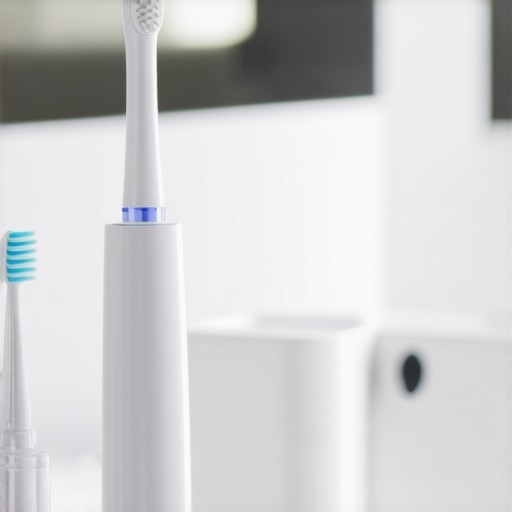
When you switch to your non-dominant hand, your brain loses that fine motor control. You’ll likely find yourself moving your whole head instead of your arm to reach the back molars. To fix this, let the electric toothbrush do the heavy lifting. Hold the brush at a 45-degree angle toward the gum line—similar to the methods found in the ultimate guide to teeth cleaning techniques and benefits—and simply glide it from tooth to tooth. Don’t scrub. Scrubbing with your ‘off’ hand usually leads to uneven pressure, which can cause irritation or even gum recession. To stay on track, I used a timer app; even the pros suggest how to get your kids to brush for the full two minutes applies to adults too, especially when every second feels like a chore.
Avoid the Tangle of Traditional Floss
Traditional string floss is practically impossible with one hand unless you’re a magician. This is where you have to pivot. A water flosser or pre-strung floss picks are your best friends here. If you skip this step, you’ll notice why your gums bleed when you floss for the first time in weeks once you finally get back into the rhythm. I found that a countertop water flosser was easier to stabilize than a handheld one because I didn’t have to worry about the weight of the water tank. Also, remember the best way to keep your bathroom toothbrush clean during this time, because you’re likely touching more surfaces than usual to stay balanced. If you notice your gums aren’t recovering, it might be worth investigating why your gums stay swollen after you finish your antibiotics or reaching out for professional advice.
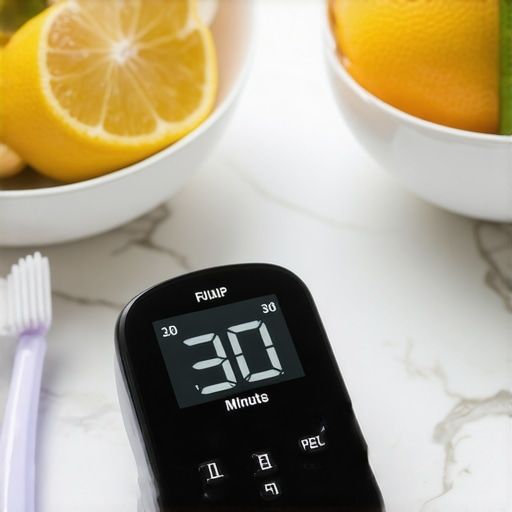
Most people think that a ‘squeaky clean’ feeling is the gold standard, but I’ve learned the hard way that friction is often the enemy of a healthy mouth. We’ve all been told to brush immediately after meals, especially sugary ones. However, here’s the nuanced truth that seasoned professionals know: if you just ate an orange or drank a coffee, your enamel is temporarily softened. Brushing right then is like sanding down a wet piece of wood. That’s why we recommend waiting thirty minutes to brush after eating fruit or anything acidic. You have to give your saliva time to remineralize the surface. This is one of those oral health myths debunked that can literally save your smile over the next decade.
Stop treating your enamel like a kitchen floor
The biggest ‘oops’ factor I see—and I was definitely guilty of this during my first few days with the cast—is overcompensating for a lack of coordination with brute force. When you can’t rotate your wrist properly, your brain tells you to press harder to ‘make up’ for the missed spots. This is a dangerous trap. Aggressive scrubbing can lead to permanent damage, which is why your gums are receding on only one side of your mouth if you are favoring your dominant or non-dominant hand too heavily. According to the Journal of Clinical Periodontology, excessive brushing force is a primary contributor to gingival recession and non-carious cervical lesions. If you see that the reason your spit is pink after you brush is due to your heavy-handedness, it’s time to recalibrate.
Is your quest for whiter teeth actually thinning your enamel?
Another high-level mistake involves the types of products we choose when we feel our routine is ‘lacking.’ When I was struggling with my one-handed technique, I almost reached for the strongest whitening paste I could find, thinking it would do the work for me. Big mistake. Many whitening products are highly abrasive. If you already have thin enamel, you might find the reason your teeth feel sensitive to sugar but not cold is because you’ve stripped away the protective layer. Instead of chasing a chemical fix, focus on teeth cleaning secrets to achieve a bright smile through consistency rather than abrasion. Have you ever fallen into this trap of over-brushing when you’re stressed or injured? Let me know in the comments. We should be aiming for a gentle, thorough massage of the gums, not a search-and-destroy mission against plaque. If you’re struggling to find the right balance, how to choose the right toothbrush bristle strength for your gums is a resource that can help you pivot to a safer routine while you heal.
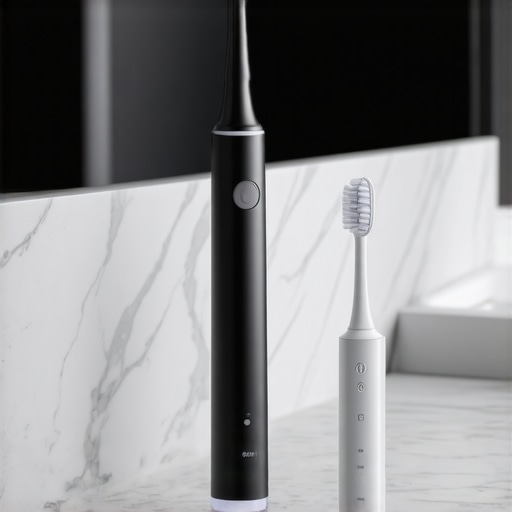
Once I got over the initial hurdle of the ‘broken arm shuffle,’ I realized that the tools you choose are just as important as the technique itself. I stopped looking at my dental routine as a chore and started viewing it as a technical challenge. I personally moved to the Philips Sonicare DiamondClean, and I cannot recommend it enough for anyone with limited mobility. Why? Because of the haptic pressure sensor. When you are using your non-dominant hand, your brain’s feedback loop is slower. This brush vibrates specifically when you’re pressing too hard, which saved me from causing the kind of damage mentioned in expert advice for a lifetime of healthy teeth. If the brush isn’t doing the work for you, you’re likely doing it wrong.
The Gear That Saved My Sanity and My Gums
Beyond the brush, I started using a copper tongue scraper every morning. It sounds like an extra step you don’t need, but why your dentist wants you to use a tongue scraper becomes incredibly clear when you can’t floss as effectively as usual. It removes the biofilm that your brush might miss, especially when your range of motion is compromised. According to a comprehensive meta-analysis published in the Cochrane Database of Systematic Reviews, powered toothbrushes provide a statistically significant reduction in both plaque and gingivitis compared to manual brushing in both short and long-term trials. This isn’t just a luxury; it’s a clinical necessity when you’re down to one functional hand. I also invested in a wall-mounted holder for my water flosser handle, which allowed me to guide the tip with my fingers without having to support the weight of the entire device.
How do I keep my smile healthy for the long haul?
Maintenance is about consistency, not intensity. Even with a cast, you have to think about the big picture. I started looking into preventive tips for long-lasting dental health for families to see how I could simplify the process for myself. One thing that stood out was the importance of the ‘check-in.’ Every few days, I used a disclosing tablet—those little purple pills that stain plaque—to see where my left hand was missing spots. It’s a humbling experience, but it’s the only way to ensure your teeth cleaning techniques and benefits are actually being realized. Long-term results aren’t born from a single great cleaning; they come from making sure that regular dental cleanings can save you money by preventing the need for emergency fillings while you’re still in a sling.
The Future of Brushing Is Looking Smarter
I predict that in the next five years, we won’t even need to think about technique. We are already seeing the rise of AI-integrated brushes that map your mouth in 3D on your smartphone. For someone with an injury, this is a game-changer. Imagine an app that tells you exactly which molar you missed because your cast was in the way. We are moving toward a world where revolutionary teeth cleaning techniques for 2025 will focus on data-driven feedback rather than just manual dexterity. This tech will make oral care more accessible for everyone, from kids to those with temporary or permanent disabilities. If you’re currently struggling, my best advice is to embrace these tools now. Go get a pack of disclosing tablets today; it is the single most effective way to gamify your oral health and see exactly where you need to improve your one-handed glide.
It happened in a flash. One second I was walking the dog, the next I was hearing that sickening pop in my right wrist. Cast on. Game over. Or so I thought until the next morning when I realized I couldn’t even unscrew my toothpaste cap. I spent twenty minutes wrestling with a tube of Crest, only to realize that the best way to brush your teeth if you have a broken arm isn’t just about the brushing—it’s about the prep work. I felt defeated, messy, and honestly, a little gross. But I’m here to tell you that you don’t have to let your oral hygiene slide just because your dominant hand is in a sling. We are going to tackle the logistics of single-handed dental care so you can keep your smile bright without the frustration.
My Week of Minty Disasters and What I Learned
I’ll be honest—I failed hard at first. In my stubbornness, I tried to use my manual toothbrush with my left hand exactly how I used my right. Big mistake. I ended up poking my gums so hard I actually saw stars, which taught me a lot about best practices for sensitive gums when you lack coordination. You don’t realize how much you rely on muscle memory until that memory is physically blocked by a pound of plaster. I was so worried about developing cavities or needing expensive dental cleanings to save money later that I almost over-brushed. Balance is everything.
Is a one-handed scrub really enough for your gums?
You might be skeptical. I certainly was. How can a clumsy, non-dominant hand provide the same level of care as your usual routine? The truth is, it can’t—at least not without a change in strategy. According to the American Dental Association (ADA), the quality of brushing depends more on the technique and time spent than the force used. This was a huge relief for me. I didn’t need power; I needed a plan. If you are struggling with a sudden injury, have you faced that moment of panic staring at a floss pick you can’t quite grip? You aren’t alone.
Switch to Tools That Work for You
The first thing I did was ditch the manual tools. If you’re still trying to saw away with a $2 plastic brush while your arm is throbbing, stop. You need to leverage technology. Using a high-quality electric toothbrush does 90% of the movement for you, which is essential when your range of motion is limited. I also found that using a water flosser was a literal lifesaver. Trying to wrap traditional floss around my fingers with one hand was a comedy of errors I’d rather forget. By switching to a stationary water flosser, I could keep my gums healthy without the finger gymnastics. This isn’t just about vanity; it’s about maintaining oral health for a lifetime, even when life throws you a curveball.
Get Your Tools Ready for Action
Mastering the setup is the secret to not ending up with a sink full of toothpaste. Think of your bathroom counter like a surgical tray; everything needs to be within reach of your ‘good’ hand before you even turn on the faucet. If you have to reach across your body or hunt for a cap while holding a wet brush, you’ve already lost the battle. Start by laying out your brush, your paste, and your flosser in a neat row. This organization prevents the frustration that leads to skipping steps in your routine.
Anchor the Tube to Stop the Slide
Applying toothpaste is the hardest three seconds of the morning when you only have one hand. On day four of my injury, I finally figured it out: use the environment. I used to try and balance the tube in the crook of my broken arm, but that just led to a mess. Instead, I started pinning the toothpaste tube against the backsplash using the side of my palm, which allowed me to unscrew the cap and squeeze the paste directly onto the bristles without the tube sliding away. It’s a small victory, but when you’re dealing with limited mobility, these wins keep you going. If you’re unsure about which tools to use, checking how to choose the right toothbrush bristle strength for your gums is a great starting point to ensure you aren’t being too abrasive with your non-dominant hand.
Let the Motor Handle the Scrubbing
When you switch to your non-dominant hand, your brain loses that fine motor control. You’ll likely find yourself moving your whole head instead of your arm to reach the back molars. To fix this, let the electric toothbrush do the heavy lifting. Hold the brush at a 45-degree angle toward the gum line—similar to the methods found in the ultimate guide to teeth cleaning techniques and benefits—and simply glide it from tooth to tooth. Don’t scrub. Scrubbing with your ‘off’ hand usually leads to uneven pressure, which can cause irritation or even gum recession. To stay on track, I used a timer app; even the pros suggest how to get your kids to brush for the full two minutes applies to adults too, especially when every second feels like a chore.
Avoid the Tangle of Traditional Floss
Traditional string floss is practically impossible with one hand unless you’re a magician. This is where you have to pivot. A water flosser or pre-strung floss picks are your best friends here. If you skip this step, you’ll notice why your gums bleed when you floss for the first time in weeks once you finally get back into the rhythm. I found that a countertop water flosser was easier to stabilize than a handheld one because I didn’t have to worry about the weight of the water tank. Also, remember the best way to keep your bathroom toothbrush clean during this time, because you’re likely touching more surfaces than usual to stay balanced. If you notice your gums aren’t recovering, it might be worth investigating why your gums stay swollen after you finish your antibiotics or reaching out for professional advice.
Most people think that a ‘squeaky clean’ feeling is the gold standard, but I’ve learned the hard way that friction is often the enemy of a healthy mouth. We’ve all been told to brush immediately after meals, especially sugary ones. However, here’s the nuanced truth that seasoned professionals know: if you just ate an orange or drank a coffee, your enamel is temporarily softened. Brushing right then is like sanding down a wet piece of wood. That’s why we recommend waiting thirty minutes to brush after eating fruit or anything acidic. You have to give your saliva time to remineralize the surface. This is one of those oral health myths debunked that can literally save your smile over the next decade.
Stop treating your enamel like a kitchen floor
The biggest ‘oops’ factor I see—and I was definitely guilty of this during my first few days with the cast—is overcompensating for a lack of coordination with brute force. When you can’t rotate your wrist properly, your brain tells you to press harder to ‘make up’ for the missed spots. This is a dangerous trap. Aggressive scrubbing can lead to permanent damage, which is why your gums are receding on only one side of your mouth if you are favoring your dominant or non-dominant hand too heavily. According to the Journal of Clinical Periodontology, excessive brushing force is a primary contributor to gingival recession and non-carious cervical lesions. If you see that the reason your spit is pink after you brush is due to your heavy-handedness, it’s time to recalibrate.
Is your quest for whiter teeth actually thinning your enamel?
Another high-level mistake involves the types of products we choose when we feel our routine is ‘lacking.’ When I was struggling with my one-handed technique, I almost reached for the strongest whitening paste I could find, thinking it would do the work for me. Big mistake. Many whitening products are highly abrasive. If you already have thin enamel, you might find the reason your teeth feel sensitive to sugar but not cold is because you’ve stripped away the protective layer. Instead of chasing a chemical fix, focus on teeth cleaning secrets to achieve a bright smile through consistency rather than abrasion. Have you ever fallen into this trap of over-brushing when you’re stressed or injured? Let me know in the comments. We should be aiming for a gentle, thorough massage of the gums, not a search-and-destroy mission against plaque. If you’re struggling to find the right balance, how to choose the right toothbrush bristle strength for your gums is a resource that can help you pivot to a safer routine while you heal.
Once I got over the initial hurdle of the ‘broken arm shuffle,’ I realized that the tools you choose are just as important as the technique itself. I stopped looking at my dental routine as a chore and started viewing it as a technical challenge. I personally moved to the Philips Sonicare DiamondClean, and I cannot recommend it enough for anyone with limited mobility. Why? Because of the haptic pressure sensor. When you are using your non-dominant hand, your brain’s feedback loop is slower. This brush vibrates specifically when you’re pressing too hard, which saved me from causing the kind of damage mentioned in expert advice for a lifetime of healthy teeth. If the brush isn’t doing the work for you, you’re likely doing it wrong.
The Gear That Saved My Sanity and My Gums
Beyond the brush, I started using a copper tongue scraper every morning. It sounds like an extra step you don’t need, but why your dentist wants you to use a tongue scraper becomes incredibly clear when you can’t floss as effectively as usual. It removes the biofilm that your brush might miss, especially when your range of motion is compromised. According to a comprehensive meta-analysis published in the Cochrane Database of Systematic Reviews, powered toothbrushes provide a statistically significant reduction in both plaque and gingivitis compared to manual brushing in both short and long-term trials. This isn’t just a luxury; it’s a clinical necessity when you’re down to one functional hand. I also invested in a wall-mounted holder for my water flosser handle, which allowed me to guide the tip with my fingers without having to support the weight of the entire device.
How do I keep my smile healthy for the long haul?
Maintenance is about consistency, not intensity. Even with a cast, you have to think about the big picture. I started looking into preventive tips for long-lasting dental health for families to see how I could simplify the process for myself. One thing that stood out was the importance of the ‘check-in.’ Every few days, I used a disclosing tablet—those little purple pills that stain plaque—to see where my left hand was missing spots. It’s a humbling experience, but it’s the only way to ensure your teeth cleaning techniques and benefits are actually being realized. Long-term results aren’t born from a single great cleaning; they come from making sure that regular dental cleanings can save you money by preventing the need for emergency fillings while you’re still in a sling.
The Future of Brushing Is Looking Smarter
I predict that in the next five years, we won’t even need to think about technique. We are already seeing the rise of AI-integrated brushes that map your mouth in 3D on your smartphone. For someone with an injury, this is a game-changer. Imagine an app that tells you exactly which molar you missed because your cast was in the way. We are moving toward a world where revolutionary teeth cleaning techniques for 2025 will focus on data-driven feedback rather than just manual dexterity. This tech will make oral care more accessible for everyone, from kids to those with temporary or permanent disabilities. If you’re currently struggling, my best advice is to embrace these tools now. Go get a pack of disclosing tablets today; it is the single most effective way to gamify your oral health and see exactly where you need to improve your one-handed glide.
Lessons from the Sink: What My Injury Taught Me About True Oral Care
After six weeks in a cast, I realized that my previous dental routine was on autopilot. Having to slow down forced me to pay attention to the textures and angles I had ignored for years. First, I learned that positioning is everything; if your wrist doesn’t rotate, you have to tilt your head to allow the bristles to reach the lingual surfaces of your teeth. Second, I discovered that saliva is your best friend when you can’t brush immediately. If you’re struggling to get to the sink, drinking plenty of water helps neutralize acids until you can manage your one-handed routine. Finally, don’t let the frustration of a clumsy hand stop you. Even a 60% effective cleaning is better than skipping it entirely, especially when trying to maintain long-lasting dental health for families who might be helping you out.
Tools That Made Life with a Cast Actually Manageable
You don’t need a bathroom full of gadgets, but a few specific items turn a stressful morning into a quick win. I swear by these three: 1. A countertop water flosser—it stays put while you work the nozzle with your good hand. 2. A pump-style toothpaste dispenser—this eliminates the need to squeeze or roll a tube with both hands. 3. Disclosing tablets—these are the ultimate feedback loop, showing you exactly where your non-dominant hand is failing. Using these teeth cleaning secrets to achieve a bright smile ensures that your temporary injury doesn’t lead to permanent plaque buildup.
#IMAGE_PLACEHOLDER_E#
Keep Your Smile Shining While You Recover
Healing takes time, and your body is already working hard to knit that bone back together. Don’t make it fight a gum infection at the same time. By adapting your technique and choosing the right tools, you can ensure that the best way to brush your teeth if you have a broken arm becomes a seamless part of your recovery. You’ve got this—one gentle stroke at a time. If you find yourself in a pinch or need professional guidance during your recovery, don’t hesitate to reach out to us for a check-up. What has been the most frustrating part of your morning routine since your injury? Let me know in the comments below!