
I remember the morning I finally looked—really looked—at my nightguard. It wasn’t pretty. It had developed a suspicious yellowish tint, and the smell was, frankly, enough to make me skip breakfast. I had been wearing it faithfully for months, thinking I was doing a great job addressing the connection between grinding your teeth and frequent migraines, but I hadn’t realized I was basically putting a petri dish in my mouth every night. My first instinct was to grab the harshest cleaner I could find. I actually soaked it in straight, high-alcohol mouthwash for three hours. Terrible mistake. Not only did it taste like a chemical factory for the next week, but the plastic started to feel brittle and weird. It turns out that many common oral health myths debunked recently suggest that stronger is always better, but when it comes to the delicate materials in your mouth, that is rarely the case. We need a way to kill the nasties without damaging the guard or our own health. [image_placeholder]
Why Your Nightguard Smells Like a Locker Room
It is not just your imagination; that funky scent is actually alive. When you wear a guard, you are trapping saliva, food particles, and bacteria in a warm, dark, moist environment. It is the ultimate vacation spot for microbes. According to research published in the Journal of Prosthetic Dentistry, dental appliances can harbor significant amounts of Staphylococcus aureus and even E. coli if they are not properly sanitized daily. This is why a simple rinse under the tap does not cut it. You need a routine that actually breaks down the biofilm without the use of endocrine-disrupting chemicals. Have you ever noticed a weird film on your guard that just will not scrub off?
Will natural ingredients actually get rid of the bacteria?
This was my biggest fear when I started looking for alternatives. I thought if it did not smell like bleach, it was not clean. But the truth is that basic pantry staples like distilled white vinegar and baking soda are surprisingly effective at killing the specific types of bacteria that cling to dental plastics. By using these family dentistry tips that make oral care effortless, you can keep your guard fresh and clear for years. It is all about consistency and the right pH balance. Today, I am sharing the exact eco-soak recipe I have used for the last two years to keep my smile healthy and my breath actually fresh.
Rinse Before the Saliva Turns to Stone
When you pop that guard out in the morning, your saliva is still liquid. If you let it sit on the counter while you brew coffee, that saliva evaporates and leaves behind a hard, calcified crust known as biofilm or tartar. Think of it like a plate of maple syrup; it is a five-second job to clean when it is fresh, but requires a jackhammer once it dries. Use cool or lukewarm water for this initial rinse. I once made the mistake of using boiling water thinking I was ‘sterilizing’ it, only to watch my expensive custom-fit guard warp into a piece of abstract art that wouldn’t even fit over my front teeth. Stick to the teeth cleaning techniques that prioritize material safety over extreme heat.
How to Dissolve Mineral Buildup with White Vinegar
Once or twice a week, you need to go deeper than a simple rinse to address the microscopic hitchhikers. Mix one part distilled white vinegar with three parts filtered water in a small glass. Let your guard soak for exactly 15 minutes. The acetic acid in the vinegar acts as a natural descaler, breaking down the stubborn white spots that a toothbrush cannot reach. This process is very similar to how to clean your clear aligners without turning them yellow, as both appliances are prone to porous staining. 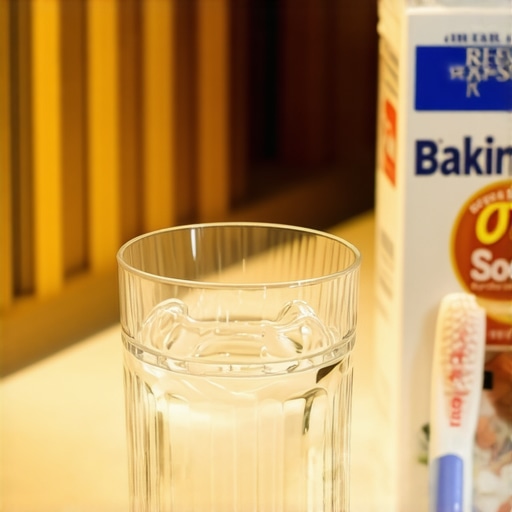
Neutralize the Acid with a Baking Soda Scrub
After the vinegar bath, your guard will smell like a pickle jar. To fix this and provide a mechanical clean, sprinkle a tiny bit of baking soda over the guard while it is still wet. The baking soda creates a gentle effervescent reaction that lifts any remaining debris. Use a soft-bristled toothbrush to move the paste into the deep grooves where your molars sit. I learned this the hard way after using a stiff-bristled brush meant for cleaning grout; I ended up with microscopic scratches that actually trapped more bacteria over time. By using a soft touch, you ensure you are maintaining oral health without compromising the integrity of the plastic.
Avoid the Brittle Plastic Trap
One of the biggest mistakes I see people make is storing their guard in a sealed, airtight container while it is still damp. This is basically building a luxury spa for mold. If you have ever seen black spots on your guard, that is likely mildew from lack of airflow. After your natural soak and scrub, pat the guard dry with a lint-free cloth and place it in a case that has ventilation holes. Proper air circulation is the final step in ensuring your perfect oral health as a family stays on track. Consistency with this routine prevents the need for the heavy-duty, bleach-based cleaners that eventually make the material feel brittle and prone to cracking during the night.While we often focus on the physical cleanliness of our dental appliances, there is a nuance that most people—and even some dental enthusiasts—overlook: the microscopic integrity of the surface. Everyone says you should scrub until it shines, but in my experience, the more you ‘scrub’ with standard materials, the more you are actually creating a playground for future bacteria. This is the ultimate ‘Oops’ factor in oral care. When you use abrasive pastes or stiff brushes on a nightguard or retainer, you create micro-fissures. These tiny scratches are invisible to the naked eye but act as five-star hotels for Streptococcus mutans. According to a study published in the Journal of Oral Rehabilitation, the surface roughness of dental resins significantly correlates with the rate of biofilm maturation. This means your aggressive deep clean might be the very reason your guard starts smelling again within 48 hours. 
Does a balanced oral microbiome matter more than total sterilization?
This is the question that changed how I view my entire routine. Many of the oral health myths busted lately focus on the idea that the mouth should be a sterile environment. It shouldn’t. By using harsh chemicals to ‘sterilize’ your guard or mouth, you are nuking the beneficial bacteria that actually help fight off decay. I used to think that if my mouth didn’t tingle from alcohol-based rinses, it wasn’t clean. The truth is that over-sanitizing leads to a rebound effect where the nastiest, most resistant bacteria grow back first. This same logic applies to your natural teeth. I see so many people falling for the trap of high-abrasivity whitening products. They want that Hollywood glow, but they end up wondering why your front teeth feel thin or see-through at the edges. When the enamel is thinned by over-cleaning, the yellowish dentin underneath shows through anyway, making the reason your teeth look yellow even though you brush twice daily a matter of structural loss rather than hygiene. If you have thin enamel, you must prioritize the safest way to whiten teeth if you have thin enamel rather than just buying the strongest kit on the shelf. Avoiding the most common mistakes people make with whitening strips is just the tip of the iceberg; the real secret is maintaining the pH of your saliva. Have you ever fallen into this trap? Let me know in the comments. I would love to hear if you have noticed your dental appliances getting ‘cloudy’ despite constant cleaning. It is often a sign that the material is being etched, not just stained. Real expertise in oral health means knowing when to put the brush down and let the natural chemistry of your mouth do the heavy lifting.I eventually realized that my manual efforts were only getting me halfway to the finish line. If you want to stop the cycle of ‘scrub, stain, repeat,’ you have to upgrade your toolkit. The biggest game-changer for me was investing in a small ultrasonic cleaner. Instead of using a brush that creates those micro-scratches I mentioned earlier, these devices use 42,000Hz sound waves to create millions of microscopic bubbles. These bubbles implode on the surface of your guard, literally blasting away plaque and bacteria from crevices a bristle could never reach. According to a meta-analysis in the International Journal of Environmental Research and Public Health, ultrasonic cleaning is significantly more effective at removing multi-species biofilms from thermoplastic materials compared to chemical soaking alone. This is the cornerstone of maintaining oral health if you wear any kind of removable appliance. 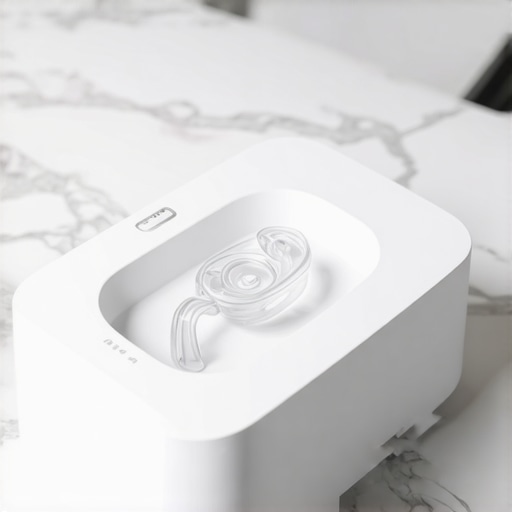
How do I maintain my dental results over time?
The secret isn’t just what you do at night, but how you integrate these habits into your daily life without them becoming a chore. For my family, we treat our dental tools like high-end electronics. We focus on preventive tips for long-lasting dental health for families by keeping a dedicated ‘sanitation station’ in the bathroom. This prevents the ‘I forgot’ excuse. I also highly recommend using a water flosser once a day, especially if you are trying to learn how to prevent your permanent retainer from trapping food particles. Traditional floss often gets shredded by the wires, but a high-pressure stream of water flushes out the gaps effortlessly. Remember, how regular dental cleanings can save you money in the long run depends entirely on your ability to manage that daily buildup.
The Future of Your Smile is Digital
Looking ahead, I predict that the next five years will see a massive shift toward home-based 3D scanning and printing. We are already seeing how we use digital scanners to avoid messy dental molds in the office, but soon, you might have a digital ‘twin’ of your teeth stored in a secure cloud. If you lose your nightguard or if your teeth start shifting after wearing braces, you won’t need a new appointment; you’ll simply order a replacement based on your last scan. This level of precision is also what drives innovations like contouring veneers and the future of cosmetic dentistry. We are moving toward a world where ‘maintenance’ is automated. My advanced tip for you today: buy a pack of pH testing strips. Test your saliva in the morning; if it is consistently acidic (below 6.5), you need to increase your intake of alkaline-rich greens or use a mineralizing rinse before bed. Give it a try for one week and see if your teeth feel less sensitive!
The Hardest Lesson I Learned About Protecting My Dental Work
When I first started wearing a nightguard, I thought I was being a model patient by scrubbing it until it gleamed. It took a conversation with my dentist and several expensive replacements to realize that I was actually doing more harm than good. One of the biggest ‘lightbulb moments’ for me was realizing that visibility isn’t the same as hygiene; a guard that looks clear but is covered in micro-scratches is actually more dangerous than a slightly stained one. I also learned that how regular teeth cleaning can prevent major dental issues applies to your appliances as much as your natural teeth. Finally, I discovered that time is your greatest enemy; if you don’t rinse immediately, the calcification process begins in seconds, turning soft plaque into hard tartar that is nearly impossible to remove at home. [image_placeholder]
The Toolkit for a Lifetime of Fresh Breath
To keep your smile healthy and your appliances in top shape, you don’t need a shelf full of chemicals. My curated list of essentials includes a dedicated ultrasonic cleaner—it’s the only way to get true 360-degree sanitation without friction. I also swear by using a soft-bristled brush designated solely for my guard to avoid cross-contamination from my daily toothpaste, which is often too abrasive. For those looking at the bigger picture, staying informed on revolutionary teeth cleaning techniques for 2025 will help you integrate modern tech into your bathroom cabinet. I also recommend checking out cosmetic dentistry innovations you can’t miss this year if you are planning to upgrade your smile further, as new materials require specific care protocols. Lastly, for parents, these family dental care hacks to keep your kids smiling daily can be adapted for retainers and sports guards too.
Take the First Step Toward a Fresh Guard Tonight
Your journey toward better oral health doesn’t have to be complicated or expensive. It starts with the simple decision to treat your dental appliances with the same respect you give your natural teeth. By moving away from harsh chemicals and abrasive scrubbing, you are not just cleaning a piece of plastic—you are protecting your investment and your systemic health. Don’t wait until your guard turns yellow or starts to smell to take action. Start the vinegar soak tonight, and you’ll be amazed at how much fresher you feel in the morning. Have you ever noticed white spots on your nightguard that just won’t come off no matter how hard you brush? Let me know in the comments below!