
I’ll never forget the morning I tried to take a bite of a simple breakfast burrito and felt a sharp, restrictive snap in my jaw. It wasn’t a sharp pain, exactly—more like my jaw had suddenly decided it was a rusty gate that hadn’t been oiled since the nineties. I spent three days massaging my cheeks, convinced I was just grinding my teeth at night because of work stress. I even looked into the connection between stress and your worn down molars, but something else was brewing. The real culprit was much further back, hiding under the surface and wreaking havoc on my muscles. I made the classic mistake of waiting too long, hoping the ‘tension’ would just melt away with a warm compress. It didn’t.
Why Your Back Molars Are Messing With Your Jaw’s Range of Motion
If you’re feeling that nagging tightness right where your jaw hinges, you aren’t imagining things. When wisdom teeth—those late-to-the-party third molars—don’t have enough room to erupt, they start playing a high-stakes game of bumper cars with your other teeth. They push, they shove, and eventually, they irritate the masseter muscle and the temporomandibular joint (TMJ). My biggest error was assuming that because I didn’t have a traditional ‘toothache,’ my teeth were fine. In reality, the pressure was radiating outward, causing my entire jaw to seize up. By the time I sought help, I was already exhibiting the signs of an infected wisdom tooth you shouldn’t ignore. According to the American Association of Oral and Maxillofacial Surgeons, roughly 85% of wisdom teeth will eventually require removal because the modern human jaw simply lacks the space to accommodate them safely.
Is this jaw stiffness actually worth the worry?
You might be skeptical, thinking that a little stiffness isn’t a big deal as long as you can still chew your dinner. I thought the same until I reached a point where I couldn’t open my mouth wide enough to even brush my teeth properly. This isn’t just about ‘crowding’; it’s about the inflammation that spreads from the gum tissue directly into the muscles used for speaking and eating. If you’ve also noticed why your jaw clicks every time you chew hard foods, you’re likely seeing the early warning signs of an impacted tooth creating mechanical issues. Today, we are going to dive into how to identify these triggers and why knowing the safest way to extract a wisdom tooth that is impacted can save you from a locked jaw later. Have you noticed your jaw feeling tighter in the mornings lately?To figure out if your jaw stiffness is a temporary fluke or a third-molar emergency, you need to perform what I call the Three Finger Test. In a healthy jaw, you should be able to stack your index, middle, and ring fingers vertically and place them between your upper and lower front teeth comfortably. When my wisdom teeth started acting up, I could barely squeeze two fingers in without a dull, radiating ache. This isn’t just about flexibility; it’s a structural roadblock caused by the late arrival of teeth that simply don’t have a seat at the table. If you find yourself struggling to open wide, it’s a clear signal you should learn how to tell if your wisdom teeth are impacted without an x-ray before the situation escalates.
Stop the Swelling Before Your Jaw Locks for Good
Once the masseter muscle—the heavy lifter of your jaw—becomes inflamed, it enters a protective spasm. It’s trying to prevent further damage by limiting movement, but this often leads to more pain. To break this cycle, you need to address the inflammation directly rather than just waiting it out. I remember sitting on my couch with a bag of frozen peas on one side and a heating pad on the other, alternating every fifteen minutes. I thought I was being dramatic, but the relief was the only thing that allowed me to speak clearly that evening. Be careful not to press too hard during your self-massage; you’re not trying to tenderize a steak, you’re trying to coax a muscle out of a defensive stance. If you’ve also been waking up with head pain, there is a strong connection between grinding your teeth and frequent migraines, which only adds fuel to the wisdom tooth fire. 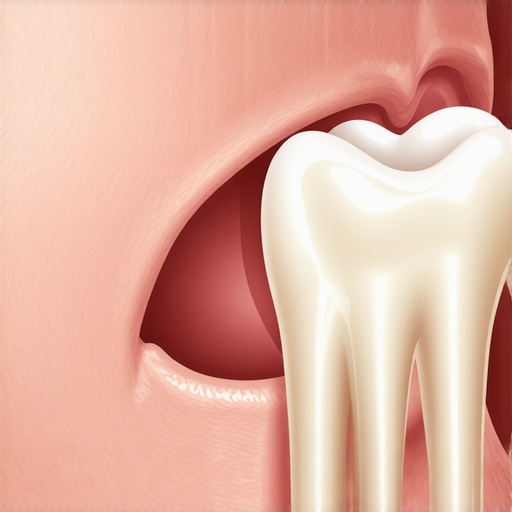
Why Basic Cleanings Won’t Fix a Positional Problem
A lot of people think that if they just keep their teeth clean, these mechanical issues will go away. While I’m a huge advocate for hygiene—and it’s true that how regular teeth cleaning can prevent major dental issues is a cornerstone of overall health—a wisdom tooth that is physically blocked by your second molar doesn’t care how much you floss. It’s a mechanical traffic jam. During my own journey, I realized that my regular cleanings were great for my gums, but they couldn’t stop a tooth that was growing sideways. If the pressure has become unbearable and the jaw is starting to click, you might need to look into the tactic to reduce swelling after a tooth extraction because, at that point, the tooth has likely transitioned from a nuisance to a liability. If the thought of the procedure makes you break out in a sweat, remember that modern techniques like how oral sedation makes deep cleanings feel effortless can often be applied to more complex extractions too, ensuring you don’t feel a thing while the dentist clears the way. Focus on the physical space in your mouth; if the back molars are crowded, the muscle will never truly relax until that pressure is gone.Most people treat their dental hygiene like a simple daily checklist: brush, floss, rinse, and wait for something to hurt before booking an appointment. But here is the contrarian truth that most beginners miss: pain is actually a terrible diagnostic tool for your mouth. By the time you feel a dull throb or a sharp sting, you’ve likely missed the window for a proactive, simple fix. I fell into this exact ‘oops’ factor myself, thinking that because my smile looked bright in photos, my roots were healthy. I was effectively falling for an optical illusion. You might be surprised to learn that oral health myths debunked: what you need to know in 2025 often center on this very misconception. A lack of symptoms does not equal a lack of pathology. In fact, a study published in the Journal of Clinical Periodontology highlights that chronic inflammation can quietly erode bone density long before the patient feels a single ‘ouch.’ This is why how regular teeth cleaning can prevent major dental issues is more than just marketing—it’s a diagnostic window into your systemic health. 
Why your bite matters more than your whitening strips
We often obsess over the shade of our teeth while ignoring their alignment and function. It’s easy to get distracted by over-the-counter fixes, but the most common mistakes people make with whitening strips usually involve ignoring underlying sensitivity or gum recession. I’ve seen people bleach their way into severe nerve pain because they didn’t realize the reason your gums recede even if you have good habits could be as simple as an improper bite or ‘malocclusion’ putting undue pressure on certain teeth. When you focus solely on the ‘cosmetic’ without the ‘structural,’ you’re essentially painting a house that has a crumbling foundation.
Can cosmetic dentistry actually prevent future jaw pain?
It sounds like a paradox, but high-end aesthetic work is often the most functional. For instance, contouring veneers: the future of cosmetic dentistry revealed isn’t just about looking like a movie star; it’s about rebuilding the worn-down surfaces of your teeth to restore a natural, healthy bite height. This stops the masseter muscle from overworking and prevents that ‘rusty gate’ jaw feeling I mentioned earlier. If you’re only looking at teeth cleaning secrets: achieve a bright smile in under 30 minutes for the sake of vanity, you’re missing the chance to stabilize your entire jaw structure. For those managing a household, family dentistry tips that make oral care effortless and effective often start with teaching kids that the dentist is a mechanic for their mouth, not just a tooth-polisher. Have you ever fallen into the trap of thinking a lack of pain meant a clean bill of health? Let me know in the comments.
Stop treating your gums like a hardwood floor
I finally traded my manual toothbrush for a sonic model with a built-in pressure sensor, and it changed everything. I used to think ‘clean’ meant ‘scrubbing hard,’ but that is actually why your gums only bleed when you use an electric toothbrush: you are likely applying way too much force. I personally chose a model that vibrates when the pressure is too high because it retrains my muscle memory to be gentle. According to a comprehensive review in the Cochrane Library, powered toothbrushes provide a 21% reduction in plaque after just three months compared to manual brushing. This isn’t just a gadget; it is a preventative tool that keeps me out of the dental chair for anything other than routine maintenance. 
Professional cleanings are your financial defense
It is easy to skip a six-month checkup when nothing hurts, but I have learned that how regular dental cleanings can save you money in the long run is a mathematical certainty. Calculus—that hardened plaque—is impossible to remove at home, no matter how many ‘cleaning secrets’ you try. When that buildup sits against your gums, it triggers the inflammation that eventually leads to the jaw issues I struggled with earlier. I view my dental hygienist as a specialized mechanic who clears the debris I cannot reach, especially around those tricky back molars.
How do I maintain my oral health over a lifetime?
Long-term success comes down to the ’30-second rule’ I adopted: I spend an extra 30 seconds focusing specifically on the gum line and the very back of my mouth where wisdom teeth usually cause chaos. This habit, combined with maintaining oral health: expert advice for a lifetime of healthy teeth, ensures that my bite remains stable and my smile stays bright. I also predict that we will soon see smart-glass bathroom mirrors that use UV light to highlight plaque colonies in real-time, making the invisible visible for better home care. For those with kids, incorporating preventive tips for long-lasting dental health for families now will prevent them from needing more invasive cosmetic dentistry innovations you can’t miss this year later in life. My advanced tip: Try using your water flosser with lukewarm water and a tiny drop of alcohol-free mouthwash; it is a game-changer for reaching deep into periodontal pockets before they become problematic.
The Warning Signs I Wish I Had Noticed Months Sooner
Reflecting on my journey with jaw stiffness, I’ve realized that the body speaks in whispers long before it screams. One of the biggest shifts in my perspective came when I stopped viewing my teeth as isolated units and started seeing them as a complex system of muscles and joints. If I could go back, I would tell myself that persistent tension is a message, not a mood. I also learned that the most expensive dental bills usually come from the problems we ignored because they ‘didn’t hurt yet.’ By reading through oral health myths busted: what every family should know, I finally understood that waiting for a toothache is a gamble you usually lose. Lastly, I discovered that the way we clean our teeth is just as important as how often we do it; using gentle teeth cleaning best practices for sensitive gums can prevent the very inflammation that makes wisdom tooth issues feel so much worse.
The Resource Kit That Saved My Smile
If you are looking to move from dental survival to true oral health, I recommend focusing on these three specific areas. First, look into revolutionary teeth cleaning techniques for 2025 to ensure your tools are doing the heavy lifting without damaging your enamel. Second, for those with children, mastering family dental care hacks to keep your kids smiling daily is the best way to ensure the next generation doesn’t deal with the same ‘rusty gate’ jaw issues later in life. Finally, don’t be afraid to look at the intersection of health and aesthetics. I found that the science behind teeth whitening and other cosmetic updates often goes hand-in-hand with structural improvements that make chewing easier and more comfortable.
Reclaiming the Joy of a Comfortable Bite
You don’t have to live with the fear that your jaw will lock every time you take a bite of an apple. Reclaiming your range of motion is about consistency and choosing the right partners in your care. Whether you are currently dealing with impacted molars or just want to improve your daily routine, focusing on maintaining perfect oral health as a family will pay dividends for years to come. Your smile is your greatest asset—not just because of how it looks, but because of how it functions. When you are ready for a transformation, exploring enhancing confidence with cosmetic dentistry what to expect can provide the roadmap for a lifetime of comfortable, confident smiles. Have you ever tried the Three Finger Test only to realize your jaw was significantly tighter than you thought? Let me know in the comments below!