
There I was, three miles deep into the backcountry with a pack that felt like it was filled with lead and a view of the sunset that would make a grown man cry. The stars were starting to peek through the canopy, the fire was crackling, and then it happened. A sharp, lightning-bolt of pain shot through my left molar, turning my peaceful wilderness retreat into a personal hell. No cell service, no pharmacy, and the nearest dentist was a four-hour hike and a two-hour drive away. It wasn’t a bear or a twisted ankle that threatened my trip; it was a rogue tooth. If you have ever found yourself huddled in a sleeping bag, rocking back and forth because your jaw feels like it’s being hit with a hammer, you know the pure, unadulterated desperation I felt that night. I realized then that I was woefully unprepared for a dental crisis in the wild. Today, I am going to share exactly how to triage that pain using what is in your pack and how to tell if you need to call it quits and hike out immediately. We’re going to walk through the steps to save your sanity before the sun comes up.
Stop the Throb Before You Pack Up the Tent
Most people think a dental emergency in the woods is an automatic trip-ender, but that is not always the case if you know what to look for. When I first started camping, I made the rookie mistake of ignoring [the reason your tooth feels fine until you drink hot coffee](https://gentlesmiledentist.com/the-reason-your-tooth-feels-fine-until-you-drink-hot-coffee) for weeks before my trip. I figured the mountain air would somehow heal me. Spoiler: it didn’t. In fact, altitude can actually make existing dental issues feel significantly worse due to pressure changes. This phenomenon, often called barodontalgia, is a well-documented issue in wilderness medicine; the Journal of the American Dental Association has noted that even small pockets of air trapped under a filling can expand at higher elevations, causing intense discomfort. Knowing [how to handle a dental emergency while traveling abroad](https://gentlesmiledentist.com/how-to-handle-a-dental-emergency-while-traveling-abroad) or in the deep woods is a survival skill just as important as knowing how to filter water. Have you ever had to cut a long-awaited adventure short because your mouth decided to stage a revolution?
Is a Backwoods Fix Actually Worth the Risk?
You might be sitting there thinking that a little saltwater rinse or some over-the-counter meds won’t do a lick of difference against a real infection. It is a valid fear. I used to be a skeptic too, thinking that ‘home’ remedies—or camp remedies, in this case—were just for people with a low pain threshold. But the goal here isn’t a permanent cure; it is about [maintaining oral health expert advice for a lifetime of healthy teeth](https://gentlesmiledentist.com/maintaining-oral-health-expert-advice-for-a-lifetime-of-healthy-teeth) by buying enough time to reach a professional. If you start feeling [the reason your teeth throb when you lean forward or bend over](https://gentlesmiledentist.com/the-reason-your-teeth-throb-when-you-lean-forward-or-bend-over), you might be dealing with sinus pressure, but if that throb is localized to one spot, it’s time to act. If the pain gets to the point where you see visible swelling or start feeling [why your teeth hurt when you have a high fever](https://gentlesmiledentist.com/why-your-teeth-hurt-when-you-have-a-high-fever), that is your body telling you the trip is over. In those cases, you need to [contact us](https://gentlesmiledentist.com/contact-us) the moment you get back to civilization. Let’s look at the actual items you should have in your first aid kit to keep a minor ache from becoming a helicopter rescue.First, you have to play detective. If the pain is a dull, generalized ache across your upper jaw, you might actually be looking at a sinus issue intensified by the hike rather than a true cavity. Knowing why your teeth ache during a sinus infection and how to tell the difference can save you from a panic attack at 10,000 feet. If the pain is sharp and localized, it is likely the tooth itself. I once spent a grueling night in the High Sierras thinking I had a massive abscess, only to realize a stray popcorn kernel from my trail mix was lodged deep in my gum line. Learning the safe way to remove a stuck popcorn kernel from your gums would have saved me six hours of misery. If you find a physical hole where a filling used to be, your goal is to shield that exposed nerve from air and cold water immediately. 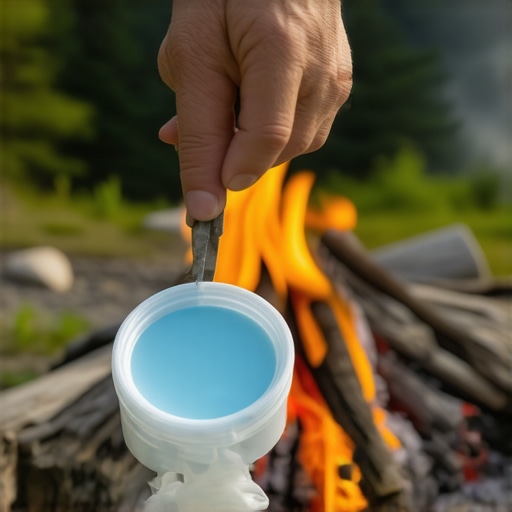
Stop the Agony with These Campfire Fixes
Think of a tooth with a lost filling like a house with a broken window in the middle of winter; the goal isn’t to rebuild the wall right now, it is just to hang some plastic to keep the frost out. Once you have identified that a piece of hardware like a crown or a filling has gone AWOL, the instinct to just glue it back with whatever is in the repair kit is strong. Resist that urge. I have seen hikers try to use hardware-store adhesives, and it is an absolute disaster for the underlying tooth structure. This is why you should never use superglue to fix a broken crown at home or in a tent; the chemicals are toxic and can permanently damage the nerve. Instead, use a temporary dental cement from a pharmacy kit or even a small dab of toothpaste to provide a weak but safe bond until you reach civilization.
Plug the Gap with Temporary Materials
If you are dealing with braces, a snapped wire can feel like a fishing hook in your cheek. If you know how to handle a loose orthodontic wire that is poking your cheek, you can usually use the eraser end of a pencil to gently tuck it back behind the archwire or cover the sharp end with a massive glob of wax. I remember crouched over a headlamp in the Wind River Range, trying to use the reflective back of a compass to see a lost filling in my molar. I ended up using a piece of softened candle wax to plug the hole. It was messy and I had to reapply it every time I drank water, but it stopped the cold air from hitting the nerve.
The Power of the Saltwater Rinse
It sounds too simple to be effective, but a warm saltwater rinse is the duct tape of oral health in the wild. It draws out fluids from inflamed gums and acts as a mild antiseptic. While it will not replace the deep benefits of how regular teeth cleaning can prevent major dental issues, it will certainly lower the bacterial load in an active infection site. In my Sierra mishap, after I finally cleared the debris, three rounds of warm salt water finally stopped the throbbing enough for me to sleep. If you have ibuprofen in your pack, use it to manage the inflammation directly. If the pain persists even after these steps, or if you notice your face starting to swell, that is a clear signal that the infection is spreading and you need to prioritize an exit.While surviving a night in the wild with a toothache is a feat of endurance, the real work happens long before you lace up your boots. I often hear people say that if their teeth look white, they must be healthy. This is one of the most dangerous oral health myths debunked what you need to know in 2025. In reality, a tooth can be sparkling white on the surface while a cavity is silently eroding the dentin underneath. The obsession with aesthetics often masks functional decay. I have seen hikers with Hollywood smiles whose gums are so recessed that a single cold breeze across the trail sends them into a tailspin. This is the ‘Oops Factor’ I see most: people prioritize the color over the structure, ignoring the fact that your tooth’s foundation is actually in the bone and gum tissue, not the enamel shade.
Does a Professional Cleaning Actually Damage Your Enamel?
A common concern I hear from patients is that the scraping and polishing done during a visit might be wearing down their teeth. It is a sophisticated question, especially when why your teeth feel more sensitive after a professional cleaning is such a common experience. The truth is quite the opposite. That ‘scraping’ is removing calculus that is far harder than your toothbrush can handle; leaving it there causes the bone to retreat. However, the nuance is in the technique. If you are already struggling with recession, you need to advocate for gentle teeth cleaning best practices for sensitive gums. A study published in the International Journal of Dental Hygiene highlights that while professional cleanings are essential, over-aggressive home brushing is actually the leading cause of non-carious cervical lesions—basically, you are sawing your teeth away at the gum line. 
Stop Brushing Like You Are Scouring a Cast Iron Skillet
We have been conditioned to think that ‘harder’ means ‘cleaner.’ But your gums are more like silk than leather. When you apply too much pressure, you are literally pushing the gum tissue away from the tooth, exposing the sensitive root. This is why how regular teeth cleaning can prevent major dental issues is so effective; it allows a professional to do the heavy lifting so you can be gentle at home. Another trap is the DIY whitening trend. You might see influencers suggesting the truth about whitening your teeth with strawberries and soda, but the citric acid in those fruits combined with the abrasive nature of baking soda can strip your enamel in a matter of weeks. If you want real results, you need to understand the science behind teeth whitening achieve stunning results fast rather than following a viral hack that ruins your bite. When we look at family dentistry building a foundation of healthy smiles for all ages, it is about realizing that oral health is an ecosystem. Bacteria can be shared within a household, so your hygiene routine actually protects those around you. True maintaining oral health expert advice for a lifetime of healthy teeth means looking past the surface. Have you ever fallen into this trap and tried a ‘natural’ whitening hack that totally backfired? Let me know in the comments.After that night in the Sierras, I became a gear nerd about my teeth. I realized that if I put that much research into my sleeping bag’s R-value, I should probably put the same energy into the tools I use to keep my molars from exploding mid-hike. I ditched the flimsy manual travel brushes and invested in a high-frequency sonic toothbrush with a pressure sensor. This isn’t just about bells and whistles; it’s about preventing the exact type of recession I mentioned earlier. By using revolutionary teeth cleaning techniques for 2025, you shift from reactive damage control to proactive preservation. I also added a portable water flosser to my stationary kit. For those who have had restorative work, knowing the secret to making your dental implants last for decades often comes down to the irrigation of the gum pocket where traditional floss simply cannot reach.
How can I keep my smile functional for the next forty years?
The key is scaling your routine as your dental needs evolve. When you are twenty, you might get away with a quick brush, but as you age, the ‘oops factor’ becomes more expensive. This is why I advocate for how regular dental cleanings can save you money in the long run; it is the ultimate scaling strategy. If you play contact sports or even just hike rugged terrain where a trip and fall is possible, stop using the boil-and-bite protectors. I’ve seen them fail too many times. There is a massive structural difference in why we recommend a custom mouthguard over the store-bought kind; the custom fit distributes impact forces across your entire jaw rather than a single tooth. According to a technical report in Clinical Oral Investigations, oscillating-rotating electric brushes showed a 20% greater reduction in plaque compared to manual brushing over long-term trials. This isn’t just marketing; it’s mechanical reality. 
The Future of Bio-Feedback in Your Bathroom
Looking ahead, the trend is moving toward ‘smart’ integration. I predict that within the next five years, we will see consumer-grade toothbrushes equipped with pH sensors that can alert you via your smartphone if your mouth is becoming too acidic after a meal, allowing you to neutralize it before the enamel starts to soften. We are also seeing cosmetic dentistry innovations you can’t miss this year that focus on biomimetic materials—fillings and crowns that actually mimic the wear-and-tear properties of natural teeth. For families, this means family dentistry tips that make oral care effortless and effective are becoming more data-driven. If you want to take your maintenance to the next level, I challenge you to try ‘dry brushing’ for one minute before you even put toothpaste on your brush. It allows you to feel exactly where the plaque remains with your tongue, ensuring you don’t miss those hard-to-reach spots behind the molars. Give it a shot for two weeks and see if your teeth don’t feel significantly smoother.
The Hardest Lessons Learned Three Miles from Nowhere
Looking back at that night in the Sierras, I realize my biggest mistake was thinking my teeth were invulnerable simply because they looked white. I fell for one of the most common oral health myths debunked what you need to know in 2025: the idea that aesthetic perfection equals structural integrity. In reality, maintaining oral health expert advice for a lifetime of healthy teeth means respecting that pain is a lagging indicator. By the time you feel that first sharp zing in your jaw, the bacterial battle has usually been raging for weeks. I now listen for those tiny whispers of sensitivity long before I pack my rucksack for a remote trek.
The Essential Toolkit for Rugged Oral Resilience
I’ve spent years refining what stays in my medicine cabinet and what goes in my pack. Here are my non-negotiables for avoiding a total oral meltdown while off-grid:
- Sonic Tech with Pressure Sensors: After realizing I was scrubbing my gums away like a panicked hiker clearing a trail, I switched to revolutionary teeth cleaning techniques for 2025 that use sonic vibrations and sensors to stop the motor if I apply too much force.
- Custom Mouthguards: If you are hiking rugged terrain where a trip and fall is a real possibility, the ‘boil-and-bite’ version won’t cut it. There is a massive structural difference in why we recommend a custom mouthguard over the store-bought kind, primarily how they distribute impact forces across the entire jaw.
- The Preventive Mindset: I now view my twice-yearly dental visits as an essential prep step for my outdoor life. Understanding how regular dental cleanings can save you money in the long run was the financial ‘aha!’ moment that keeps my travel budget focused on gear rather than emergency root canals.
#IMAGE_PLACEHOLDER_E#
Your Smile is the Ultimate Survival Tool
Whether you are preparing for a summit or just navigating the stress of a busy work week, your oral health dictates your quality of life more than any piece of high-tech gear ever could. It starts with building a culture of care at home, much like family dentistry building a foundation of healthy smiles for all ages. Don’t wait for a lightning-bolt crisis to remind you that your teeth are vital adventure companions. If you’re worried about a nagging ache before your next big trip, please contact us to secure your smile before you head out. Have you ever had a dental emergency strike at the absolute worst possible moment? Let me know how you handled it in the comments below!