
I was on my knees, my joints clicking against the cold bathroom tile, pleading with a tiny human who had just swallowed a pea-sized amount of bubblegum-flavored paste for the third time in a row. It’s a classic parenting standoff. You want them to have great oral health, but they just want to eat the ‘soap.’ I used to think I was failing as a parent because my toddler treated the sink like a suggestion rather than a destination. I even worried if his tongue-tie was making it harder for him to clear his mouth, or if I had missed the boat on effortless oral care entirely. But after a few frantic calls and a lot of trial and error, I realized that the battle isn’t about the spit—it’s about the routine. Today, I’m going to show you exactly how to pivot away from the ‘toothpaste snack’ and toward a lifetime of healthy smiles. Have you ever found yourself negotiating with a toddler who treats toothpaste like frosting?
Turn the Sink Into a Game Instead of a Battlefield
Early on, I made a massive mistake: I used way too much paste. I thought more bubbles meant cleaner teeth, but all it did was make the swallowing habit harder to break and the texture more tempting to gulp down. I’ve learned that getting toddlers to sit still and actually cooperate requires a mix of psychology and sheer silliness. We started by practicing the ‘spit’ with plain water first, making ‘motorboat’ sounds to make it a game.
Is a Tiny Bit of Fluoride Actually Worth the Worry?
A lot of parents I talk to are terrified of their kid swallowing a little bit of fluoride. While we definitely want them to learn the proper technique, a tiny smear isn’t usually an emergency. According to the American Academy of Pediatrics, while chronic over-ingestion in very young children can lead to mild fluorosis—which causes faint white streaks on the teeth—the goal is to find the balance between protection and practice. I’ll walk you through the exact ‘copycat’ method that finally clicked for my son.
Teach the Great Escape for Excess Toothpaste
Moving from the ‘toothpaste as a snack’ phase to actual hygiene requires a shift in how we present the sink. I learned that toddlers don’t have the same muscle coordination we do; to them, swallowing is the default setting for anything in their mouth. To break this, we started practicing ‘dry runs’ where we used no paste at all, just focusing on the movement. I treated it like a sports drill. We’d stand side-by-side, and I’d make exaggerated puh-tuey sounds. One Tuesday morning, my son finally got the hang of it, but he was so excited he ended up blowing a massive, wet bubble that landed right on my cheek. We both dissolved into giggles, but that was the turning point. By making it a silly interaction rather than a medical necessity, he stopped viewing the sink as a place of restriction and started seeing it as a playground for oral health skills.
How a Tiny Smear Saves Big Teeth
The biggest hurdle for most parents is the ‘fear of the swallow.’ We often think we need a full ribbon of paste to get the job done, but for a toddler, a smear no larger than a grain of rice is the gold standard. This tiny amount provides enough fluoride to strengthen enamel without posing a risk if they accidentally gulp it down. This is one of the oral health myths debunks that many parents find relief in—you don’t need a mountain of suds to protect them. In fact, fewer bubbles mean less urge to swallow. When you use a minimal amount, you are effectively maintaining oral health by ensuring the fluoride stays on the teeth rather than going into the stomach.
Let Them Mirror Your Own Routine
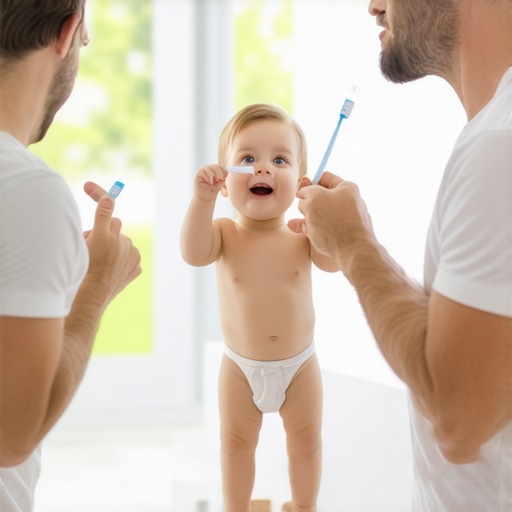
Toddlers are the ultimate copycats. If they see you treat brushing like a chore you’re rushing through, they’ll do the same. I started letting my son watch me brush every single morning. I would explain what I was doing in simple terms, almost like a play-by-play announcer. ‘Now I’m cleaning the back teeth where the crunchy crackers hide!’ This approach is one of the best family dental care hacks because it normalizes the process. It’s also the best way to explain a cavity to a toddler—as a little ‘sugar bug’ that we need to shoo away together.
The Motorboat Method for Perfect Spitting
To master the actual physical act of spitting, we used the motorboat analogy. I told him to hold a tiny bit of water in his mouth and make ‘brrrr’ sounds with his lips over the sink. This naturally forces the liquid out rather than down. We even put a few drops of food coloring in a cup of water so he could see the ‘colored fuel’ leaving the boat. This visual feedback is crucial. It helped him understand that the goal of the sink visit is to get things out of the mouth, which is a vital part of how to stop your kids from getting cavities between their teeth. When kids learn to clear their mouths properly, they are following the top 5 secrets to maintaining perfect oral health as a family by ensuring no sugar or bacteria-laden paste sits on their gums overnight.
Why Your Whitening Paste Might Be Doing More Harm Than Good
We’ve all been conditioned to believe that a brighter smile is just one tube of whitening toothpaste away. However, here is the contrarian truth that most marketing won’t tell you: most whitening pastes don’t actually change the internal color of your teeth. Instead, they rely on high-abrasion particles to scrub away surface stains. If you are too aggressive, you might find that the truth about whitening toothpaste is actually a bit painful—literally. Over time, these abrasives wear down your translucent enamel, exposing the naturally yellowish dentin underneath. This creates a frustrating paradox where the more you scrub to get white teeth, the yellower they appear. According to a study published in the Journal of Evidence-Based Dental Practice, high Relative Dentin Abrasivity (RDA) in dental products can lead to irreversible enamel loss and heightened sensitivity, especially when paired with an improper brushing technique.
The Hidden Trap of Over-Aggressive Home Care
One of the most common ‘oops’ factors I see with parents and adults alike is the ‘more is better’ philosophy regarding chemical rinses. Many people believe that swishing with high-concentration solutions is a shortcut to a sterile mouth. For instance, some turn to pantry staples, but the truth about using hydrogen peroxide as a mouthwash is that it can disrupt the delicate microbiome of your mouth if used incorrectly, leading to tissue irritation or even ‘black hairy tongue.’ It is a classic trap: in your quest for a perfectly clean mouth, you end up killing the beneficial bacteria that actually protect you from decay. If you’ve noticed that why your gums are receding on only one side of your mouth, it might not be your age; it might be your heavy-handed brushing or an overly acidic routine. Maintaining a balance is far more important than achieving total sterilization.
#IMAGE_PLACE_HOLDER_C#
Can You Really Reshape Your Teeth Without Braces?
When most people think about fixing an uneven smile, they immediately picture years of metal brackets. But for those looking for a sophisticated alternative, there is a hidden nuance in cosmetic dentistry called contouring. It’s not just about moving teeth; it’s about how they reflect light. By subtly adjusting the edges of your teeth, a dentist can make a smile look straighter and more symmetrical in a single visit. This is often discussed when looking at contouring veneers and the future of cosmetic dentistry. Similarly, many adults worry about the small gaps that form near the gumline as we age. Learning how to fix the black triangles appearing between your teeth often involves these subtle, additive techniques rather than massive overhauls. Have you ever fallen into this trap of over-scrubbing or using a product that did more harm than good? Let me know in the comments. We are all learning as we go, and sometimes the best ‘secret’ is simply doing less, but doing it with more precision.
Stop Guessing and Start Using Pressure Sensors
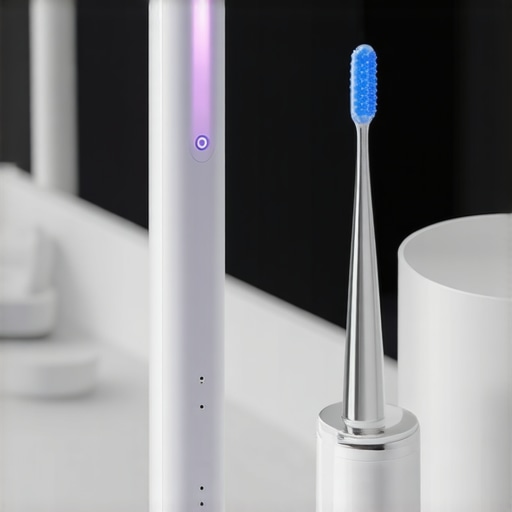
Once I realized that scrubbing harder wasn’t the secret to success, I had to find a way to override my ‘clean freak’ instincts. I personally switched to a high-end electric toothbrush with a built-in pressure sensor. It glows red if I press too hard, which was a humbling wake-up call for someone who thought they were an expert at teeth cleaning techniques and benefits. The technical reason this matters is that modern oscillating-rotating brushes, like those often reviewed in the Cochrane Library, have been shown to reduce plaque by 11% more than manual brushing over a three-month period. For me, it wasn’t just about the plaque; it was about protecting my gums from receding. By using a tool that provides real-time feedback, you aren’t just cleaning; you’re retraining your hand to be gentle, which is one of the most overlooked preventive tips for long-lasting dental health for families.
The Tool That Changed My Morning Routine More Than Coffee
If you aren’t using a stainless steel tongue scraper yet, you are missing out on the easiest win in oral hygiene. I used to use my toothbrush for this, but the difference is night and day. A scraper removes the biofilm that a brush just smears around. It’s a vital part of keeping your bathroom toothbrush clean too, because you aren’t loading your bristles with tongue bacteria every morning. This simple tool is one of those family dental care hacks that takes ten seconds but fundamentally changes your breath and taste perception. I’ve found that my son actually enjoys using his own little plastic version because it’s ‘satisfying’ to see the progress. It’s a small investment that scales your routine from basic to professional level.
How do I maintain my professional dental results over time?
Maintenance is less about the deep scrub and more about the frequency of professional oversight. People often ask me if they can skip a visit if their teeth feel fine. My response is always the same: you wouldn’t wait for your car engine to smoke before changing the oil. Professional cleanings are where the real magic happens, especially for sensitive gums. A hygienist can reach the areas where your electric brush simply can’t. Furthermore, staying on top of your schedule is actually a financial strategy; it’s a prime example of how regular dental cleanings can save you money in the long run by catching issues before they require a crown or an implant. For those who have invested in aesthetics, this is how you protect that investment, ensuring your lifetime of healthy teeth remains a reality.
The Next Frontier of Smart Dental Care
I predict we are moving toward a world where your toothbrush doesn’t just vibrate; it analyzes. We are already seeing the beginning of AI-integrated dental tools that map your mouth in 3D and send a report to your phone. This isn’t just a gimmick; it’s the future of family dentistry. Imagine knowing exactly which tooth your toddler is missing before you even leave the bathroom. This data-driven approach will eliminate the guesswork and make oral care effortless and effective. If you want to stay ahead of the curve, I challenge you to try one thing this week: swap your manual brush for an electric one with a pressure sensor or add a tongue scraper to your sink. You’ll be surprised how much of a difference these professional-grade tools make in your daily confidence.
Three Hard Truths I Discovered About Family Dental Health
After years of trial and error at the bathroom sink, I realized that many of our daily struggles come from outdated expectations. First, I had to accept that spitting is a complex motor skill, not a behavior issue; expecting a two-year-old to spit perfectly is like expecting them to tie their shoes on the first try. Second, I learned that a tiny ‘smear’ of fluoride is a safe and necessary ally, a fact backed by the oral health myths busted by modern pediatric experts. Finally, the biggest ‘lightbulb moment’ was realizing that how regular teeth cleaning can prevent major dental issues is a lesson best taught through your own actions rather than just words.
#IMAGE_PLACEHOLDER_E#
The Essential Toolbox for Stress-Free Brushing
If you want to move your home routine from basic to professional-grade, I personally recommend three specific tools. A high-quality stainless steel tongue scraper is my absolute non-negotiable for adults; it removes biofilm in a way a brush simply cannot. To see why this matters, look at the latest revolutionary teeth cleaning techniques for 2025 that prioritize the oral microbiome. I also trust electric brushes with pressure sensors because they eliminate the ‘over-scrubbing’ habit that causes gum recession. Lastly, for kids, a simple two-minute visual sand timer transforms a chore into a countdown, making the time pass much faster for everyone involved.
The Future of Your Family’s Smile Starts Tonight
Establishing a solid foundation for your children doesn’t happen in a single, perfect dental visit; it happens in the messy, consistent moments at the sink each morning and night. By focusing on connection and making the process a game, you are ensuring your kids grow up with a positive relationship with their teeth rather than a fear of the chair. Your commitment to maintaining oral health today will pay dividends in confidence and health for decades to come. Have you ever struggled with getting your toddler to actually spit instead of swallowing their paste? Let me know your best ‘sink hacks’ in the comments below!