
I was leaving the dentist last Tuesday, feeling pretty good about myself for finally checking off that cavity. But the moment I tried to eat a sandwich later that afternoon, things went south. Every time I chewed, it felt like my top and bottom teeth were having a serious disagreement. One spot was hitting way before the others, sending a weird pressure through my whole jaw. It is a tiny, nagging sensation that can drive you absolutely crazy, isn’t it? If you are sitting there right now clicking your teeth together and wondering why one side feels like it is standing on a stool, you are not alone. Today, we are going to look at exactly why this happens and why you should never try to just ‘tough it out.’
Stop Trying to ‘Break In’ Your New Filling
Most of the time, we do not even think about how our teeth meet. It is just a reflex. But when you get a new composite or amalgam restoration, that delicate balance can get thrown off by a fraction of a millimeter. I made a huge mistake early on by thinking I could just wear the filling down by chewing on that side more. I thought I was being a ‘good patient’ by not complaining. Spoiler alert: that is a terrible idea. It actually led to more inflammation and a week of avoidable throbbing. I’ve learned the hard way that maintaining oral health isn’t just about avoiding sugar; it is about how your mouth functions as a complete system.
Is This Just Something I Have to Get Used To?
You might be tempted to wait a week and see if the feeling disappears. Sometimes, your teeth feel tight for a day or two as the dental ligament settles from the procedure, but if you are physically hitting one tooth before the others, your jaw is going to start compensating in ways that cause pain. According to the American Dental Association, the human mouth is sensitive enough to detect a strand of hair between the teeth—that is about 50 microns. So, if your filling is even slightly ‘high,’ it feels like you are biting on a pebble. If you are noticing that your filling feels cold or sharp when you inhale, or if you can’t bite down without a sharp wince, you aren’t being ‘difficult.’ You are experiencing a high bite, and it is the most common post-filling adjustment needed. Have you ever felt like your new dental work was just a fraction of an inch too tall and it ruined your entire dinner? If the discomfort persists, you should definitely reach out to your dentist to get a quick adjustment. It usually takes less than five minutes of ‘tap-tap-tapping’ on articulating paper to fix it, and it saves you weeks of jaw fatigue.
Identify the High Spot Before the Pain Escalates
Think of a high bite like a tiny pebble stuck in your shoe. You can walk on it for a few minutes, but after a mile, your whole gait changes, your hip starts to ache, and you are ready to throw the shoe into the woods. A high filling works exactly the same way. When one tooth hits before the rest, it acts like a lever, forcing your jaw to shift unnaturally every time you swallow or chew. This is often the reason your teeth throb when you aren’t even eating, as the ligament surrounding the tooth becomes bruised from the constant, uneven pressure. Identifying the spot early is the key to preventing a simple fix from turning into a major inflammatory event.
Try the Tapping Method at Home
Before you call the office, try this: sit up straight, relax your jaw, and slowly bring your teeth together until they just barely touch. Do you feel one specific point of contact before everything else meets? Now, try to grind your teeth gently from side to side. If that new restoration catches or feels like a ‘speed bump,’ the anatomy of the filling needs to be refined. I once spent three days convinced I just had a sensitive tooth after a procedure, only to realize I was subconsciously avoiding biting down on my left side. By the time I got into the chair, my masseter muscle was so tight it felt like a rock. Using simple family dentistry tips like checking your bite alignment can save you from days of unnecessary tension.
How the Dental Adjustment Actually Works
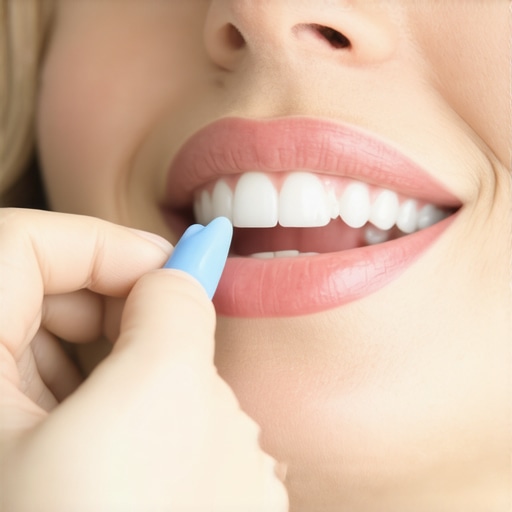
The adjustment process is far less intimidating than the initial filling. There is usually no need for numbing because the dentist is only working on the restorative material, not your actual tooth structure. They will use articulating paper—that thin, ink-coated strip—to map out exactly where the interference is happening. When you bite down and grind, the paper leaves a dark mark on the ‘high’ spots. It is a game of microns. The dentist uses a fine finishing bur to buff away those marks, much like a carpenter sanding down a rough edge on a chair leg until it sits flush on the floor. It is part of the precision required in cosmetic dentistry innovations that ensure your smile is as functional as it is beautiful.
Why Carbon Paper Reveals the Friction
The marks left by the paper aren’t just random; they show the ‘heavy’ contact points. If the mark is a solid, dark circle with a clear center (a ‘target’ mark), it means that specific point is taking the full force of your jaw. This mechanical stress can explain why your jaw is sore even if the tooth itself doesn’t feel sharp. By smoothing these out, the dentist redistributes the force across all your teeth, allowing the dental ligament to finally rest and heal.
Your Jaw Suspension and Why It Matters
Your jaw functions like the suspension on a car. When the alignment is off, the tires—or in this case, your teeth—wear down unevenly, and the shocks—your temporomandibular joints—start to rattle. Ignoring a high bite can eventually lead to larger issues, which is how regular teeth cleaning and routine check-ups catch the early signs of wear that you might miss. If you find that your jaw pops when you try to eat, it might be because your muscles have been overcompensating for that high filling for too long. Getting it smoothed down is the fastest way to reset your oral health and stop the cycle of muscle fatigue.
It is a common misconception that dental work is a ‘set it and forget it’ situation. Most people believe that if a filling feels slightly off, their mouth will simply adapt over time through natural wear. In my experience, this is the quickest way to end up with a cracked tooth or a massive bill for a root canal. Modern composite resins are incredibly durable—often harder than the natural enamel on the tooth it is hitting against. You are essentially bringing a diamond to a knife fight, and your natural tooth will lose every time. Instead of the filling wearing down, you’ll likely end up with ‘abfraction’ lesions—tiny notches at the gumline—because the tooth is flexing under the uneven pressure. This is one of the many oral health myths debunked in recent years; your mouth does not ‘self-correct’ structural imbalances.
Stop Waiting for Your Teeth to Fix Themselves
If you are sitting there hoping that ‘breaking in’ a new filling is like breaking in a new pair of leather boots, you are setting yourself up for failure. While leather softens, teeth do not. A study published in the Journal of Prosthetic Dentistry highlights that even a 30-micron discrepancy in occlusal height can trigger neuromuscular changes in the masseter muscles, leading to chronic tension. This is why maintaining oral health requires a proactive approach. If it feels high on Tuesday, it will still be high on Friday, but by then, your jaw muscles will be exhausted from trying to avoid the obstacle.
Why Does One Tiny High Spot Affect My Entire Neck?
The human jaw is part of a complex kinetic chain. When your bite is off, your brain sends signals to your muscles to shift the jaw into a position that avoids the ‘high’ tooth. This constant, micro-shifting engages the muscles in your neck and even your shoulders. This is the ‘hidden nuance’ most people miss: a poorly adjusted filling in a back molar can be the root cause of that tension headache you’ve had all week. It is a reminder that cosmetic dentistry innovations are not just about making things look pretty; they are about restoring the harmonious mechanics of your skeletal system. 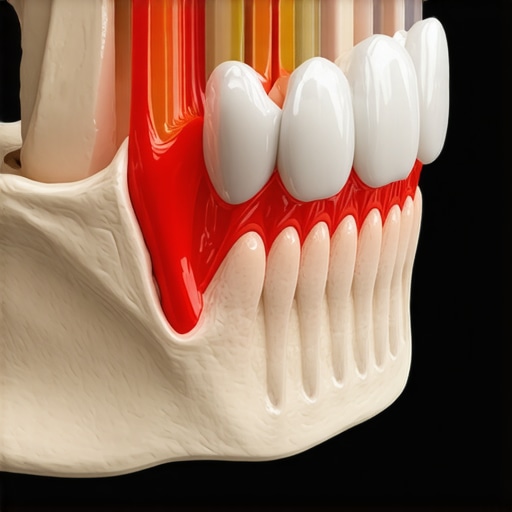
Don’t Fall for the Aesthetics Only Trap
Another common mistake is assuming that ‘cosmetic’ means ‘non-functional.’ I have seen patients insist on contouring and veneers while ignoring a fundamental bite issue. If you put a beautiful porcelain veneer on a tooth that is taking too much force, that veneer will eventually chip or pop off. Similarly, many people try to fix discoloration by scrubbing with abrasive charcoal pastes, but the truth about whitening toothpaste is that it often just wears down your enamel without fixing the underlying bite or structural issues. Have you ever fallen into this trap of thinking you could just ‘wait out’ a dental discomfort? Let me know in the comments below, because your experience might help someone else avoid the same mistake. Precision is everything, and the ‘tap-tap-tap’ of that blue carbon paper is the most important part of your appointment. If you feel even a hair’s width of difference, speak up—your jaw will thank you for it.
Once you get that bite adjusted, the focus shifts from immediate relief to long-term preservation. I used to think a toothbrush was just a toothbrush until I realized that the way we clean our teeth directly impacts how long our fillings and crowns actually stay put. If you are aggressive with your technique, you are not just cleaning; you are sanding down your investment. This is why I have become obsessed with pressure-sensitive technology. Most people brush like they are trying to scrub a stain out of a garage floor, but your gums are more like silk. Using gentle teeth cleaning best practices is the only way to ensure you don’t end up with receding lines that expose the edges of your dental work.
Invest in Tools That Actually Talk Back
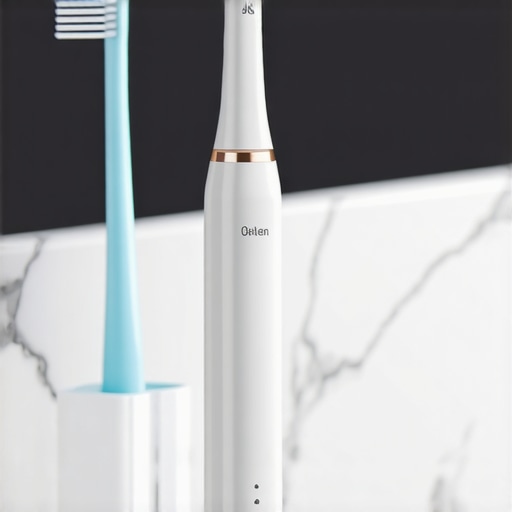
I personally transitioned to an oscillating-rotating toothbrush with a built-in pressure sensor, and it was a total reality check. I thought I had a ‘light touch’ until the handle started flashing red every ten seconds. These tools aren’t just gadgets; they are biofeedback devices. A meta-analysis published in the International Journal of Dental Hygiene confirms that oscillating-rotating power toothbrushes significantly reduce plaque and gingivitis more effectively than manual brushing by automating the precise micro-movements required for biofilm disruption. When you combine this with revolutionary teeth cleaning techniques for 2025, you are moving from basic hygiene into the realm of professional-grade maintenance at home.
How do I maintain my new dental work over time?
Maintaining your smile is about consistency and the right chemistry. Beyond the brush, I recommend using interdental brushes instead of just string floss if you have wider gaps or complex bridge work. They reach the ‘concave’ areas of the tooth that string simply skips over. This level of detail is a cornerstone of preventive tips for long-lasting dental health for families. We are also seeing a massive shift toward hydroxyapatite toothpastes, which actually help remineralize the enamel rather than just scrubbing it. Looking ahead, I predict we will soon see smart-sensors embedded in retainers or night guards that can sync to an app, alerting you if your bite alignment shifts even slightly overnight due to grinding. This kind of tech will make cosmetic dentistry trends much more durable because we will catch the ‘wear and tear’ before it causes a fracture.
The Biofilm Battle and Why Your Hand Strength is Irrelevant
The goal isn’t to muscle the plaque away; it is to chemically and mechanically disrupt the colony. If you are still using a hard-bristle brush, you are essentially using a broom on a window—it is going to leave scratches. This is a major part of maintaining oral health that many people ignore until they see a chip in their veneer. Precision tools allow you to clean the ‘sulcus’—the tiny pocket where the tooth meets the gum—without causing the trauma that leads to inflammation. I want you to try one thing this week: switch your grip on your toothbrush to just your fingertips, like you are holding a pen. It forces you to use less pressure and lets the bristles do the work. If you find yourself still struggling with sensitivity or fit, it might be time to contact us to see if a more specialized cleaning protocol is needed for your specific dental anatomy.
What I Finally Realized About the 50-Micron Rule
Looking back at my own dental history, the biggest ‘lightbulb moment’ was realizing that pain isn’t just a nuisance; it is data. I used to think that a slight discomfort after a procedure was just the ‘price of admission.’ Here is what I have learned after years of trial and error: First, your jaw muscles have a ‘memory.’ If you force them to adapt to a high spot, you are retraining your nervous system to move incorrectly, which can take weeks to unlearn even after the tooth is fixed. Second, nothing in your mouth happens in isolation; a high molar on the right can cause a tension headache on the left. Finally, I discovered that oral health myths debunked recently show that waiting for a resin filling to ‘wear down’ is a fool’s errand—modern materials are just too strong to self-correct.
My Go-To Kit for a Pain-Free Smile
If you want to move beyond basic brushing, there are a few specific tools that have completely changed my routine. I swear by oscillating-rotating toothbrushes with pressure sensors because they remove the guesswork of manual scrubbing. I also recommend switching to hydroxyapatite-based toothpastes, which act like liquid enamel to help seal those microscopic gaps that cause sensitivity. For the space between your teeth, interdental brushes are often far more effective than string floss for those who have had previous restorative work. These tools are part of the secrets to maintaining perfect oral health and ensuring your dental investments last for decades. Using gentle teeth cleaning best practices ensures your gums remain healthy enough to support your new dental work.
#IMAGE_PLACEHOLDER_E#
Your Path to a Perfectly Balanced Bite
You do not have to live with a smile that feels like a ‘work in progress.’ Taking action when something feels off is the ultimate act of self-care. Whether it is a five-minute adjustment at the clinic or a shift in how you hold your toothbrush, these small pivots lead to a lifetime of comfort. Remember that maintaining oral health is a marathon, not a sprint, and you deserve a bite that feels as natural as breathing. If you are tired of the ‘clacking’ sound or that nagging pressure, do not hesitate to reach out to us for a quick check-up. Have you ever ignored a high filling only to regret it later? Let me know your experience in the comments below!