
I sat in my car for twenty minutes, staring at the clinic door like it was the entrance to a haunted house. My palms were sweaty, my heart was thumping against my ribs, and I was genuinely considering just driving away and pretending I’d moved to a different state. It sounds ridiculous for a grown adult, right? But for anyone who has ever felt that cold spike of panic at the mere mention of teeth cleaning, you know exactly what I’m talking about. I spent years in this cycle of avoidance, and my biggest mistake was thinking that the only way out was to be completely “knocked out” with heavy drugs. I eventually realized that relying on heavy sedation wasn’t fixing my fear; it was just masking it. Today, I want to show you exactly how I reclaimed my smile and my sanity by using simple, holistic techniques that don’t involve a chemical hangover.
Why You Don’t Need Heavy Sedation to Stay Calm
The “all-or-nothing” approach to dental fear is a trap. I used to think I either had to suffer through white-knuckled terror or be totally unconscious. But here’s the thing: heavy drugs come with risks, recovery time, and a hefty price tag that often isn’t covered by insurance. When I finally found a way to manage dental anxiety without heavy sedation, it changed everything. I stopped seeing the dentist as an adversary and started seeing it as a routine part of my self-care. According to the Cleveland Clinic, nearly 36% of people experience some form of dental fear, so you are definitely not alone in this boat. We’re going to look at how to retrain your brain to handle the sounds and smells of the office so you can actually walk in there with your head held high.
Can you really stay relaxed while someone is drilling?
I get the skepticism—I really do. If you’ve had a bad experience, the idea of “just breathing through it” sounds like some New Age fluff. But it’s not about ignoring the discomfort; it’s about control. Early in my journey, I made the mistake of not speaking up. I thought I had to be a “good patient” and stay still even when I was panicking. That lack of control is usually where the anxiety breeds. Have you ever found yourself gripping the armrests so hard your knuckles turned white? If you’ve been there, I want to hear about it—let me know if you’ve faced that specific moment of dread. Once I learned how mindfulness helps you stay calm, the chair stopped feeling like a cage. We’ll dive into the sensory tricks I use to stay grounded, but first, let’s talk about why your choice of provider is the foundation of this whole drug-free strategy.
Pick a Provider Who Actually Gets It
Your strategy starts before you even step through the sliding glass doors. You wouldn’t go to a steakhouse if you were a vegan, so don’t go to a high-volume, ‘get-em-in-get-em-out’ practice if you have high anxiety. You need to specifically look for someone who markets themselves toward nervous patients. I once made the mistake of picking a dentist solely based on proximity to my office. The waiting room felt like a cold, sterile bus station, and the dentist seemed annoyed when I asked questions. That experience set me back years. Now, I suggest you research how to find a dentist who specializes in anxious adult patients before making that first call. When you do call, ask the receptionist directly: ‘How do you handle patients with severe dental phobia?’ Their answer—or the lack of a clear one—tells you everything you need to know.
Master the Hand Signal Before the Chair Goes Back
The biggest source of anxiety is the feeling of being trapped. When you’re reclined with a mouth full of tools, you lose your primary way of communicating: your voice. This is where the ‘Stop Signal’ comes in. Before the bib even goes on, tell the dentist, ‘If I raise my left hand, I need you to stop everything immediately.’ It’s like having an emergency brake on a train. I remember a specific cleaning where my gums felt particularly raw. I raised my hand, the hygienist stopped instantly, and I just took three deep breaths. That five-second pause was the difference between me finishing the appointment and me bolting for the exit. Knowing you can hit the ‘pause’ button at any time reduces the fight-or-flight response significantly, especially during a teeth cleaning session where you feel every vibration.
Drown Out the Senses with Your Own Tech
The sounds and smells of a dental office are major triggers. The high-pitched whine of the tool is like nails on a chalkboard for your nervous system. I never go into an appointment without noise-canceling headphones. It’s not just about music; I listen to heavy, rhythmic podcasts or even brown noise. It’s like a digital shield. Also, bring sunglasses. Those overhead lights are bright enough to perform surgery, and they can make you feel exposed and vulnerable. By dimming your world and controlling the audio, you’re creating a sensory bubble. 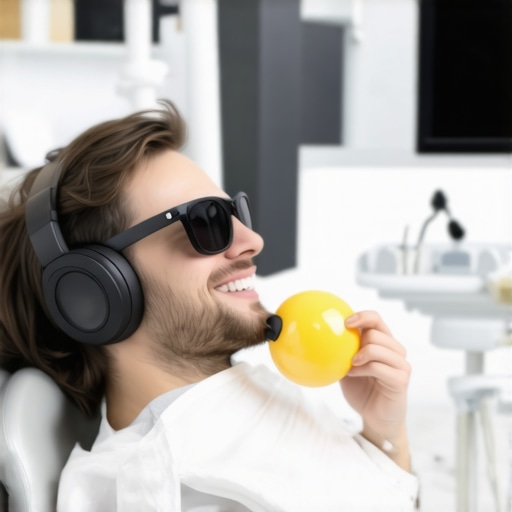 If you’ve struggled with physical discomfort during the process, ask about how to manage tooth sensitivity after a professional scale and polish so you aren’t dreading the recovery.
Pick Your Appointment Time Based on Your Energy
Most people just take whatever slot is open, but that’s a rookie mistake. If you’re a morning person who gets cranky and tired by 3 PM, don’t schedule a 4 PM cleaning. Your ‘resilience tank’ is empty by then. I personally schedule all my visits for 8 AM. I’m fresh, I haven’t had all day to let the anxiety stew, and the office is usually running on time. This is similar to why parents are often told to consider the best time of day to schedule your childs dentist visit—fatigue and fear are best friends. When you’re tired, your brain’s ability to use how mindfulness helps you stay calm drops significantly. You want to be at your sharpest when you’re practicing these new coping skills.While finding the right time for your appointment is a great tactical win, it’s only half the battle. We need to talk about the ‘cleanliness trap’ that almost every patient I know falls into. You might think that if you brush harder, you’re doing a better job, but that’s one of the biggest oral health myths debunked in recent years. In my own journey, I thought I was being a ‘gold star’ patient by scrubbing my teeth until they squeaked. In reality, I was just wearing down my enamel and pushing my gum line back. Have you ever fallen into this trap of thinking ‘more force equals more clean’? Let me know in the comments because it’s a mistake that keeps many of us in the dental chair longer than necessary.
Stop Scrubbing Like You’re Cleaning a Tiled Floor
The hidden nuance here is that dental plaque is soft; you don’t need a jackhammer to remove it. You need consistency and the right technique. I learned the hard way that why your gums recede faster if you use a hard-bristled brush is actually due to mechanical trauma, not just age. If you’re using a ‘firm’ toothbrush, throw it away immediately. Your gums aren’t a floor to be scrubbed; they are delicate tissue that needs a gentle teeth cleaning approach. When you brush too hard, you are literally filing away the protective layer of your teeth, which leads to the very sensitivity you’re trying to avoid. 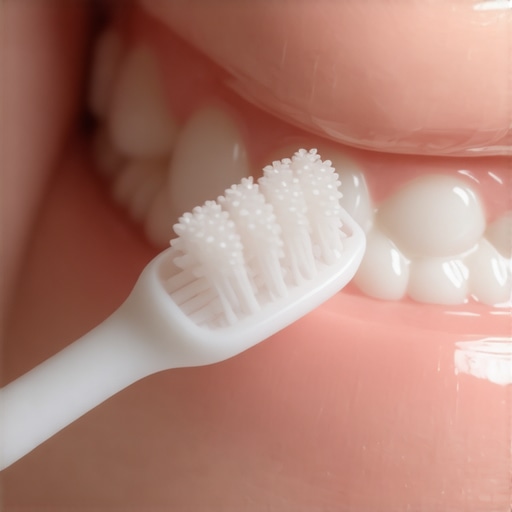
What if your ‘perfect’ routine is actually masking a bigger issue?
Most people assume that if their teeth look white, they are healthy. This is a dangerous oversimplification. Cosmetic appearance doesn’t always equal structural integrity. A study published in the Journal of Periodontology emphasizes that chronic inflammation in the mouth is a significant risk factor for systemic issues like cardiovascular disease. This is why how regular teeth cleaning can prevent major dental issues is about so much more than just a bright smile; it’s about reducing the bacterial load that enters your bloodstream. Even if you’re looking into the impact of cosmetic dentistry in 2025, the foundation must be healthy bone and tissue. Don’t make the ‘oops’ mistake of prioritizing the ‘curb appeal’ of your smile while the foundation is crumbling underneath. Another subtle nuance is the ‘family dentistry’ paradox. Many parents focus so much on their kids’ sugar intake that they forget that oral bacteria can actually be shared. If you’re tasting your baby’s food with the same spoon, you might be passing along decay-causing bacteria. It’s why family dentistry is about treating the whole household as a single ecosystem. Understanding these small, high-level details is what separates people who have ‘okay’ teeth from those who maintain expert-level oral health for a lifetime.
The Gadgets That Actually Earn Their Counter Space
For years, I thought ‘high-tech’ dental tools were just a way for companies to charge more for plastic. I was wrong. When I finally committed to a drug-free, anxiety-managed oral care routine, I realized that the right equipment acts as a buffer against my own human error. I swapped my manual brush for a handle that literally vibrates red when I press too hard. This was a game-changer because, as someone with sensitive teeth, I finally learned how to choose the right toothbrush bristle strength for your gums by letting the technology do the thinking for me. Then there’s the water flosser. If the thought of string floss makes your heart rate spike, this is your solution. I found that the benefits of using a water flosser for patients with gum disease go beyond just cleaning; it’s a much more soothing, pressurized water massage that doesn’t trigger my ‘threat’ response the way traditional flossing does. According to a study in the Journal of Clinical Periodontology, using a water flosser in combination with manual brushing is significantly more effective at removing biofilm than brushing alone, making it a non-negotiable part of my morning.
How do I maintain professional results at home without the stress?
Maintenance isn’t about one big effort; it’s about the ‘micro-habits’ that keep you out of the chair for emergency work. For me, that meant finally understanding how to maintain your porcelain veneers so they last twenty years, which applies to natural teeth just as much as cosmetic work. It’s about using non-abrasive pastes and avoiding the ‘scrubbing’ mentality we talked about earlier. We are moving into an era of revolutionary teeth cleaning techniques for 2025 where guided biofilm therapy and air-polishing are becoming the standards. By staying on top of these at-home tools, I’ve found my professional cleanings are faster, quieter, and—most importantly—completely painless. I no longer feel that deep-seated dread because I know there won’t be any ‘surprises’ when the hygienist starts their exam.
The Future of Your Bathroom Mirror Might Include AI
If you think the current tech is cool, the next five years are going to be wild. We’re already seeing cosmetic dentistry innovations you cant miss this year, like AI-integrated toothbrushes that map your mouth in 3D on your smartphone. They show you exactly where you’re missing spots in real-time. This level of feedback turns oral care into a data-driven health metric rather than a chore. I predict that within the next decade, we will have ‘smart’ mirrors that can detect early signs of demineralization before a cavity even forms. This shift from reactive to proactive care is the ultimate cure for dental anxiety. When you have the data, you have the power. I want you to try one specific advanced tip tonight: if you eat something acidic like an orange or a salad with vinaigrette, set a timer on your phone for 30 minutes before you brush. This simple pause allows your saliva to naturally remineralize your enamel, protecting you from the ‘mechanical trauma’ that causes sensitivity. It’s a small, technical tweak that pays huge dividends for your long-term comfort.
The Hard Truths I Learned While White-Knuckling the Armrest
Reflecting on my journey from a panicked patient to a calm regular, I’ve realized that knowledge truly is the antidote to fear. One of the most significant realizations was that my fear was often fueled by misinformation. I spent years believing oral health myths debunked only recently, such as the idea that if it doesn’t hurt, it’s not working. In reality, the best care is the kind you barely feel. I also learned that silence is my biggest enemy; if I don’t tell the hygienist I’m nervous, they can’t adjust their technique to be more gentle. Finally, I discovered that my ‘threat response’ was largely tied to a lack of agency. By reclaiming the right to stop the procedure at any second, I took the power back from the tools and put it back in my own hands.
The Gear That Turned My Bathroom Into a Personal Spa
You don’t need a medical degree to maintain expert-level oral health, but you do need the right partners in your cabinet. #IMAGE_PLACEHOLDER_E# My daily toolkit now includes a pressure-sensitive electric toothbrush that keeps me from over-scrubbing. I also swear by Water Flossers; the benefits of using a water flosser for patients with gum disease are immense because it’s much less invasive than string. For those who want to stay ahead of the curve, I highly recommend looking into revolutionary teeth cleaning techniques for 2025 like Guided Biofilm Therapy, which is essentially a spa treatment for your mouth. Lastly, never underestimate a high-quality pair of noise-canceling headphones to create a sanctuary of sound during your visit.
Take Back Control of Your Smile Today
The transition from dental phobic to dental confident doesn’t happen overnight, but it is one of the most rewarding forms of self-care you can invest in. By choosing a provider focused on family dentistry that prioritizes comfort, you are setting a new standard for your well-being. Don’t let the fear of a simple teeth cleaning keep you from the health you deserve. You have the tools, the tech, and now the strategy to walk into that office on your own terms. What is the one sound or smell at the dentist that triggers your anxiety the most, and have you found a way to tune it out? Let me know in the comments below!