
I’ll never forget the Tuesday afternoon I went in for a routine cleaning, fully prepared to discuss my latest teeth cleaning secrets, when my dentist did something that caught me completely off guard. He reached for a small square of sterile gauze, asked me to stick out my tongue, and gently held it while looking at the sides and underneath. I felt exposed, a little silly, and deeply confused. I thought we were there to talk about my molars and maybe some cosmetic dentistry innovations, not my taste buds. But that moment was a massive wake-up call for me. It turned out my dentist wasn’t just being thorough; he was performing a life-saving screening that most of us completely overlook. Today, I want to pull back the curtain on why that tongue-tugging routine is arguably the most important thirty seconds of your entire appointment.
Why Your Dentist Cares About Your Tongue Texture
I used to be the person who only looked at my teeth in the mirror, making sure they looked white and straight. I even obsessed over how to tell the difference between a canker sore and a cold sore if something felt off. But I completely ignored the actual surface of my tongue. That was a mistake. Early on in my journey toward better health, I had a small, painless white patch that I just assumed was from a rough piece of toast. I let it sit for months. When I finally mentioned it, I learned that while most spots are harmless, others can be early indicators of oral cancer or systemic issues like vitamin deficiencies. According to the Oral Cancer Foundation, nearly 54,000 Americans are diagnosed with oral cancer every year, and early detection is the absolute key to survival. Your tongue is basically a health dashboard. If you’ve ever felt that weird sensation, you might even be wondering why your tongue feels scalded even when you haven’t touched hot coffee. These are the clues your dentist is trained to decode during every visit.
Is a tongue check really worth the extra time in the chair?
You might think it’s just another way to bill for a comprehensive exam, but the reality is much more vital for your long-term wellness. Many serious conditions, from autoimmune disorders to serious infections, show their first symptoms on the soft tissues of the mouth long before they ever affect your teeth. By the end of this guide, you’ll know exactly what those spots might mean and why you should never skip this part of your family dentistry tips routine. Have you ever noticed a persistent spot on your tongue and just hoped it would go away on its own?
How to Perform a Five-Second Home Screening
You don’t need a medical degree to keep an eye on your oral health between visits. I started a habit of checking my tongue every Sunday night right after my flossing routine. It’s simple: grab a clean piece of gauze or even a sturdy paper towel. Stick your tongue out as far as it goes, wrap the gauze around the tip, and gently pull it forward and to each side. You’re looking for things that don’t belong—think of it like checking your car’s dashboard for warning lights. This isn’t just about teeth cleaning secrets; it’s about early detection. When I first did this, I was so focused on the color that I missed the texture entirely. I found a small, firm bump on the side of my tongue that I initially mistook for a canker sore. Because it didn’t hurt, I almost ignored it, but my dentist later told me that painless lesions are often the ones that need the most attention.
Watch Out for These Three Red Flags
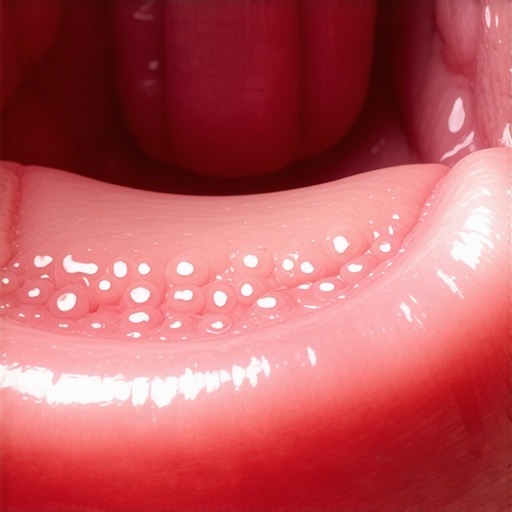
Not every spot is a crisis, but three specific things should send you straight to the phone to call your provider. First, look for persistent white or red patches that don’t scrape off. These can be precursors to something more serious, far beyond what simple family dentistry tips can fix at home. Second, feel for any hard lumps or thickened areas. Your tongue should be soft and flexible; anything that feels like a “kernel” under the surface is a sign to get a professional opinion. Third, check for sores that refuse to heal after two weeks. We often debunk oral health myths that suggest all mouth sores are just from stress. In reality, a non-healing ulcer is a major red flag. I remember feeling a bit paranoid the first time I noticed a “geographic” pattern on my tongue—those map-like red islands—but my dentist reassured me it was harmless. Knowing the difference between weird but okay and urgent saves you a lot of sleep.
Why Professional Tools Beat the Mirror Every Time
While your home checks are great for catching obvious changes, dentists have access to technology that makes our bathroom mirrors look like relics. For instance, many modern offices now use digital scanners and specialized fluorescent lights to catch cellular changes before they even become visible to the naked eye. It’s like the difference between looking at a paper map and using a high-resolution GPS. This level of care is central to family dentistry building a foundation of healthy smiles for all ages. During my last check-up, my dentist used a light that made healthy tissue glow green and suspicious areas look dark. Seeing that contrast in real-time was incredibly grounding. It turned a routine visit into a comprehensive health scan, proving that how regular teeth cleaning can prevent major dental issues is only half the story. The real value is in the silence of the screening.
I used to think that if my teeth were white and my breath was minty, I was winning the oral health game. I fell for the ‘scorched earth’ philosophy—the idea that the more a mouthwash burns, the harder it’s working. But here is the contrarian truth that changed my perspective: a sterile mouth is actually a vulnerable mouth. When you use harsh, alcohol-based products to kill 99% of bacteria, you aren’t just getting rid of the bad guys; you’re wiping out the beneficial microbes that protect your gums and tongue. This is often why your mouth feels like it is burning after using alcohol-based mouthwash, and it can actually lead to chronic dryness and an increased risk of infection. We’ve been conditioned to believe in total elimination, but maintaining oral health is more about balance than sterilization.
Stop Chasing the Hollywood White at the Expense of Your Enamel
One of the biggest ‘oops’ factors I see today is the obsession with aggressive whitening. It is a common trap to assume that if a little whitening is good, more must be better. However, over-treating your teeth can lead to ‘bleachorexia,’ where the enamel becomes porous and translucent. If you’ve noticed why your front teeth feel thin or see-through at the edges, you might be overdoing the chemical treatments. Instead of reaching for more strips, it’s better to look at the root cause. For instance, the reason your teeth look yellow even though you brush twice daily might actually be thinning enamel that allows the yellowish dentin underneath to show through. In this case, more whitening only makes the problem worse. This is where cosmetic dentistry innovations like bonding or high-quality veneers are far superior because they protect the tooth structure rather than stripping it away.
Why Does Your Saliva’s Chemical Composition Matter More Than Your Toothbrush?
Advanced oral care isn’t just about the mechanical action of brushing; it’s about the biochemistry of your spit. Most people view saliva as just ‘water in the mouth,’ but it is actually your primary defense mechanism. According to research from the Harvard Health Publishing, saliva contains essential minerals and antimicrobial enzymes that neutralize the acids produced by bacteria. If your saliva is too acidic or if you suffer from chronic dry mouth, no amount of teeth cleaning secrets will prevent decay. This is also why many oral health myths about ‘natural’ fixes like oil pulling fall short. While the truth about oil pulling for whiter teeth and healthy gums is that it can reduce some surface bacteria, it cannot replace the remineralization process that high-quality fluoride or professional treatments provide. Have you ever fallen into the trap of thinking a ‘natural’ remedy was a total replacement for professional care? Let me know in the comments.
The Nuance of Painless Symptoms
The most dangerous mistake you can make is equating ‘no pain’ with ‘no problem.’ Many systemic issues, including early-stage gum disease and oral lesions, are completely painless until they reach a crisis point. This is why how regular teeth cleaning can prevent major dental issues isn’t just a marketing slogan; it’s a medical necessity. A professional can spot the subtle thickening of tissue or the slight change in vascularity that you would never see in a bathroom mirror. When we talk about family dentistry tips, the most important one is consistency. Detecting a problem during a routine screening is the difference between a simple five-minute fix and a complex, expensive surgical intervention later. Your tongue and gums are tell-tales for your heart, your blood sugar, and your immune system—treat them with the same analytical eye your dentist does.
I spent years thinking a manual brush and some basic string floss were ‘good enough’ until I saw the high-resolution images from a professional scanner during my last visit. It was a humbling moment. If you want to stop just ‘getting by’ and start actually improving your baseline, you need to upgrade the hardware in your bathroom. I personally switched to a sonic toothbrush with a built-in pressure sensor because I realized I was scrubbing my gums away. When the handle glows red, it’s a physical reminder that more force doesn’t mean more clean—it just means more recession. Following gentle teeth cleaning best practices for sensitive gums isn’t about being soft; it’s about being precise.
Why Your Electric Brush Needs a Pressure Sensor
The mechanical action of a high-end brush moves at thousands of strokes per minute, which is impossible to replicate by hand. However, the real game-changer for me was the integration of a water flosser. If you have any history of gingivitis, the benefits of using a water flosser for patients with gum disease are undeniable. It reaches into the periodontal pockets that string simply skips. According to the American Academy of Periodontology, professional-grade water flossing can be up to 50% more effective than traditional floss for reducing gingival inflammation. I use mine on the ‘pulse’ setting every single night, and the difference in my gum color—from a stressed red to a healthy coral pink—was visible in just three weeks.
How do I maintain professional results at home?
Longevity is the name of the game. Whether you have natural teeth or you are learning how to maintain your porcelain veneers so they last twenty years, the secret isn’t a secret at all: it’s the removal of biofilm before it calcifies into tartar. Once that plaque hardens, no at-home tool can touch it. This is why I treat my six-month appointments as non-negotiable. I view them as a ‘reset’ for my chemistry. It’s also a massive financial win; understanding how regular dental cleanings can save you money in the long run helps you realize that a $150 cleaning is much cheaper than a $1,500 crown later.
Expect Your Brush to Talk Back by 2026
Looking ahead, I predict we are moving toward a ‘smart’ oral health era where our mirrors will scan our mouths while we brush. We are already seeing cosmetic dentistry innovations that use AI to predict how your smile will age. In the next few years, your toothbrush will likely sync with your dentist’s office, alerting them to a potential cavity before you ever feel a twinge. This proactive shift is the core of preventive tips for long-lasting dental health for families. Instead of reacting to pain, we will be managing our health through data. My challenge for you this week is to ditch the manual brush and try a pressure-sensitive electric model for seven days—your gums will thank you almost immediately.
The Most Surprising Lessons from My Journey to Better Gums
I used to think that a little bit of blood in the sink was just a sign that I was getting a “deep clean.” It took a serious conversation with my hygienist to realize that bleeding is actually a cry for help, not a badge of honor. I learned that switching to soft bristles wasn’t a sign of weakness but a strategic move to save my enamel. If you are struggling with redness, following gentle teeth cleaning best practices for sensitive gums can change your results in days. Another lightbulb moment was realizing that my tongue holds onto bacteria just as much as my teeth do. Now, I never finish my routine without a quick scrape and a visual check of the sides and underside of my tongue.
What I Use to Keep My Mouth Healthy Between Visits
If you want to stop the cycle of “surprise” cavities and gum issues, you need the right gear. I swear by my water flosser; it’s the only way I’ve found to truly clear out the biofilm that causes inflammation in those hard-to-reach pockets. I also spent time learning how to choose the right toothbrush bristle strength for your gums, and the answer is almost always “softer than you think.” These tools aren’t just gadgets; they are my daily defense system that keeps my dental bills low and my confidence high.
#IMAGE_PLACEHOLDER_E#
Take Control of Your Health One Screening at a Time
Your oral health is the gateway to your entire body’s wellbeing. By paying attention to the small details—like the texture of your tongue or the color of your gums—you are practicing the best kind of medicine: prevention. Don’t wait for a toothache to start caring. Start today by implementing these preventive tips for long-lasting dental health for families. Remember, maintaining oral health is a marathon, not a sprint, and every small habit adds up over a lifetime of healthy smiles. Have you ever noticed a strange spot on your tongue and weren’t sure whether to mention it to your dentist? Let me know in the comments below!