
I was sitting in that big, leather chair, trying to look brave, but my stomach was doing backflips. The dental assistant held up that little plastic square. You know the one. It looks harmless, but the second it touched the back of my mouth, my body went into full-blown ‘reject’ mode. I’m talking watering eyes, an embarrassing ‘urk’ sound, and the sudden urge to bolt for the door. It’s a classic battle: your brain knows it’s just a picture, but your throat thinks it’s fighting for its life. If you’ve ever felt that panic, I promise you aren’t alone, and more importantly, you don’t have to just ‘suck it up.’ Today, I’m sharing exactly how I went from a serial gagger to someone who can sit through a full set of bitewings without flinching.
Stop Feeling Like You’re Choking Every Time the Sensor Goes In
I used to think I could just ‘man up’ and hold my breath until the beep. That was my first big mistake. It turns out, holding your breath actually makes your throat muscles tighter and more sensitive. I’ve spent decades maintaining oral health and I’ve learned the hard way that fighting your biology head-on usually ends in a mess. When we need those images to ensure our family dentistry goals are on track, the X-ray is non-negotiable. It’s how we find the tiny issues before they become expensive nightmares. Have you ever had to stop an X-ray because you felt like you were going to lose your lunch?
Can you really trick your brain into forgetting its own reflexes?
It sounds like science fiction, doesn’t it? But the gag reflex is essentially a protective alarm system. According to the Journal of the American Dental Association, approximately 8.2% of patients experience a severe gag reflex during dental procedures, which can make routine care feel impossible. To get past it, you have to distract the alarm. I used to search for how to manage dental anxiety because I thought it was all in my head. While anxiety plays a role, the physical trigger is real. If your dentist uses digital scanners, you might avoid the goop, but those bitewings are still a hurdle. There are physical ‘hacks’—like salt on the tongue or lifting your left leg—that actually change how your nerves process that touch. We’re going to dive into those specifically so your next teeth cleaning and checkup feel like a walk in the park.
Rewire Your Nerves Before the Sensor Touches Your Tongue
The gag reflex is like a hair-trigger alarm system that doesn’t know the difference between a piece of plastic and an actual choking hazard. To shut it down, you need to create a sensory ‘short circuit’ that tells your brain to focus elsewhere. I remember one Tuesday morning when I was particularly jittery about a full set of images. I asked the assistant for a tiny packet of salt. I dabbed a bit on the back of my tongue, right where the ‘danger zone’ starts. It felt weirdly grainy and sharp, but when she slid that sensor in, my brain was so busy processing the salt that it forgot to panic. Using this technique for how to manage your gag reflex during dental x-rays isn’t just a folk remedy; it’s a way to overload the glossopharyngeal nerve so it can’t send the ‘eject’ signal.

Why Your Left Leg is a Secret Distraction Tool
This sounds like a playground prank, but it’s a legitimate technique used in offices that prioritize family dentistry tips that make oral care effortless and effective. When the technician says ‘open wide,’ slowly lift your left leg a few inches off the dental chair. Hold it there. This requires conscious muscular effort and forces your brain to shift its focus from your throat to your core and hip flexors. It’s like trying to pat your head and rub your stomach at the same time—your nervous system can only handle so much complex input before it drops the less ‘urgent’ signal. By the time your quadriceps start to feel the burn, the X-ray is usually already over.
Breathe Like You Are in a Yoga Class
The moment we feel something touching the soft palate, our instinct is to gasp or hold our breath. That is the quickest way to trigger a throat spasm. Instead, think of your nose as a straw. Focus on deep, rhythmic ‘belly breaths’ exclusively through your nose. This keeps your soft palate in a stable, lowered position and prevents the fluttering that often leads to a gag. If you find this difficult, especially during a gentle teeth cleaning, try humming a low note. You physically cannot hum and gag at the same time because of how your vocal cords and throat muscles are forced to interact. It’s a biological impossibility that you can use to your advantage.
Use Sensory Overload as a Shield
Beyond salt, there are other ways to dampen the sensitivity of those triggers. Some patients find that rinsing with ice-cold water just before the sensor goes in numbs the nerves just enough to get through the bitewings. While we often talk about maintaining oral health through daily habits, these situational ‘hacks’ are what make those habits possible for people with high sensitivity. If physical tricks don’t quite cut it, don’t be afraid to ask for a topical numbing spray. It acts like a temporary ‘off switch’ for the back of your mouth, allowing the dental team to get the data they need to keep your smile healthy.
Take Control with Simple Hand Signals
Never feel like you are being a ‘difficult’ patient by asking for a pause. A high-quality practice knows that a comfortable patient provides much clearer images. When I finally admitted to my dentist that I was struggling, we developed a system of hand signals. One finger raised meant ‘I need a second,’ and a flat palm meant ‘Stop right now.’ Just knowing I had the power to end the sensation reduced my dental anxiety by half instantly. Embracing revolutionary teeth cleaning techniques often involves this level of communication to ensure you aren’t just enduring the chair, but actually cooperating with the process.
Stop Scrubbing Your Gums into Oblivion
Most people I talk to believe that a ‘deep clean’ at home requires a lot of elbow grease. They treat their teeth like a dirty garage floor that needs a wire brush. This is actually the most common mistake in maintaining oral health. If you use a hard-bristled brush or apply too much pressure, you aren’t just removing plaque; you are physically wearing away your gum line. I’ve seen patients who are obsessed with hygiene actually cause more damage than those who are a bit more relaxed. This leads to a painful reality where your gums recede faster if you use a hard-bristled brush, exposing the sensitive roots of your teeth. The ‘oops’ factor here is that once that gum tissue is gone, it doesn’t just grow back like a fingernail. You’re looking at potentially needing gum grafts later in life just because you were too aggressive with a five-dollar toothbrush.
Why “White” Isn’t Always the Same as “Healthy”
In the world of cosmetic dentistry trends that transform your smile this year, everyone is chasing the brightest white possible. But here is the nuance: blindingly white teeth can actually be a sign of weakened enamel. If you over-whiten, you can strip the mineral layers of your teeth, making them porous and actually more prone to staining in the long run. I often tell my friends that if they have naturally thin enamel, they need to be incredibly careful. Learning how to whiten your teeth if you have naturally thin enamel is about choosing chemistry over abrasion. According to a study published in the Journal of Clinical Periodontology, mechanical wear from over-brushing combined with acidic whitening agents can lead to irreversible tooth surface loss. Have you ever fallen into this trap of thinking ‘whiter equals cleaner’? Let me know in the comments.
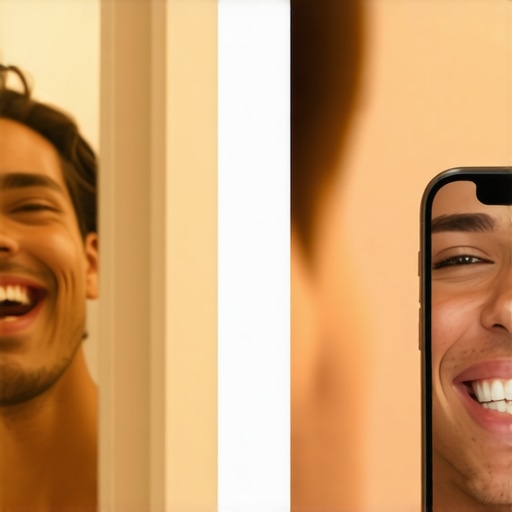
Does your smile look crooked in selfies for a biological reason?
This is an advanced question I get from patients who are considering the impact of cosmetic dentistry in 2025. They notice that in the mirror they look great, but in a photo, one side of their smile looks higher or ‘off.’ Usually, this isn’t a dental failure; it’s a perspective shift. There is a specific reason why your smile appears crooked in selfies but not the mirror, involving how camera lenses distort 3D objects at close range. Understanding this nuance prevents you from rushing into unnecessary procedures like contouring or veneers when your bite might actually be perfectly aligned. Expertise in family dentistry means knowing when to treat a patient and when to explain that the ‘problem’ is just a trick of the light. We should always prioritize structural health over a digital aesthetic. If you’re ready to see the difference between a ‘camera-ready’ smile and a truly healthy one, it might be time to check out our ultimate guide to teeth cleaning techniques and benefits to get your foundation solid first.
I’ve spent a small fortune on my teeth over the years, and if there is one thing I’ve learned, it’s that the ‘set it and forget it’ mentality is the fastest way to lose your investment. Whether you’ve had contouring or veneers or you’re just trying to keep your natural enamel intact, the tools you use at 11:00 PM in your bathroom matter more than the fancy chair in the office. I personally swear by my water flosser. Yes, it splashes the mirror, and yes, it feels like a tiny power washer for your mouth, but the benefits of using a water flosser are undeniable when you see how much debris a standard string misses. It’s the difference between surface cleaning and actually flushing out the bacteria that hide under the gumline. This is how we move from basic hygiene to true maintaining oral health for the long haul.
How can I keep my dental work from failing over time?
Maintenance isn’t just about showing up for your teeth cleaning every six months. It’s about understanding the specific physics of your dental work. For instance, if you want to maintain your porcelain veneers so they last twenty years, you have to treat them like fine crystal, not a bottle opener. Avoid biting directly into hard apples or crusty bread with your front teeth. This shift in habit is what scales your results from ‘temporary fix’ to ‘lifetime smile.’ It’s the same logic for family dentistry; we teach kids the habits now so they aren’t paying for repairs later.
Stop Guessing with 3D Bone Maps
One piece of tech that changed how I view my own health is the CBCT scan. In the past, dentists were working with 2D shadows. Now, we use 3D imaging to see the density of the bone and the exact path of your nerves. As Dr. Scott Ganz, a world-renowned expert in computer-aided implantology, often points out, ‘You cannot treat what you cannot see.’ This is exactly why our practice won’t place a dental implant without a CBCT scan. It eliminates the ‘oops’ factor that comes with traditional surgery and ensures that your impact of cosmetic dentistry in 2025 is built on a solid foundation.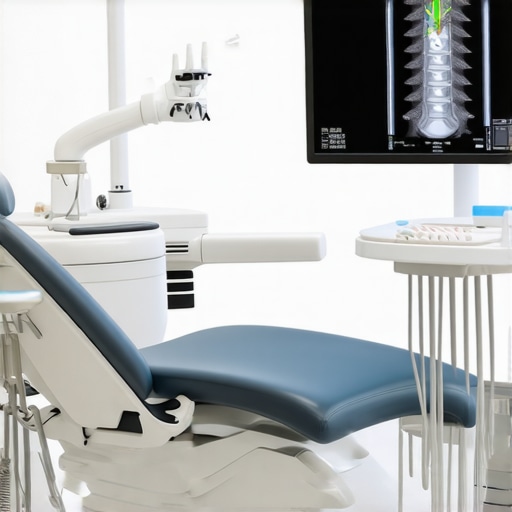
Your Phone Will Soon Diagnose Your Cavities
Looking ahead, the biggest trend isn’t a new drill; it’s Artificial Intelligence. We are moving toward a world where your electric toothbrush or a quick smartphone photo can flag early-stage demineralization before it even requires a filling. This kind of tech is at the heart of cosmetic dentistry innovations you can’t miss this year. It shifts the focus from ‘drilling and filling’ to ‘predicting and preventing.’ If you want to get ahead of the curve right now, here is my most advanced tip: start the ‘Thirty-Minute Rule.’ Waiting thirty minutes to brush after eating fruit or anything acidic allows your saliva to remineralize your enamel naturally. Try it for one week—your tooth sensitivity will drop significantly, and you’ll be practicing the same proactive care that the pros do to ensure a gentle teeth cleaning experience next time you’re in the chair.
Lessons from the Dental Chair That I Wish I Knew Sooner
Looking back at my years of dental struggles, the biggest shift wasn’t just finding a better toothbrush; it was changing my mindset about the process. First, I realized that silence is the enemy of a good experience. If you don’t tell your hygienist about your gag reflex, they can’t help you with the ‘salt trick’ or specialized positioning. Second, I learned that how regular dental cleanings can save you money in the long run isn’t just a marketing slogan—it’s a mathematical reality because preventing one crown pays for a decade of cleanings. Finally, I discovered that my ‘aggressive’ brushing was actually a form of self-sabotage. You can’t scrub your way to health; you have to nourish and protect what you have.
A Few Simple Tools to Change Your Routine Forever
If you are looking to upgrade your home care, I cannot recommend a high-quality water flosser enough. While string flossing is the gold standard for some, the benefits of using a water flosser for patients with gum disease are a game changer for reaching deep pockets. I also suggest keeping a small container of sea salt in your travel kit; it’s the most reliable, low-tech way to handle a sensitive gag reflex during X-rays on the go. For those with children, check out these family dental care hacks to keep your kids smiling daily to ensure they never develop the same fears we had. Lastly, bookmark a guide on oral health myths busted what every family should know to stay informed about the latest science.
The Future of Your Smile Starts Tonight
You don’t have to be a ‘perfect’ patient to have a healthy mouth; you just have to be a consistent one. By applying these small hacks—from lifting your leg during an X-ray to waiting thirty minutes after coffee to brush—you are taking the power back from anxiety. There is no better time than now to commit to maintaining oral health so that your future self thanks you for the lack of pain and the abundance of confidence. If you’re ready to schedule your next stress-free visit, feel free to contact us and let our team know about your specific needs. What’s the one ‘trick’ that finally helped you get through a dental visit without panicking? Let me know below.