
I stood there, squinting at the bathroom mirror, feeling that familiar twinge of guilt as I pulled a dusty container of floss from the back of the medicine cabinet. It had been weeks. Maybe a month. I took a deep breath, slid the thread between my back molars, and—well, the sink looked like a scene from a low-budget vampire movie within seconds. My first instinct? Total panic. I thought I was losing my teeth or that I’d somehow developed a rare, incurable condition overnight. But the truth is much simpler, though a little gross. If you’ve ever looked down and seen pink in the porcelain after a long break from the string, you’re not alone, and you’re certainly not a lost cause. Today, we’re going to dive into why those tiny capillaries are so angry with you and, more importantly, how you can get back to a healthy smile without the daily drama or the fear of a massive dental bill. I promise, it’s not as scary as it looks, and we can fix this together. When we ignore the gaps between our teeth, we aren’t just letting a little food sit there; we’re essentially inviting an unwanted guest to stay indefinitely.
Your Gums Are Throwing a Temper Tantrum for a Reason
When we skip flossing, we aren’t just leaving bits of last night’s steak behind. We’re letting a microscopic city of bacteria, known as biofilm, set up shop right against the gum line. I made the massive mistake for years of thinking that if my gums bled, I should just leave them alone. I figured, ‘Hey, they’re clearly injured, I’ll let them rest for a few days.’ That was probably the worst thing I could have done because it just allowed the bacteria to multiply even faster. According to the American Academy of Periodontology, bleeding is the primary sign of inflammation, often indicating the early stages of gingivitis. It’s essentially your body’s way of sending out a flare that it’s under attack. If you want to dive deeper into the mechanics of why this happens, checking out the ultimate guide to teeth cleaning techniques and benefits can really help clear up the science behind the scenes. Your gums aren’t actually being ‘cut’ by the floss in most cases; they are so swollen with extra blood—sent there by your immune system to fight the bacteria—that even a gentle touch causes them to leak. It’s like a sponge that’s already over-saturated and just waiting for a reason to spill over.
Is this just a trick to make me buy more floss?
I get it. You’re skeptical. You think maybe the ‘bleeding’ is just the floss being a sharp, unnecessary weapon pushed by Big Dental. But if your tissue is healthy and firm, you could practically saw at it with reasonable force and it wouldn’t bleed like that. The blood is there because the skin is thin and raw from a constant, invisible battle. If the traditional string feels like too much of a hassle or feels too aggressive for your current state, you might find the benefits of using a water flosser to be a total game-changer for your routine. It’s a lot gentler on those sensitive spots while you’re trying to heal the inflammation and can make the process feel less like a chore. Have you ever had that moment of ‘sink-shock’ where you almost threw the floss in the trash for good out of pure frustration? I’d love to hear I’m not the only one who’s been there. It’s all about finding gentle teeth cleaning best practices that actually stick for your lifestyle, rather than aiming for perfection and failing every time. We aren’t looking for a quick fix today, but a sustainable path back to health.
Stop Sawing and Start Hugging Your Teeth
Most of us treat flossing like we’re trying to cut down a tree. We pull the string back and forth in a sawing motion, which does nothing but irritate the gum tissue and potentially cause damage. Instead, you need to master the ‘C-shape.’ Think of the floss as a soft towel you’re using to dry the back of a curved chair. Once the floss is between your teeth, wrap it around the side of one tooth in a C-shape and slide it gently up and down. This gets under the gum line where the bacteria hide. I remember the Tuesday night I decided to get ‘serious’ about this. I grabbed the minty string, wrapped it around my fingers until they turned purple, and went to town. I wasn’t cleaning; I was attacking. By the time I hit my bottom front teeth, the floss snapped, and a tiny piece got wedged so deep I had to use tweezers to get it out. It was a mess, but it taught me that finesse beats force every single time. Learning how to choose the right toothbrush bristle strength for your gums is a great companion to this technique, as both tools must work in tandem to reduce inflammation without causing trauma.
The Blood is a Signal Not a Stop Sign
I know it feels counterintuitive to keep going when you see red. My first instinct was always to stop, thinking I was making it worse, but that just lets the bacteria win. The bleeding is essentially ‘old’ blood trapped in swollen tissue that is desperate for a cleanup. By flossing, you’re actually helping that stagnant blood move out and allowing fresh, oxygenated blood to come in and heal the area. If the throbbing gets intense, you might be overdoing the pressure; it’s worth checking out why your gums throb after brushing too vigorously to see if you’re being a bit too aggressive. Usually, if you stay consistent with the gentle C-shape, that bleeding will vanish within 7 to 10 days of daily attention.
Pick the Tools That Won’t Make You Quit
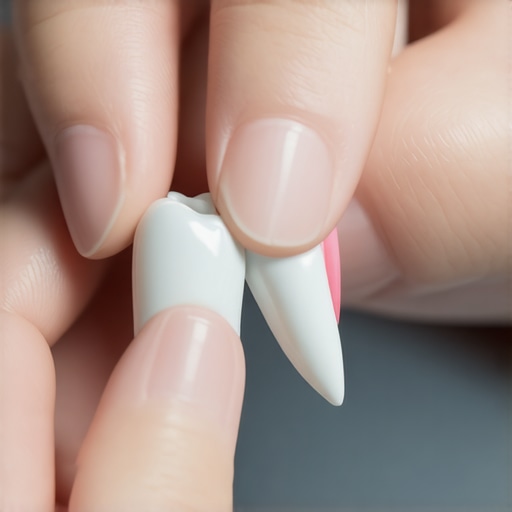
If traditional string makes you want to pull your hair out, stop using it. There is no law saying you must use the same waxed string your grandparents used. I personally switched to high-quality dental picks for a few months just to get the habit to stick because I could do it while watching a movie. For those with significant sensitivity or early signs of gum disease, the benefits of using a water flosser are massive. It uses a stream of pressurized water to flush out debris, which is much less abrasive on raw tissue than physical string. The goal is to find teeth cleaning secrets that fit into your actual life, not the life you wish you had. Consistency is the only metric that matters for oral health.
Why Nighttime is the Non-Negotiable Slot
Your mouth becomes a literal petri dish while you sleep. When you’re awake, your saliva acts as a natural buffer, washing away acids and bacteria. But at night, saliva production drops significantly. If you leave food and biofilm between your teeth before bed, the bacteria have eight hours of uninterrupted party time to wreak havoc on your gums. This is why flossing before bed is significantly more effective than doing it in the morning. Getting into this routine is a primary way regular teeth cleaning can prevent major dental issues down the road. I started leaving my floss on top of my toothpaste tube so I couldn’t ignore it. It wasn’t about being perfect; it was about making the healthy choice the easiest choice in the room.
We often think that more effort equals better results, especially when it comes to our health. But in the world of dentistry, being a ‘hard worker’ can actually lead to a ‘broken mouth.’ I’ve seen so many people come in with a look of utter defeat because they brush four times a day, yet their gums are still retreating. The nuance that most beginners miss is that oral health isn’t a test of strength; it’s a delicate balance of chemistry and timing. If you’ve been scrubbing with a heavy hand, you might find that your gums recede faster if you use a hard-bristled brush. It’s a classic case of doing the ‘right’ thing in the wrong way.
Stop Treating Your Enamel Like a Scoured Kitchen Sink
The most common contrarian truth I tell my patients is that aggressive brushing is actually the enemy of a bright smile. We’ve been conditioned to think that friction is the only way to clean, but enamel is a finite resource. Actually, according to a study published in the Journal of the American Dental Association (JADA), excessive brushing force doesn’t remove more plaque; it simply increases the risk of gingival recession and cervical wear. You aren’t cleaning a grease-stained pan; you are maintaining a living tissue. If you feel like your efforts aren’t paying off, it’s time to look at oral health myths debunked to see where else your routine might be working against you. Have you ever fallen into this trap? Let me know in the comments.
The Post-Lunch Brushing Trap That Actually Softens Your Teeth
Here is the ‘oops’ factor that surprises almost everyone: brushing immediately after eating is often the worst thing you can do for your enamel. When you consume acidic foods or drinks—like fruit, soda, or even coffee—your enamel temporarily softens. If you rush to the sink immediately, you are essentially brushing the acid into the tooth and scrubbing away the softened surface. This is why we recommend waiting thirty minutes to brush after eating fruit or anything acidic. It gives your saliva time to neutralize the pH and remineralize the surface. It sounds counterintuitive to wait, but your teeth will thank you for the patience.
Why do my teeth look darker when I am brushing them more than ever?
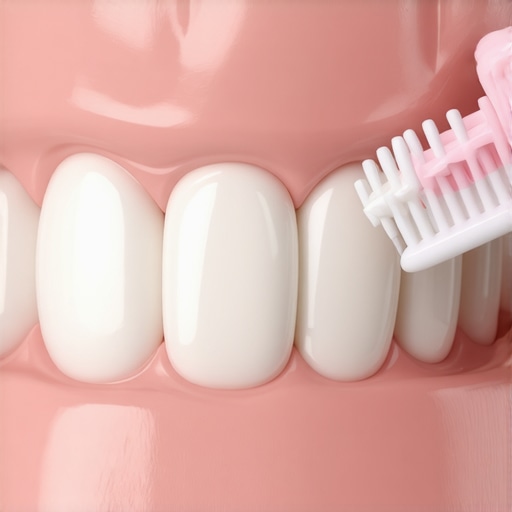
This is an advanced concern that many obsessive brushers face. When you over-brush, you thin out the white enamel, which allows the yellow dentin underneath to show through more clearly. This is the reason your teeth look yellow even though you brush twice daily. No amount of scrubbing will fix this; in fact, it will only make the yellowing more pronounced. At this stage, you might need to look into cosmetic dentistry innovations you can’t miss this year to restore that brightness without further damaging your natural structure. It’s about working smarter, not harder, to achieve that Hollywood glow while keeping your foundation rock-solid. Remember, a healthy mouth is a quiet mouth—no bleeding, no throbbing, just a clean, steady baseline.
It took me years to realize that I was treating my mouth like a static object rather than a dynamic ecosystem. Once I shifted from simply ‘fixing problems’ to ‘maintaining a system,’ the fear of the dentist’s chair completely vanished.
The Hidden Cost of Skipping Your Pro Cleanings
I used to think I was saving money by pushing my dental appointments to once every two years. I mean, if nothing hurts, why pay the bill? But I quickly learned that how regular dental cleanings can save you money in the long run isn’t just a marketing slogan. When you skip the professional scale and polish, you’re allowing tartar—which is essentially petrified plaque—to build up in places your brush simply cannot reach. By the time it hurts, you’re looking at a root canal or a crown instead of a simple cleaning. It is the ultimate ‘pay now or pay much more later’ scenario.
How do I maintain my results over the next decade?
The secret isn’t a secret at all; it’s about high-fidelity tools. I personally swapped my manual brush for a smart electric model with a built-in pressure sensor. Why? Because as we discussed, I’m a ‘scrubber.’ The brush literally turns red and slows down when I press too hard, protecting my gums from recession. According to a comprehensive 2020 Cochrane systematic review, powered toothbrushes provide a 21% greater reduction in plaque compared to manual brushing over a three-month period. If you’re serious about maintaining oral health and expert advice for a lifetime of healthy teeth, you need a tool that corrects your human error in real-time. 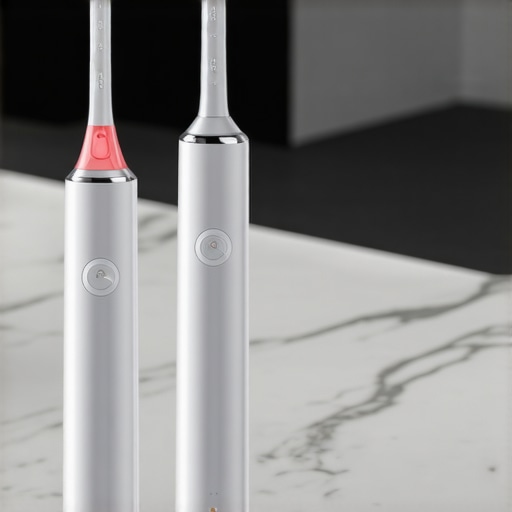
Smart Tech That Actually Changes Your Habits
We’re moving toward a future where your toothbrush will likely sync with your insurance to lower your premiums based on your brushing data. It sounds like sci-fi, but tele-dentistry and AI-driven feedback are already here. If you’re struggling with the manual dexterity of string floss, the benefits of using a water flosser are backed by incredible clinical data for reducing bleeding. For those of us with kids, the battle is even harder. I found that family dental care hacks to keep your kids smiling daily often come down to making the tech fun. If the kids see it as a gadget rather than a chore, the habit sticks without the morning tantrums. I want you to try one thing tonight: download a two-minute timer app or use a brush that pulses every 30 seconds. That tiny bit of data—knowing exactly when to move to the next quadrant—is the difference between a ‘missed spot’ and a perfect check-up. Don’t just guess; use the tech to your advantage.
3 Oral Health Realities I Only Discovered After Decades of Mistakes
Looking back at my years of dental anxiety, I realize there were nuances I completely missed. First, bleeding is feedback, not a stop sign. When I stopped flossing because of the blood, I was actually feeding the infection. Second, the speed of your routine doesn’t matter; the coverage does. It’s better to floss three teeth perfectly than thirty teeth with a quick snap. Finally, the tools you use should match your personality. I wasted years trying to be a ‘string floss person’ when I should have just embraced revolutionary teeth cleaning techniques that utilize modern technology. Your gums aren’t failing you; they are responding exactly as they should to the environment you provide.
The Minimalist Kit That Saved My Smile
I stopped buying every ‘miracle’ mouthwash and focused on three things that actually move the needle. A pressure-sensing electric toothbrush was my biggest win because it forced me to stop the aggressive scrubbing that caused my recession. I also integrated a water flosser for those nights when my hands felt too tired for string—this consistency is vital for maintaining oral health and getting expert advice. Lastly, I committed to a professional visit every six months. I learned that how regular dental cleanings can save you money in the long run is about catching ‘pinhole’ problems before they become ‘grand canyon’ bills.
Take the First Step Toward a Fearless Check-Up
I want you to know that a healthy mouth is within your reach, regardless of how long you’ve been away from the floss. It starts with one gentle session tonight and the realization that you are in control of your healing. Whether you are looking into family dentistry to build a foundation for your kids or exploring how cosmetic dentistry innovations you cant miss this year can refresh your look, the foundation is always a clean, healthy gum line. Don’t wait for the ‘perfect’ time to start your teeth cleaning journey—start where you are. Have you ever felt like you were doing everything right but still saw red in the sink? Let me know your biggest hurdle below!