
I remember the first time I saw it. My son was laughing at a cartoon, and there they were—two little pearly whites peeking out from behind his bottom baby teeth. It looked like a Great White shark had taken up residence in my six-year-old’s mouth. I’ll admit, I spiraled. I immediately pulled out my phone and started searching for emergency extractions. In my panic, I made a classic rookie mistake: I tried to manually wiggle that stubborn baby tooth out with way too much enthusiasm, which only led to a very grumpy kid and a sore gum line. I felt like a failure as a parent, convinced I’d let his oral health slide. But here is the good news: what you’re seeing is likely a very common phenomenon often called ‘shark teeth,’ and it is rarely the dental emergency we imagine it to be in the heat of the moment.
The Biological Oddity Behind the Double Row
Usually, a permanent tooth acts like a little demolition crew. It grows directly under the baby tooth, dissolving the root until the old tooth falls out and the new one takes its place. Sometimes, however, the permanent tooth decides to take the scenic route. It erupts behind the baby tooth because the root didn’t dissolve properly. It feels weird to look at, but it is actually a common part of family dentistry. In fact, according to the American Academy of Pediatric Dentistry, this ‘ectopic eruption’ occurs in many children and often resolves itself as the tongue naturally pushes the new tooth forward into the correct position. You might find that why your childs jaw alignment matters starts with these early transitions, but nature has a surprisingly effective way of sorting out the clutter if we give it a little time. Today, I want to walk you through why this happens, when you actually need to call the professional, and how to stay calm when your kid looks like a deep-sea predator.
Is this going to ruin their smile forever?
It is the first question every parent asks. We see those crooked rows and immediately start calculating the cost of future braces. While it looks messy, this isn’t an automatic sentence for years of orthodontics. Many times, once the baby tooth finally gives up the ghost, the tongue does the heavy lifting of repositioning the permanent tooth. I’ve learned that focusing on family dental care hacks to keep your kids smiling daily is much more productive than stressing over a temporary double-row. Have you ever peeked into your child’s mouth and felt that same jolt of panic? You aren’t alone. We have all been there, staring at a mouth that seems to have too many occupants. We often fall for oral health myths that suggest every tooth must fall out in a perfect sequence, but the reality is much more flexible. Before you reach for the pliers—don’t, seriously—let’s look at the mechanics of how these teeth eventually find their home.
Test the wiggle without causing a meltdown
The first step in managing a double row of teeth is to evaluate the ‘stubbornness’ of the baby tooth. If the permanent tooth is poking through but the baby tooth is still as solid as a rock, don’t panic, but do start a daily ‘wiggle quota.’ I used to tell my son his teeth were like loose LEGO bricks—they just needed a little nudge to find their new home. You can find more family dentistry tips that make oral care effortless and effective, but the simplest method is the ‘clean finger wiggle.’ Encourage your child to gently move the tooth back and forth with their tongue or a washed finger for a few minutes every evening. The goal isn’t to rip it out, but to signal to the body that the root needs to finish dissolving.
Why crunchy snacks are your best dental ally
Apples and carrots aren’t just for nutrition; they are mechanical tools in the fight against shark teeth. I remember my daughter had a double row for weeks until we went to a backyard cookout. One cob of corn later, the baby tooth was on a napkin and the permanent tooth finally had room to breathe. This is one of those family dental care hacks to keep your kids smiling daily that actually delivers results. The natural pressure from biting into firm, fibrous foods helps break those last stubborn root attachments that are holding the baby tooth in place. If your child is hesitant because of mild discomfort, try slicing the apples into wedges to make the ‘work’ feel more manageable.
Let the tongue do the heavy lifting
It is easy to look at a tooth growing in the ‘wrong’ spot and assume it will stay there forever. However, the tongue is essentially a built-in, natural orthodontic appliance. It is a powerful muscle that exerts constant forward pressure. Once the baby tooth is finally out of the way, the tongue usually shoves that permanent tooth into the vacant slot within a few weeks. You might even notice why your childs gums look blue where a tooth is about to erupt, which is just an eruption hematoma—a fancy way of saying a tiny bruise from the tooth pushing through. This pressure is exactly what helps the teeth align themselves without early intervention.
Three signs you actually need a professional appointment
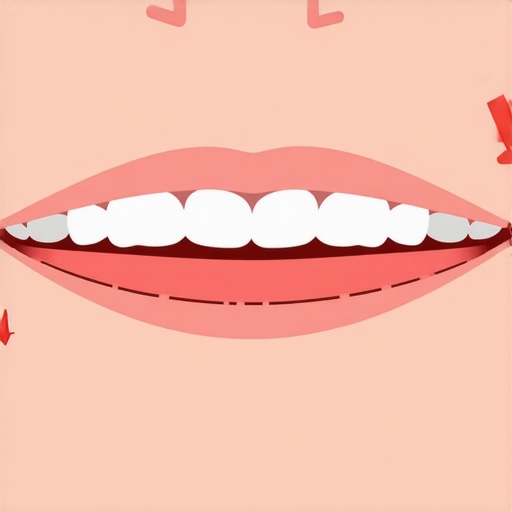
While most cases resolve themselves, you need to know when to stop wiggling and start calling. First, if the permanent tooth reaches the same height as the surrounding teeth and the baby tooth hasn’t moved an inch, it may be ‘over-retained.’ Second, look for signs of inflammation or extreme sensitivity that prevent how to get your kids to brush for the full two minutes properly. If they are skipping hygiene because it hurts, that is a red flag. Finally, if you are unsure how to tell if your child is ready for their first dental cleaning or if this specific alignment is an issue, a quick X-ray can determine if there is enough jaw space for the new arrival. If the jaw is too crowded, your dentist might suggest a simple extraction to clear the path and prevent more complex issues later.
Maintain hygiene even when it gets crowded
When teeth overlap, they create perfect little hiding spots for plaque and sugar. During this ‘shark’ phase, you have to be extra diligent. I found that using a smaller, soft-bristled brush helped get into those awkward crevices behind the baby tooth. If you ignore these spots, you risk decay in the brand-new permanent tooth before it even fully arrives. Teaching your child that a ‘double row means double brushing’ is a great way to instill lifelong habits that prevent the need for future how regular teeth cleaning can prevent major dental issues. It’s about managing the environment of the mouth while nature takes its course.
Stop rushing to the extraction chair
The most common mistake I see parents make—and I’ve been there myself—is the ‘extraction itch.’ We see a second row of teeth and assume the baby tooth is a squatter that needs to be evicted immediately. However, rushing to have that tooth pulled can sometimes do more harm than good. In my years of obsessing over pediatric dental trends, I’ve found that oral health myths often drive us to seek surgical solutions for natural transitions. If you pull a baby tooth too early, you risk ‘mesial drift,’ where the surrounding teeth lean into the empty space, potentially blocking the permanent tooth from ever finding its proper home.
The hidden danger of pulling teeth too early
There is a specific ‘trap’ in thinking that clearing the path manually is always better. When we force an extraction before the permanent tooth has finished its journey, we lose the natural ‘space maintainer’ that the baby tooth provides. I’ve spoken with several practitioners in family dentistry who emphasize that nature’s timeline is usually superior to our own impatience. Have you ever fallen into this trap and pushed for an extraction only to find your child needed spacers later? Let me know in the comments. We often think we are saving money, but a premature pull might lead to more expensive interventions later, whereas how regular dental cleanings can save you money in the long run by simply monitoring the situation.
Can an extra row of teeth actually save you from future orthodontic bills?
It sounds counterintuitive, but those ‘shark teeth’ can actually be a sign that the jaw is expanding to accommodate adult-sized teeth. According to clinical observations discussed in the American Journal of Orthodontics and Dentofacial Orthopedics, the timing of tooth loss is more critical for jaw development than the temporary aesthetic of a double row. The tongue exerts significant force every time we swallow, acting as a natural orthodontic tool. This ‘natural braces’ effect is powerful. However, the nuance most people miss is the health of the gingival tissue during this overlap. If you aren’t using family dental care hacks to keep your kids smiling daily, like targeted flossing between the two rows, you’re inviting localized gingivitis. This inflammation can actually slow down the natural shedding process.
Don’t let dental anxiety dictate the treatment
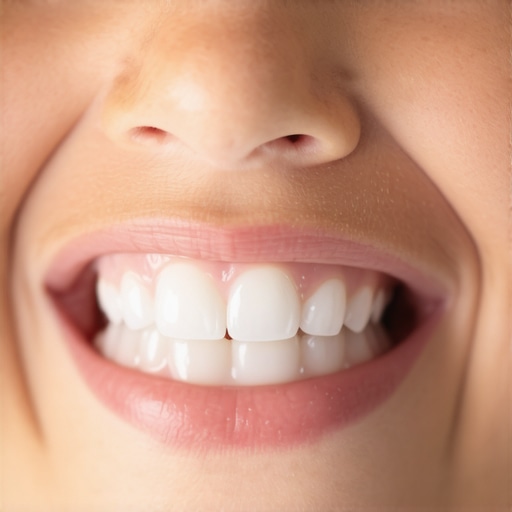
One of the biggest advanced mistakes is letting the ‘scary look’ of shark teeth lead to a traumatic dental visit. If a child is terrified, forcing a professional extraction can create a lifelong phobia. I always recommend exploring how to manage dental anxiety without using heavy sedation before deciding on an extraction. A calm child who wiggles their own tooth is far better for long-term oral health than a traumatized one with a ‘perfect’ smile. Remember, the goal of preventive tips for long-lasting dental health for families isn’t just straight teeth—it’s a healthy relationship with the dentist. If you stay patient, focus on hygiene, and keep those crunchy snacks coming, those pearly whites will almost always find their way home.
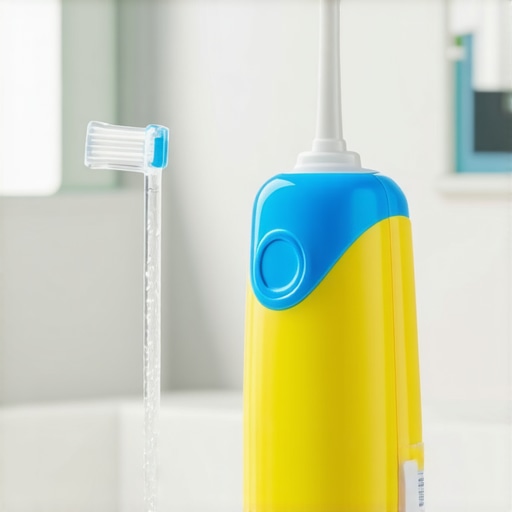
Once you have identified that your child’s double row of teeth is a natural transition rather than a dental catastrophe, the focus shifts from panic to maintenance. When those permanent teeth are crowded behind baby teeth, they create tight, narrow gaps that traditional string floss simply cannot navigate effectively. This is where I stop being a ‘traditional’ parent and start using more advanced tools. I personally recommend the Waterpik Water Flosser for Kids. Unlike manual flossing, which can be clumsy for small hands and frustrating for parents, the water flosser uses a targeted stream of pressurized water to blast out food particles trapped in those ‘shark’ crevices. I’ve seen firsthand how the benefits of using a water flosser for patients with gum disease apply just as effectively to children with ectopic eruptions, keeping the gums healthy while the teeth shift.
Skip the string and grab a water flosser
The reason I swear by this specific tool is the pressure control. You want it high enough to clean, but soft enough not to cause bleeding. If you allow plaque to sit between those overlapping teeth, you are practically inviting early-stage decay on the enamel of the new permanent tooth. To supplement this, I suggest switching to a U-shaped ultrasonic toothbrush or a high-quality electric model with a small, circular head. The Journal of Clinical Pediatric Dentistry has highlighted that the consistent mechanical vibration of electric brushes can improve gingival health significantly more than manual brushing in pediatric cases where spacing is an issue. This vibration also helps gently ‘jostle’ the loose baby tooth every single morning and night, accelerating the process naturally.
How do I maintain my child’s oral health during the shark tooth phase?
Consistency is your best friend here. You need to ensure that the area behind the baby tooth—where the new tooth is emerging—gets as much attention as the front. I often see parents focus on the visible teeth while the ‘shark’ row stays covered in a thin film of biofilm. To prevent this, I use a disclosing tablet once a week. These little chewable tablets stain plaque a bright pink or purple, showing exactly where your child is missing spots. It turns a chore into a game and ensures that maintaining oral health expert advice for a lifetime of healthy teeth becomes a visual reality they can understand. If you notice persistent redness, it might be time to integrate family dentistry tips that make oral care effortless and effective, such as using a non-alcohol mouthrinse to keep the bacterial load low without stinging.
Digital scans are replacing the ‘goop’ for a reason
Looking toward the future, the way we manage these alignment issues is changing rapidly. I predict that within the next five years, the ‘wait and see’ approach will be supplemented by AI-driven growth tracking. We are already seeing how we use digital scanners to avoid messy dental molds to create 3D maps of a child’s mouth. These scans allow dentists to predict with incredible accuracy whether the jaw will naturally widen or if early orthodontic intervention is truly necessary. This technology removes the guesswork. If your dentist mentions a ‘CBCT scan’ or a ‘digital impression,’ don’t be intimidated; it’s the gold standard for ensuring that double row doesn’t lead to permanent crowding. To stay ahead of the curve, I recommend asking your provider for a digital baseline scan as soon as the first permanent molars appear. My advanced tip for today? Incorporate a tongue scraper into their routine. As strange as it sounds, why your dentist wants you to use a tongue scraper relates directly to the overall bacterial environment of a crowded mouth. Try one for a week and you’ll notice a huge difference in their morning breath and gum health.
Lessons from the Parent Who Panicked First
Looking back, my initial freak-out was entirely unnecessary, but it taught me a few things that no textbook ever does. First, the timeline of a child’s mouth is rarely linear. Just when you think you’ve got it figured out, a ‘shark’ tooth appears. I’ve realized that top 5 secrets to maintaining perfect oral health as a family often involve more observation and less intervention. Second, your child takes their cues from you. If you act like their mouth is a disaster zone, they will treat it like one. Stay calm, keep the mood light, and celebrate the wiggle. Finally, don’t ignore the ‘back row’ during cleaning—that’s where the real work happens. It’s easy to fall for oral health myths debunked what you need to know in 2025, but staying grounded in science-backed patience is always the better route.
The Daily Survival Kit for Little Predators
If you want to move from ‘wait and see’ to active support, these are the tools I trust. Firm, Crunchy Foods: Don’t underestimate the power of an apple or a carrot to finish what nature started. The Waterpik for Kids: It turns a potentially painful flossing session into something fun and effective. I’ve found that preventive tips for long-lasting dental health for families almost always include better mechanical cleaning tools. A Trusted Pediatric Dentist: Sometimes you just need an expert to say, ‘Everything is fine.’ If you’re truly worried about a stubborn tooth that won’t budge, you can always reach out to us for a quick check-up to put your mind at ease.
Your Kid’s Smile is a Work in Progress
Parenting is full of surprises, and a double row of teeth is just one of those weird, wonderful milestones on the road to adulthood. Don’t let the ‘shark’ phase steal your peace of mind. With a little bit of crunchy snacking, a whole lot of wiggling, and a solid hygiene routine, those permanent teeth will eventually find their home. Your child’s oral health is a marathon, not a sprint, and you’re doing a great job guiding them through it. Did your child lose their first ‘shark’ tooth to a snack or a wiggle? Share your best tooth-pulling story in the comments below!