
Picture this. You are standing in front of your bathroom mirror, determined to keep up with your daily maintaining oral health routine. You wrap the floss tightly around your fingers, target that one notoriously tight gap between your back molars, and snap it down. Snap! Instead of a clean glide, you are left with a frayed, useless thread stuck between your teeth. Now you have a new problem: trying to fish out shredded pieces of nylon while your gums start to thrum with irritation. I used to face this exact nightmare every single night, and for years, I thought my only option was to buy expensive specialty tape or simply skip those tight spots altogether.
The Nightly Battle with Tight Molars
For the longest time, I made the classic mistake of sawing the string straight down with brute force. I thought pressing harder was the only way to conquer those stubborn, tight contact points. It was a painful, bloody mess, and it actually discouraged me from flossing regularly. According to research from the National Institutes of Health, proper interdental cleaning is crucial because brushing alone misses up to 40% of tooth surfaces. Yet, nobody tells you how to actually navigate tight spaces without destroying the floss or hurting your gums. Today, I want to share the exact physical pivot—a subtle, pressure-releasing wiggle—that glides the string safely past the tightest contact points without a single tear.
Is a Simple Technique Really Enough to Stop the Shredding?
You might be highly skeptical. After all, if your teeth are practically fused together, how can a minor physical adjustment prevent strong nylon or Teflon from tearing apart? The secret lies in physics and muscle memory, not the brand of floss you buy. When you learn how to angle the string and use your adjacent teeth as a fulcrum, you bypass the friction point entirely. This simple shift not only saves your sanity but also prevents you from accidentally slicing into your delicate gum tissue, which can lead to chronic inflammation. Have you ever ended up with a piece of shredded floss permanently stuck between your back teeth? I would love to hear if you have battled this frustrating issue too!
Why Force is the Enemy of Your Gums
When we force the floss downward, we lose control. The moment the string finally breaks past the tight contact point, it crashes violently into the interdental papilla—the sensitive triangle of gum tissue between your teeth. If you are already dealing with sensitive areas, this trauma only makes matters worse. Over time, this aggressive sawing motion can even contribute to recession. In my early days of trying to master a solid family oral health routine, I constantly made this mistake, thinking pain meant progress. It does not. Learning the gentle glide technique changes everything, setting the stage for how we can easily slide through those tight gaps using a controlled, back-and-forth zigzag motion.
Step-by-Step Guide to the Friction-Reducing Wiggle
Getting floss past those stubborn, tight spaces is like trying to squeeze a wide car into a narrow garage. If you rush and slam on the gas, you will dent the sides. Instead, you need a slow, controlled entry. The key to the gentle glide is to stop treating floss like a saw and start treating it like a delicate instrument. By mastering a few physical adjustments, you can keep your gums intact and make your daily routine as painless as possible.
Use Your Index Fingers as a Micro-Clutch
To control the tension of the string, you need to shorten the active distance. Most people wrap the floss around their fingers and leave a long, floppy bridge of string between their hands. When you do this, you lose all leverage, and the string inevitably snaps violently down. Instead, wrap the string so that there is no more than one inch of active floss between your fingertips. By keeping the span incredibly short, you gain maximum control, allowing you to guide the string with absolute precision rather than raw force.
Think of this setup as your steering wheel. When the distance is short, a tiny twist of your wrists completely changes the angle of entry. This precise control is especially important if you have delicate dental work. For example, knowing why you should never use superglue to fix a broken crown at home reminds us how fragile our dental anatomy can be; treating your teeth with physical respect starts with controlled flossing.
The Zigzag Motion That Softens the Entry
Instead of pressing straight down, tilt the string at a slight angle—about 45 degrees—against the side of one tooth. Slide the floss back and forth in a microscopic sawing motion while applying gentle downward pressure. You are not sawing into the gum; you are gently wiggling the string past the tight contact point of the enamel. This tiny back-and-forth zigzag slowly spreads the contact point just enough for the thin string to slip through without any sudden, painful pops.
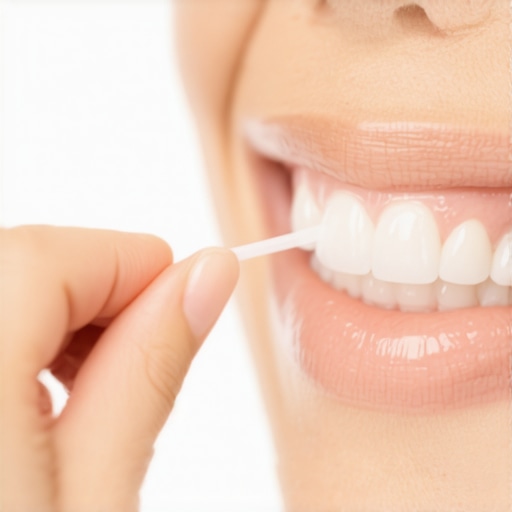
Leverage Your Neighboring Teeth as a Pivot
This was the ultimate game-changer for me. One evening, after repeatedly snapping the string and causing my gums to thrum with irritation, I realized I was floating my hands in the air with no physical stability. I decided to rest the knuckle of my guiding index finger directly against my chin, using it as a solid anchor point. By keeping my hand firmly anchored, I could pivot the floss on the side of the tooth, completely eliminating the sudden downward plunge. The floss gently slid into place, and for the first time, my gums did not bleed.
If you find that your gums are still highly sensitive even when using this pivot technique, it helps to understand the underlying causes of your discomfort. Learning gentle teeth cleaning best practices for sensitive gums can provide additional relief. When you pair proper physical leverage with specialized care, you can build a highly effective, pain-free routine. This delicate physical approach is vital for everyone in the household, and teaching children these soft physical habits is one of the best family dental care hacks to keep your kids smiling daily without fear of the bathroom mirror.
Clear the Tight Spot Safely
Once you successfully navigate past the tight contact point, your job is only half done. Hug the floss around the side of one tooth in a “C” shape, and gently slide it up and down to clean the plaque from the tooth surface. Then, lift it back up through the tight spot using the same subtle zigzag motion. Never yank the string straight out, as this can dislodge loose fillings or weaken old dental work. If you are experiencing structural issues or notice your teeth shifting, seeking professional guidance on family dentistry building a foundation of healthy smiles for all ages can help ensure your physical efforts are supported by excellent preventive care.
When we talk about maintaining a healthy smile, most of the advice we get is painfully basic. We are told to brush twice a day, scrape our tongues, and floss those tight spaces. But as someone who has spent years perfecting my own routine, I have realized that the conventional wisdom passed down by well-meaning blogs is often incomplete, if not outright counterproductive. Let’s dig deeper into the nuances that most people, and even some professionals, get wrong about daily care.
The Aggressive Scrubbing Myth that Destroys Your Enamel
Everyone says that to get your teeth truly clean, you need to scrub them with absolute conviction. In my experience, this aggressive approach actually does more harm than good. People buy stiff-bristled brushes thinking they are industrial scrubbers designed to erase coffee stains. In reality, over-scrubbing wears down your precious enamel and forces your gums to recede. When you couple aggressive brushing with the wrong technique, you create micro-abrasions that make your teeth even more susceptible to staining and decay. It is one of the most common oral health myths debunked by modern restorative dentistry: gentle, circular sweeping always outperforms raw physical friction.
Why Do My Teeth Feel Sore Even After a Light, Proper Cleaning?
If you have recently switched to a gentler routine or just returned from a professional visit, you might wonder why your mouth still feels tender. It is highly common to experience temporary discomfort when you disrupt stubborn calculus. When soft plaque is allowed to harden into tartar near the gumline, it acts like a physical wedge. Removing this buildup exposes highly sensitive areas of the tooth that were previously shielded. If you are experiencing this exact sensation, understanding why your teeth feel more sensitive after a professional cleaning can help put your mind at ease. The sensitivity is not a sign of damage; rather, it is your gum tissue adjusting to a truly clean environment free of chronic bacterial irritation.
The Dangerous Trap of Over-the-Counter Cosmetic Shortcuts
Another massive trap that eager patients fall into is trying to achieve a Hollywood smile using aggressive DIY methods. We see social media trends advocating for activated charcoal, baking soda scrubs, or highly concentrated acidic fruit pastes. While these might offer a temporary illusion of brightness by stripping away surface stains, they are incredibly destructive to your underlying dentin. According to a clinical study published by the American Dental Association, abrasive whitening agents can cause permanent enamel loss and severe tooth sensitivity. Real, lasting cosmetic enhancement requires professional guidance rather than kitchen-counter chemistry experiments.
If you genuinely want to brighten your smile safely, exploring professional cosmetic dentistry innovations is the only way to protect your long-term health while getting predictable results. Modern techniques focus on preserving your natural enamel structure rather than grinding it away. Have you ever fallen into the trap of using harsh DIY whitening products only to end up with incredibly sensitive teeth? Let me know in the comments below!
Shifting Your Focus to True Preventive Care
At the end of the day, the secret to a flawless smile is not about finding a magic product; it is about refining your physical habits and understanding the anatomy of your mouth. When we stop treating oral hygiene as a chore to blast through with brute force and start treating it as a precise, gentle ritual, our gums and enamel will naturally thrive. By investing time in proper, low-friction techniques and regular professional checkups, you save yourself from painful emergency procedures down the road. This proactive shift is the ultimate foundation for preventive dental health for families, ensuring everyone in your household enjoys a lifetime of pain-free, naturally bright smiles.
Once you move past the basic physical adjustments of your daily routine, maintaining those results becomes a matter of using the right tools. I used to think a standard plastic toothbrush and a random spool of grocery-store floss were all I needed. However, as my focus shifted toward long-term oral health and preserving subtle cosmetic enhancements, I realized that specialized equipment is what truly bridges the gap between average hygiene and professional-grade maintenance at home.
The Tools That Earned a Permanent Spot in My Bathroom
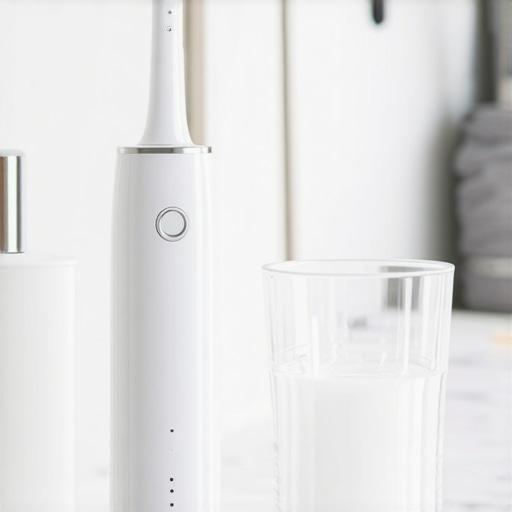
I do not recommend products lightly. Every tool in my cabinet has to prove its worth by actively preventing irritation and keeping my enamel pristine. First and foremost, I swapped my manual toothbrush for an oscillating-rotating electric model equipped with a smart pressure sensor. This sensor is crucial; it physically flashes red the moment I apply too much force, protecting my gums from the aggressive scrubbing that leads to recession. If you have invested in your appearance through cosmetic dentistry trends that transform your smile this year, this precise control is what keeps those restorations looking flawless without wearing down the margins.
For interdental care, I paired my physical flossing routine with a high-quality water flosser. While a water flosser does not completely replace the need to physically scrape plaque away with traditional string, it is unmatched at flushing out loose debris and bacterial biofilms from deep periodontal pockets. This combination of physical flossing and hydrodynamic irrigation is the absolute gold standard for preventing chronic gum inflammation.
How Do I Maintain My Oral Health Results Over Time?
Consistent, long-term success is not about occasional deep cleans; it is about building a daily ecosystem of gentle habits and protective tools. To keep your teeth and gums in peak condition, you must treat your home routine as a preventive shield. This means committing to low-abrasion techniques and relying on regular professional cleanings to handle the hard calculus that no toothbrush can touch. Understanding how regular teeth cleaning can prevent major dental issues is the foundation of this strategy. When you combine professional scaling with daily, low-friction maintenance, you prevent minor plaque from ever turning into a structural threat.
The Future of Home Dental Maintenance
Looking ahead, the landscape of daily dental care is shifting toward personalization and biochemistry. We are moving away from generic, highly abrasive formulas and toward smart diagnostic tools and biomimetic ingredients. I predict that within the next few years, we will see widespread adoption of home salivary diagnostic kits that analyze your oral microbiome in real-time, telling you exactly which strains of bacteria are thriving in your mouth so you can adjust your diet and hygiene routine accordingly.
Additionally, ingredients like hydroxyapatite—a biocompatible material that naturally remineralizes enamel without the potential sensitivity of traditional treatments—are becoming mainstream. This is incredibly exciting for anyone looking to maintain a bright smile safely. Incorporating these advanced physical and chemical barriers into your daily life ensures your smile remains strong, functional, and naturally beautiful for decades to come.
If you want to experience the financial benefits of this proactive approach, exploring how regular dental cleanings can save you money in the long run will highlight just how much you save by investing in preventive tools today rather than corrective surgeries tomorrow. I highly encourage you to try one specific advanced tip tonight: shorten your active flossing string to just one inch, anchor your guiding hand against your chin, and feel the immediate difference in control.
What Experts Won’t Tell You About Your Daily Routine
Over the years, I have realized that the most valuable lessons in maintaining oral health do not come from the back of a toothpaste tube. They come from frustrating trial and error. Here is the raw truth about what actually keeps your smile in pristine shape:
- The 10-Second Rule of Pressure: If your fingernails turn white while you are brushing or flossing, you are using enough force to slowly destroy your enamel and push back your gums.
- Floss is a Scraper, Not a Guillotine: Its primary job is to hug the tooth and scrape away soft biofilm, not to be snapped violently into your delicate gum tissue.
- The Fallacy of ‘Squeaky Clean’: Teeth should feel clean, but if they feel chemically stripped or overly sensitive, you are likely using highly abrasive products that do more harm than good.
By shifting your mindset from aggressive cleaning to gentle, precise maintenance, you protect your mouth from long-term wear and tear.
The Essential Tools I Keep in My Bathroom Cabinet
I do not believe in cluttered counters, but I do believe in investing in high-quality dental tools that yield real, physical results. Here are the items that have completely transformed my daily routine:
- A Smart Pressure-Sensing Electric Toothbrush: This is my absolute non-negotiable. It physically forces you to stop scrubbing aggressively, ensuring you preserve your enamel for years to come.
- Unwaxed, Extra-Fine Dental Floss: While it might seem counterintuitive for tight teeth, pairing a thinner, high-quality string with our physical pivot technique is far more effective than relying on thick, slippery tapes that fail to grab plaque.
- A Hydrodynamic Water Flosser: It is the perfect companion to physical flossing. It safely flushes out the microscopic debris and bacteria that your brush and string leave behind in deep gum pockets.
By combining these specific tools with consistent, mindful habits, you can elevate your home care to a professional standard.
Your Path to a Pain-Free, Radiant Smile
Taking control of your dental health does not require a massive financial investment or a complex, hourly routine. It simply requires a shift in how you handle your tools. When you treat your mouth with physical respect—using a controlled, short-span grip and a gentle zigzag wiggle—you eliminate the pain, bleeding, and frustration that make oral hygiene feel like a chore. Embrace this mindful, low-friction approach, and remember that consistent, gentle care is the ultimate secret to preserving your natural smile. To take your preventive routine even further and protect your financial health, consider exploring how regular dental cleanings can save you money in the long run.
Have you ever struggled with painful snapping or shredded string when trying to floss your back molars? Let me know your thoughts and questions in the comments below!