
I’ll never forget the sound. It wasn’t a loud crack, but more of a sickening, dull thud inside my jaw while I was trying to enjoy a crusty sourdough roll at a friend’s wedding. That was the moment I realized my expensive patchwork of crowns and bridges was finally finished. I spent the rest of the night smiling with my lips pressed tightly together, terrified that one wrong laugh would cause my dental work to literally hit the floor. It is a lonely, exhausting feeling. If you have ever felt that hidden reason your dental bridge feels loose when you chew bread, you know exactly the anxiety I’m talking about. Today, I want to cut through the clinical jargon and marketing fluff to talk about the reality of All-on-Four implants. We are going to look at what it actually feels like to go from full tooth loss to a fixed, permanent smile. Have you ever avoided a social event because you were worried your teeth wouldn’t hold up?
The Day I Stopped Patching My Smile and Looked at the Big Picture
For years, I made the classic mistake of thinking I could just outrun the inevitable. I spent thousands on single crowns and root canals, hoping to save a failing ship. I thought I was being smart. I was wrong. By the time I looked into the impact of cosmetic dentistry in 2025, I realized that I had wasted years in a state of dental ‘limbo’ when I could have had a permanent solution. All-on-Four isn’t just about aesthetics; it is about structural integrity. According to the American Academy of Implant Dentistry, dental implants are the only restoration option that actually preserves natural bone by stimulating bone growth. Without them, your jaw literally begins to shrink after tooth loss.
Are These Implants Actually Worth the Hefty Price Tag?
This is the hurdle most of us trip over. I certainly did. When you first see the estimate for a full arch of implants, it’s enough to make your eyes water. But when I started looking into how to reduce the cost of a full mouth of dental implants, I began to see it as a long-term investment rather than an expense. Think about the cost of constantly repairing failing teeth over twenty years versus one permanent procedure. The reality is that the healing process isn’t instant. You might wonder why some dental implants take months to heal while others take weeks, and the truth is, your body needs time to fuse with the titanium. It’s a journey, not a sprint, but for the first time in a decade, I can finally eat a sandwich without a second thought.
Mapping Out Your New Foundation Before the First Cut
Think of this initial phase like an architect surveying a site for a skyscraper. We aren’t just looking at where the holes go; we are looking at the density of your ‘soil’—your jawbone. The process starts with high-resolution 3D CT scans. This isn’t your standard bitewing X-ray. These scans allow the dentist to see the nerves, sinuses, and bone volume in three dimensions, ensuring they don’t hit anything vital. If you are looking into cosmetic dentistry innovations you can’t miss this year, you’ll see that virtual surgical planning is the gold standard. It allows the surgeon to ‘perform’ the surgery on a computer screen before you even sit in the chair. This precision is why All-on-Four can often work for people who were told they didn’t have enough bone for traditional implants.
How Four Little Screws Support an Entire Arch of Teeth
The ‘magic’ of the All-on-Four technique lies in physics, specifically the 45-degree angle. Traditional implants go straight down like a fence post. If the post is too short or the soil is too soft, it fails. By tilting the back implants at a 45-degree angle, we can use longer screws and anchor them into the denser bone at the front of the jaw. This creates a tripod-like stability that can support the pressure of chewing almost immediately. 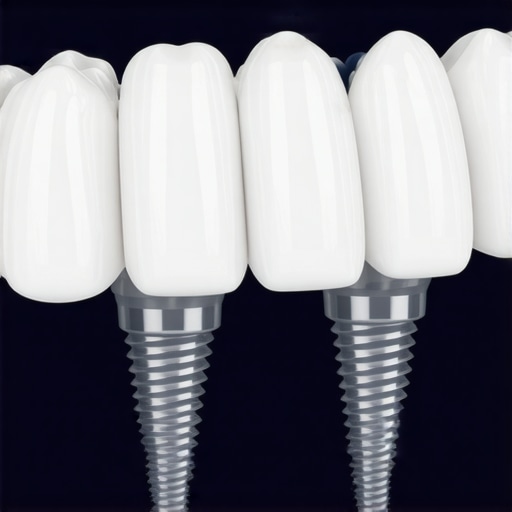
The Surgery Day and the Test Drive Phase
On the day of the procedure, any remaining failing teeth are removed, and the four titanium posts are placed. I won’t lie—the idea of this was terrifying for me. I had to learn how to manage your dental anxiety without heavy drugs just to get through the door. But once the implants are in, you don’t leave toothless. You receive a ‘provisional’ bridge. This is your test drive. It’s fixed in place, meaning it doesn’t come out at night, but it’s made of a lighter material to let your gums heal. I remember my first week with the provisionals; I was so paranoid about breaking them that I cut my overcooked pasta into microscopic pieces. It was messy and I felt ridiculous, but it taught me that I didn’t have to rely on dental adhesives anymore.
Keeping Your Investment Sparkly Without Scrubbing Your Gums Raw
Once the implants fuse with your bone—a process that explains why some dental implants take months to heal while others take weeks—you transition to your final, permanent bridge. However, ‘permanent’ doesn’t mean ‘indestructible.’ You have to rethink your hygiene. You aren’t just brushing teeth; you are cleaning the interface where the bridge meets the gum. I found that the ultimate guide to teeth cleaning techniques and benefits emphasizes the use of specialized tools. For me, the game-changer was a water flosser. When I first tried it, I sprayed half the bathroom mirror and soaked my shirt, but it’s the only way to effectively clear debris from under the bridge. Understanding the benefits of using a water flosser for patients with gum disease is crucial because even with titanium ‘roots,’ your gum tissue can still get infected if ignored. Mastering this is the key to maintaining oral health and getting expert advice for a lifetime of healthy teeth.
But here is where the ‘expert’ advice you find online usually misses the mark. Most people believe that once you have a mouth full of titanium and porcelain, you are essentially cured of dental problems. They think, ‘I can’t get a cavity on a screw, so I’m safe.’ This is a dangerous misconception. In reality, you’ve traded the risk of decay for the risk of peri-implantitis. It’s a specialized form of gum disease that attacks the bone holding your implants. While your new teeth won’t rot, the foundation they sit in is still biological and very much alive. A longitudinal study published in the Journal of Clinical Periodontology found that without diligent maintenance, roughly 1 in 5 implant patients may develop peri-implantitis—a condition that can lead to bone loss around the screw itself. This is why I always tell people that how regular teeth cleaning can prevent major dental issues is even more critical after surgery than it was before.
Can You Really Lose an Implant to Gum Disease?
Yes, and it happens faster than you think. The ‘oops’ factor I see most often is the ‘over-scrubber’ trap. We’ve been conditioned to think that more force equals more clean. But with All-on-Four, aggressive scrubbing can actually create microscopic scratches on the bridge material or, worse, cause the gums to pull away from the abutment. When that happens, bacteria find a VIP entrance to your jawbone. If you are struggling with this, looking into gentle teeth cleaning best practices for sensitive gums can save your investment from premature failure.
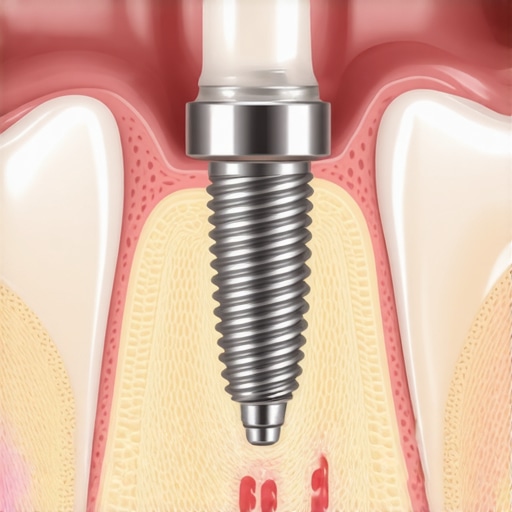
Another silent trap is the ‘whitening’ myth. Many patients rush out to buy the grittiest, most expensive whitening paste they can find to keep their new smile bright. However, the truth about whitening toothpaste—does it actually change the color?—is that it’s often far too abrasive for prosthetic materials. It can strip the polish off your bridge, leaving it dull and more likely to stain over time. It’s a classic case of oral health myths debunked: what you need to know in 2025. We also have to acknowledge that why some people are more prone to cavities regardless of hygiene can also apply to how your body responds to the presence of implants. Your systemic health, including your inflammatory response, plays a massive role in how well your body ‘accepts’ the hardware over the long haul. Have you ever fallen into this trap of over-cleaning your teeth only to find them becoming more sensitive? Let me know in the comments.
It’s a frustrating paradox, isn’t it? Trying too hard can be just as damaging as not trying at all. Once I realized that I couldn’t just ‘scrub’ my way to health, I had to completely overhaul my bathroom cabinet. I stopped looking for the most expensive gadgets and started looking for the most effective ones. For anyone who has invested in full-arch restoration, the ‘maintenance’ phase is where the real work happens. If you want to keep that investment for twenty or thirty years, you need to treat it like a high-performance engine.
The Gear That Actually Saves Your Gums
When I first brought home my Waterpik, I thought it was just a fancy toy. But after a month of using the ‘Plaque Seeker’ tip—the one with the three thin tufts of bristles—I saw a night-and-day difference in my gum health. Unlike standard string floss, which can get snagged on the abutments of an All-on-Four, the pressurized water reaches the nooks and crannies that manual tools simply can’t touch. I’ve found that revolutionary teeth cleaning techniques for 2025 focus heavily on this non-contact cleaning. It’s about flushing out the biofilm without creating physical trauma to the delicate tissue around the titanium posts. I also switched to a dedicated ‘implant brush.’ These aren’t just smaller toothbrushes; they have a specific neck angle designed to wrap around the back of the bridge. According to Dr. Paulo Malo, the pioneer who developed the All-on-Four protocol, mechanical plaque removal remains the ‘gold standard’ for preventing prosthetic failure. He argues that while the surgery gets the headlines, it’s the boring, daily repetition of cleaning that determines the lifespan of the implants. 
How do I maintain my prosthetic foundation over time?
The secret isn’t just what you do at home; it’s about the professional ‘pit stops.’ You might think you can skip a visit if nothing hurts, but how regular dental cleanings can save you money in the long run becomes very apparent when you realize a professional cleaning for an All-on-Four involves a specialized process. Your hygienist uses ultrasonic scalers with plastic tips—never metal—to vibrate away mineralized plaque without scratching the titanium. I make sure to follow expert advice for a lifetime of healthy teeth by scheduling these specialized sessions every six months, no matter how busy I am. I’m also keeping a close eye on where dental tech is headed. In the next few years, I predict we will see the rise of ‘smart’ implants—titanium screws embedded with biosensors that can detect changes in pH or cytokine levels in the surrounding tissue. Imagine getting an alert on your phone that inflammation is starting before you see a drop of blood. This is the future of family dentistry tips that make oral care effortless and effective. If you want to stay ahead of the curve, I have one advanced tip: the ‘Flashlight Test.’ Once a week, take a high-lumen small flashlight and a magnifying mirror. Open wide and look specifically at the ‘seam’ where the bridge meets the gums. If you see any gray shadows or persistent redness, don’t wait for your next cleaning. Learning teeth cleaning secrets to achieve a bright smile in under 30 minutes is great, but early detection is the only way to save an implant once bone loss begins. Grab a flashlight tonight and do your own ‘foundation check’—it’s the best five minutes you’ll spend on your health all week.
The Small Wins You Won’t Find in a Brochure
After living with All-on-Four for some time, I realized that the recovery isn’t just physical—it is neurological. For the first few weeks, your brain is trying to figure out why your teeth don’t ‘feel’ the same way your natural ones did. Here is the insider reality: your proprioception, the sense of where your teeth are in space, changes. I found that reading aloud for ten minutes a day was the fastest way to get my speech back to 100% after getting my permanent bridge. Another surprise was the weight; the titanium and porcelain have a solid, reassuring density that actually makes your jaw feel stronger. Most importantly, I learned that the ‘phantom tooth’ itch is real, but it fades as your nerves settle. These are the nuances of maintaining oral health and getting expert advice for a lifetime of healthy teeth that go beyond the surgery itself.
The Kit That Keeps My Smile Looking Brand New
Building a maintenance routine is about precision, not power. I ditched the traditional floss that would shred against my abutments and replaced it with a three-part toolkit. First, a high-quality water flosser is non-negotiable for reaching the ‘dead zones’ under the bridge. Second, I use a tufted brush designed specifically for the tight angles around the back implants. Finally, the ‘Flashlight Test’ I mentioned earlier is my secret weapon for early detection. If you ever feel unsure about your cleaning routine, it is always best to reach out to a professional who can show you the ropes in person. These habits are what ensure that how regular teeth cleaning can prevent major dental issues stays a reality for your new investment.
#IMAGE_PLACEHOLDER_E#
You Deserve a Life Without Dental Fear
The journey from failing bridges to a permanent All-on-Four smile is one of the most empowering things you can do for your self-esteem. We often underestimate how much mental energy we waste worrying about our teeth until that worry is finally gone. When you look at the impact of cosmetic dentistry in 2025, it isn’t just about the ‘perfect’ look; it is about the freedom to laugh, eat, and speak without a second thought. You have a second chance at a foundational smile—don’t be afraid to take it and protect it with everything you have got. Have you ever avoided a specific meal or a social event because you didn’t trust your teeth to hold up? Let me know in the comments below.