
I remember sitting in my favorite local deli, staring down a double-decker Reuben that looked more like a challenge than a meal. I opened wide for that first ambitious bite, and suddenly, a sound like a dry twig snapping echoed through my head. My jaw didn’t just pop; it felt like it shifted gears. I froze, sandwich in hand, wondering if the people at the next table had heard my skeleton protesting. For the longest time, I just figured this was a weird ‘me’ thing, a personality trait for my face. But that annoying click is actually your body’s way of waving a red flag about your temporomandibular joint, or TMJ. If you have ever felt that sharp jolt or heard a rhythmic clicking while chewing, you are definitely not alone. Today, we are going to dive into why this happens and how you can actually start enjoying your lunch again without the soundtrack.
That Annoying Sound Is Usually a Displaced Disc
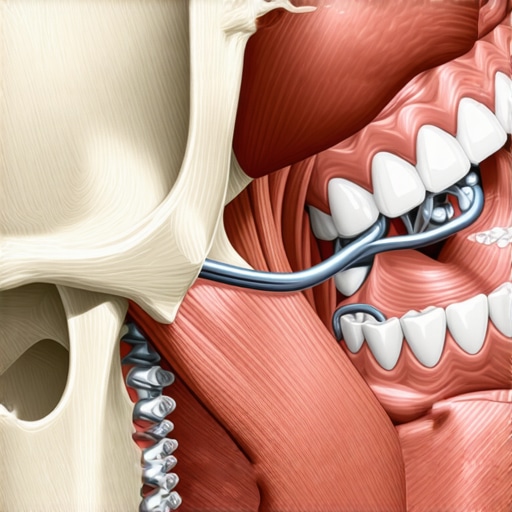
When your jaw functions correctly, there is a tiny disc of cartilage that acts as a cushion between the bones of the joint. When that disc slips out of place and then snaps back as you move, you get that signature ‘pop.’ I used to make the massive mistake of trying to force my jaw to click even more, thinking I could ‘reset’ it like a loose hinge. In reality, I was just aggravating the ligaments. It turns out that the best way to soothe a sore jaw isn’t through more movement, but through targeted relaxation and understanding the root cause. This clicking often stems from stress, clenching, or even how your teeth align. If you have been focusing on building a foundation of healthy smiles for all ages in your home, you might notice your kids or partner doing the same thing. Have you ever felt your jaw actually catch or lock for a split second after a loud pop?
Is This Something That Requires Invasive Surgery?
This is the number one fear I hear from people who deal with a noisy jaw. They assume that if it clicks, a surgeon needs to go in there with a scalpel. The good news? That is rarely the case. Most TMJ issues can be managed with simple behavioral changes or a custom-fit night guard. Interestingly, the National Institute of Dental and Craniofacial Research notes that TMJ disorders affect over 10 million Americans, yet the majority of cases are temporary and don’t lead to serious problems. Sometimes, the issue is even linked to things you wouldn’t expect, which is the reason your dentist asks about your snoring habits during your checkup. Airway issues and jaw alignment often go hand-in-hand. We are going to look at the specific steps you can take to quiet the noise and protect your joint for the long haul.
Give Your Joint a Required Vacation
The first step to fixing a clicking jaw is surprisingly simple: stop making it work so hard. Think of your TMJ like a sprained ankle. You would not try to run a marathon on a swollen joint, yet we often expect our jaws to power through tough steaks and crusty bread every single day. I remember attending a work brunch shortly after my deli incident where my jaw first popped. Everyone was tearing into these thick, toasted bagels. I knew if I took one big bite, my jaw would likely lock up in front of my boss. Instead, I tore my food into tiny, bite-sized pieces and chewed slowly on my back molars. I felt slightly ridiculous, like I was feeding a toddler, but by the end of the meal, my face did not ache. This soft food diet for a week or two allows the inflammation to subside and the disc to settle without constant interference.
Master the N-Position for Instant Relief
One of the most effective ways to retrain your jaw muscles is by finding the proper resting position. Say the letter N and notice where your tongue lands—it is right on the roof of your mouth, just behind your front teeth. This is where your tongue should live. When your tongue is up, your teeth are slightly apart, and your jaw muscles are not firing. It is a natural circuit breaker for clenching. Practice this throughout the day, especially when you are driving or staring at a computer screen. If you find your jaw feeling tight, check your tongue. If it is pressed against your lower teeth or floating in the middle of your mouth, move it back to the N-position immediately.
Heat or Ice? Choosing the Right Tool
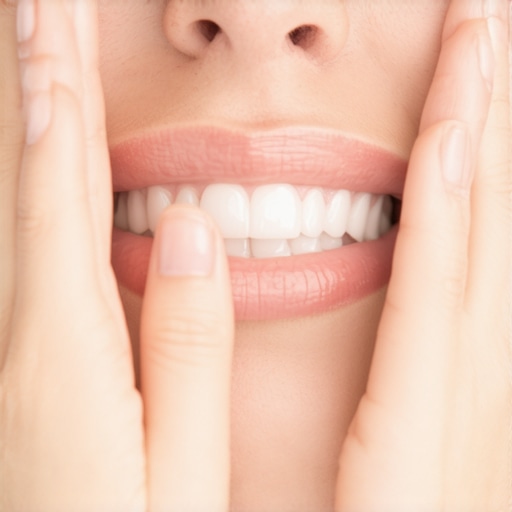
Patients often ask which temperature is better for a clicking jaw. If you are dealing with sharp, sudden pain after a long day of talking or a particularly tough meal, go with ice to bring down the swelling. However, for chronic, dull tightness that feels like a constant weight on your face, moist heat is your best friend. A warm compress increases blood flow and relaxes those stubborn muscle fibers. This is particularly helpful if you notice why your jaw is sore after a long dental cleaning or any situation where your mouth was open for an extended period. Balancing these thermal treatments with family dentistry tips that make oral care effortless and effective ensures you are creating an environment where healing can actually happen.
Stop the Grinding Before It Starts
Most of the physical damage to your jaw joint happens while you sleep. If you wake up with a dull headache or a jaw that feels like it has been through a boxing match, you are likely grinding your teeth. This friction wears down your enamel and keeps your TMJ in a state of constant trauma. Utilizing the best way to soothe a sore jaw from teeth grinding often involves a custom-fit night guard. Unlike the bulky ones you find at a local drugstore, a professional guard is slim and aligns your bite to take the pressure off the joint. It is a direct investment in your sleep quality and your long-term facial comfort.
How Regular Maintenance Protects Your Progress
You might not associate a standard checkup with jaw health, but they are intrinsically linked. When a dentist looks at your mouth, they are not just hunting for cavities; they are looking for wear facets on your teeth that signal a bite misalignment. Learning how regular teeth cleaning can prevent major dental issues includes understanding that a stable bite keeps your jaw joint happy. If your teeth do not fit together like perfect puzzle pieces, your jaw has to work overtime to find a comfortable resting spot, which leads right back to that annoying clicking sound and muscle fatigue.
The False Comfort of a Pain-Free Click
Common wisdom suggests that if your jaw clicks but doesn’t hurt, you should just leave it alone. In my years of looking at dental patterns, I have found this to be a dangerous oversimplification. A painless click is often the precursor to adaptive changes in your facial structure that you won’t notice until it is too late. While you might think you are just ‘living with it,’ your body is likely compensating by overworking the muscles on one side, which eventually leads to asymmetric wear on your molars. This is one of the biggest oral health myths debunked in recent years: the idea that silence or lack of pain equals health. In reality, a silent jaw that has lost its range of motion is often in more trouble than a noisy one that still moves freely.
Stop Falling for the Natural Detox Trap
One of the most frequent ‘oops’ moments I see involves patients trying to ‘detox’ their way out of jaw or gum inflammation using internet trends. I have had people come in with significantly worsened joint pain because they spent twenty minutes a day aggressively swishing coconut oil, thinking it would heal their TMJ. While there is a place for holistic care, the truth about oil pulling is that it cannot reposition a displaced disc or fix a bite misalignment. The trap here is delay; by the time these patients seek professional help, the inflammation has often become chronic. If you are substituting professional care with DIY trends, you might be ignoring the fact that some people are more prone to dental issues due to their unique oral microbiome and bone density, regardless of how much oil they swish.
Can Chronic Systemic Inflammation Mimic a Jaw Injury?
This is where the science gets truly fascinating and where many beginners lose the thread. We often treat the jaw as an isolated mechanical hinge, but it is actually a highly sensitive barometer for your entire body’s inflammatory load. A study published in the Journal of Periodontology indicates that systemic inflammatory markers are significantly higher in patients with chronic TMD (temporomandibular disorders) compared to healthy controls. This means that if your diet is high in processed sugars or if you are dealing with unmanaged stress, your jaw joint is going to be the first place to ‘flare up.’ It is not just a ‘bad joint’; it is a systemic red flag. This is exactly how regular teeth cleaning can prevent major dental issues—by reducing the total bacterial load in your mouth, you are actually lowering the systemic inflammation that makes your jaw feel so tight.
The Aesthetic Nuance Most People Miss
When we talk about fixing a ‘bad bite’ or a clicking jaw, many assume we are only talking about braces or heavy-duty surgery. However, modern approaches like contouring and veneers are proving to be the future of functional cosmetic dentistry. By subtly changing the height or shape of a few key teeth, we can sometimes redirect the way the jaw closes, taking the pressure off the joint without a single scalpel ever being involved. It is about harmony, not just ‘straightness.’ Have you ever fallen into the trap of thinking a dental issue was just a ‘mechanical’ problem rather than a signal from your whole body? Let me know in the comments. We are all learning that the mouth is truly the gateway to the rest of our health, and keeping that gateway quiet and functional requires more than just the occasional brush.
I have spent a small fortune on gadgets that promised to fix my bite, but I’ve found that the most effective tools are often the most boringly consistent ones. For instance, I’ve swapped my manual flossing routine for a high-end water flosser. Why? Because when your jaw is inflamed, the manual dexterity and reaching required for traditional floss can actually trigger a flare-up. Using the benefits of using a water flosser for patients with gum disease isn’t just about your gums; it’s about minimizing the time your mouth stays open in a strained position. I personally use a model with a specialized orthodontic tip because it delivers a more concentrated stream that does the work for me, allowing my jaw to remain in a neutral state. I also recommend a pressure-sensitive electric toothbrush. If you are a hard brusher, you are likely also a hard clencher, and that vibration feedback is a great subconscious reminder to relax your grip and your face. 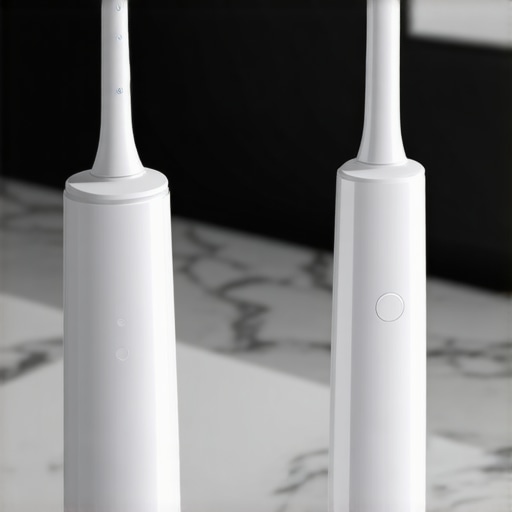
How do I maintain my jaw health over the long haul?
Consistency is the only real secret. I treat my semi-annual cleanings like a mechanical tune-up. Beyond just scraping plaque, these visits allow us to check if your bite has shifted or if your night guard needs a professional adjustment. Understanding how regular dental cleanings can save you money in the long run is vital because catching a tiny shift in your jaw alignment today prevents a massive bill for reconstructive cosmetic dentistry in 2025 later. I also swear by a jaw diary—a simple note on my phone where I track when the clicking feels louder. Usually, it correlates perfectly with high-stress weeks at the office, reminding me to double down on my relaxation exercises. Following preventive tips for long-lasting dental health for families means making these checks part of your household’s routine, not just a response to pain.
The Next Frontier: AI is Coming for Your Night Guard
We are moving toward a fascinating era of smart dental appliances. I predict that within the next few years, we will see widespread adoption of biofeedback night guards. These aren’t just plastic shells; they contain thin sensors that connect to your phone and alert you via a gentle vibration if you start grinding during the night. This kind of active intervention is the logical evolution of maintaining oral health expert advice for a lifetime of healthy teeth. Instead of just protecting your teeth from the damage of grinding, these tools will retrain your brain to stop the habit entirely. According to the American Academy of Orofacial Pain (AAOP), the goal of any TMJ intervention should be re-establishing a state of orthopedic stability, and technology is finally catching up to that ideal. Try this today: Set a timer on your phone for every two hours. When it goes off, check if your teeth are touching. If they are, drop your jaw, place your tongue in that N-position, and take one deep breath. It’s the simplest way to scale your progress without spending a dime.
The Three Realizations That Finally Silenced My Jaw
Reflecting on my own journey with TMJ, I have realized that the clicking wasn’t just a random mechanical glitch—it was my body’s built-in alarm system. First, I learned that stress isn’t just in your head; it lives physically in your masseter muscles. Second, I stopped viewing my jaw as a separate entity and started seeing it as part of my total wellbeing. Many oral health myths busted by modern science show that the jaw is incredibly resilient if you just give it the right environment to heal. Finally, I realized that a professional evaluation is about much more than just fixing a sound; it is about preventing a cascade of alignment issues down the line.
My Non-Negotiable Kit for a Quiet Jaw
If you want to move beyond the clicking, you need a few reliable allies in your bathroom cabinet. I swear by my water flosser because it eliminates the jaw-straining gymnastics often required by traditional flossing. Following family dentistry tips that make oral care effortless and effective often means choosing tools that work for your anatomy, not against it. I also recommend keeping a digital jaw diary; simply tracking flare-ups helped me see that my clicking peaked during high-stress weeks or after heavy workouts. Lastly, never underestimate the power of a professional tune-up. Seeing how regular dental cleanings can save you money in the long run helped me realize that a small adjustment today prevents a major reconstruction tomorrow.
#IMAGE_PLACEHOLDER_E#
Reclaiming Your Comfort One Bite at a Time
Living with a clicking jaw can feel like walking on eggshells with your own face, but it does not have to stay that way. By focusing on relaxation, using the right tools, and staying consistent with your professional checkups, you can return to a life where you do not even think about your jaw during a meal. Your long-term oral health is a journey of small, daily wins—not just a response to a crisis. Take that first breath, drop your shoulders, and give your jaw the vacation it deserves.
Has your jaw ever popped so loud you thought the whole restaurant could hear it? Let me know your experience in the comments below!