
I was sitting at my kitchen table last Sunday morning, nursing a steaming cup of coffee and tearing into a piece of crusty sourdough, when it happened. That terrifying, heart-sinking wiggle. It wasn’t a sharp pain, but rather a subtle, sickening shift in the back of my mouth where my three-unit bridge usually sits rock-solid. I froze. Was I about to swallow a several-thousand-dollar piece of porcelain? Bread, of all things, shouldn’t be the enemy. But for those of us living with restorative dental work, a simple slice of toast can feel like a high-stakes stress test for our smiles. If you’ve felt that ghost-like movement while chewing, you aren’t imagining things, and you certainly aren’t alone. [IMAGE_PLACEHOLDER]
The Sticky Truth About Bread and Your Dental Bridge
Most people assume it’s the hard stuff—ice cubes or peanut brittle—that does the most damage to dental work. I certainly did. In my early days with a bridge, I was reckless with bagels, thinking that as long as I wasn’t biting stones, I was fine. That was a huge mistake. The real culprit behind that loose sensation when you chew bread is often the suction and lateral force created by the dough’s elasticity. When you bite down on something chewy, it creates a vacuum effect. If there is even a microscopic gap in the cement or a slight change in your gum line, that suction pulls on the bridge with surprising force. Have you ever felt that weird click while eating and just hoped it would go away on its own? Let me know in the comments, because ignoring it is exactly what I did until it became a much bigger problem.
Is this just a normal part of having a bridge?
The short answer is a resounding no. A bridge is designed to be a permanent fixture, not a trampoline. According to the American College of Prosthodontists, while a bridge is a durable solution, any movement usually signals an underlying issue with the abutment teeth or the integrity of the bonding agent. If you’re noticing that your bridge feels slightly off, it might be related to why your gums are receding on only one side, which can expose the delicate margins of your dental work. When those margins are exposed, tiny food particles get trapped, and the seal begins to fail. I’ve learned the hard way that a loose bridge isn’t just an annoyance; it’s an invitation for bacteria to throw a party underneath your restoration. This is why staying on top of modern cosmetic dentistry and regular check-ups is so vital to catch these failures before they require a full replacement. We’re going to look at exactly why this happens and how you can tell if you need a simple rebonding or a total replacement, especially if you start noticing that dreaded dental crown smell that often accompanies a leaking bridge.Think of your dental bridge as a high-performance tire on a car. If the lug nuts are loose, you do not keep driving at high speeds hoping they will magically tighten themselves. You pull over. In the dental world, pulling over means stepping away from the chewy sourdough and performing a quick self-assessment. A bridge is a suspension system, and when one support fails, the entire structure is at risk.
Perform Your Own Preliminary Movement Test
To see if you are dealing with a structural failure or just a temporary sensation, stand in front of a well-lit mirror. Use your tongue or a clean finger to apply gentle, lateral pressure to the underside of the bridge. Watch the gum line closely. If you see tiny bubbles or a ‘squelch’ of fluid emerging from where the porcelain meets the gum, that is a definitive sign that the seal has been compromised. You need to determine if your dental restoration is leaking before bacteria can settle into the abutment teeth.
Check for the dreaded squelch or click
Sometimes the movement is audible. If you hear a faint clicking sound when you release pressure, the cement has likely pulverized into a fine powder. I remember the time I tried to play ‘dental detective’ with a loose crown on my lower molar. I spent three days only chewing on the left side of my mouth, convinced that if I did not touch it, it would fix itself. By day four, not only was the crown wobbly, but my entire jaw was throbbing from the uneven pressure. When I finally sat in the chair, my dentist explained that jaw soreness often stems from these weird chewing compensations. That delay turned a simple five-minute rebonding into a much more complex procedure.
Why You Should Never Wait for a Bridge to Fall Out
When that seal breaks, it is a silent emergency. You might not have a sharp toothache yet, but you are essentially housing a petri dish in your mouth. When food particles get trapped under a loose bridge, they ferment rapidly. This is why many people notice a foul taste or a specific smell coming from their dental work. If the bridge is still partially attached, you cannot clean it effectively with a standard toothbrush. You are leaving the natural teeth that support the bridge—the abutments—vulnerable to rapid decay.
Clean Like a Pro to Protect Your Abutment Teeth
Until you can get into the office, your goal is ‘damage control.’ Cleaning under a bridge is like trying to dust behind a heavy, fixed radiator; you know the dust is there, but you need specialized tools to reach it. Use a bridge threader or a water flosser specifically aimed at the margins. 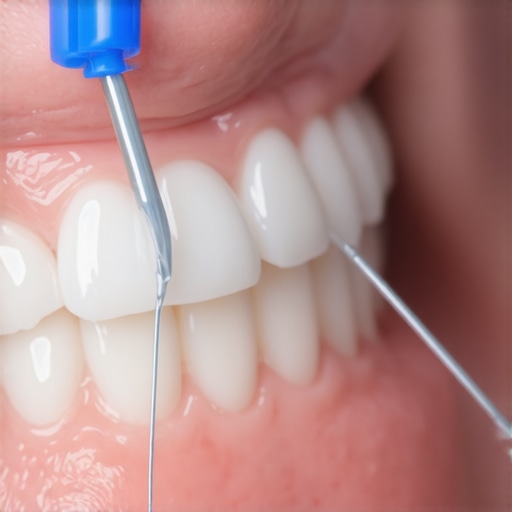 It is vital to keep the area debris-free to prevent the surrounding tissue from becoming inflamed. If you have not been diligent with this in the past, your gums might bleed when you restart a cleaning routine, but do not let that discourage you. Consistent hygiene is the only way to avoid major dental issues that require total replacement. By utilizing advanced cleaning techniques, you can often save the bridge and simply have it professionally re-cemented rather than starting over from scratch.Most people assume that to keep a bridge clean, they need to scrub it with the same vigor they would use on a dirty engine block. I call this the Brillo Pad Fallacy. In reality, the more aggressive you are with your toothbrush, the faster you might be inviting disaster. Over-brushing does not just wear down your enamel; it irritates the gingival margin—the thin line where your bridge meets the gum. When this tissue recedes, it exposes the edge of the restoration, creating a shelf for plaque to accumulate. This is one of the biggest oral health myths debunked by modern science: friction is not your friend when it comes to porcelain.
Can a lack of saliva actually dissolve your dental cement?
Here is the advanced nuance that rarely gets discussed in general check-ups: your spit is a structural component of your smile’s longevity. If you find yourself wondering why your mouth feels dry even when you drink plenty of water, you are at a significantly higher risk for bridge failure. Saliva acts as a natural buffer, neutralizing the acids that eat away at the dental cement. Without adequate flow, those acids become concentrated, essentially digging out the seal from the inside out. Research published by the American Dental Association emphasizes that xerostomia, or dry mouth, is a leading cause of secondary decay under existing restorations. It is not just uncomfortable; it is chemically destructive.  Then there is the whitening trap. Many patients, eager to keep their transformational cosmetic dentistry looking bright, switch to highly abrasive whitening toothpastes. The oops factor here is massive. Most of these products do not actually bleach the tooth; they use silica to sand off stains. But whitening toothpaste does not change the color of porcelain, and the grit can create microscopic scratches on the bridge surface. These scratches then act as anchors for even more stain and bacteria. I fell into this trap myself, thinking I was being extra clean, only to find my bridge felt gritty and unstable within months. Have you ever fallen into this trap, or noticed your bridge feeling different after switching products? Let me know in the comments. Realizing that how regular teeth cleaning can prevent major dental issues depends more on technique than brute force is a game-changer. Stick to soft bristles and pH-balanced rinses to keep that seal intact for the long haul.Once you realize that friction isn’t your friend, the next step is upgrading your toolkit. I used to think a standard toothbrush and a bit of string floss were enough, but after my first bridge scare, I went down a rabbit hole of dental tech. If you really want to protect the investment in your mouth, you need to think like a dental hygienist. For me, that meant finally embracing the benefits of using a water flosser. Unlike string, which can snag on the underside of the porcelain or fail to reach the deep recesses of the pontic (the fake tooth), a water flosser uses targeted pulsation to flush out bacteria. I personally use a model with a specialized ‘orthodontic tip’ because the tapered brush at the end allows me to physically scrub the margins while the water stream does the heavy lifting. This dual-action approach is one of those benefits of using a water flosser that most people overlook until they see their gum health improve in real-time.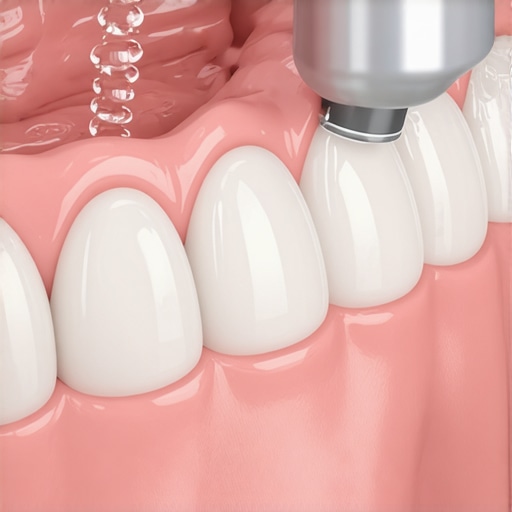
My Secret Weapon for Flawless Margins
Beyond the water flosser, I’ve added interdental brushes to my nightly routine. According to a landmark study in the Journal of Clinical Periodontology, interdental brushes are significantly more effective at removing biofilm in the difficult-to-reach areas under dental bridges compared to traditional flossing methods. I choose the extra-soft, plastic-coated variety to avoid any metal-on-porcelain scratching. Integrating these specific teeth cleaning techniques and benefits into your life isn’t just about hygiene; it’s about structural preservation. If you are managing a household, these are the types of family dentistry tips that prevent expensive emergency visits later on.
How can I maintain my dental bridge for decades instead of years?
The key is consistency and pH management. I’ve started using a xylitol-based mouth rinse specifically because it promotes a neutral environment, which protects the bonding cement from acidic erosion. I predict that in the very near future, we will see ‘smart’ dental restorations with built-in sensors that sync to your smartphone to alert you the moment a seal begins to leak. Until that high-tech future arrives, we have to be our own advocates for maintaining oral health through manual vigilance.
The Future of Home Dental Monitoring
We are already seeing a shift toward more preventive, data-driven care. This isn’t just a trend; it’s a necessity for anyone looking for preventive tips for long-lasting dental health. I suggest you try one specific advanced tip this week: switch to an extra-soft interdental brush dipped in a non-alcohol antiseptic and use it specifically around the ‘feet’ of your bridge. You will be amazed at the difference it makes in how fresh your mouth feels and how stable the restoration remains. Staying proactive is the only way to ensure your smile remains both beautiful and functional without constant worry about that next piece of sourdough.
3 Myths About Dental Bridges That Cost Me a Fortune
Reflecting on my own dental journey, I realized that many of us are taught to treat a bridge like a ‘set it and forget it’ solution. This couldn’t be further from the truth. One major revelation was that even the most expensive restoration is only as strong as the organic tooth holding it up. If you ignore the signs, you aren’t just losing a piece of porcelain; you’re risking the foundation of your smile. Many people believe oral health myths debunked by science, such as thinking that a bridge can’t decay because it’s not real tooth. In reality, the margin where the bridge meets your gum is the most vulnerable spot in your mouth.
- Bread is the silent killer: We worry about ice, but the suction of chewy dough is what pulls a bridge loose.
- Smell is a diagnostic tool: If it smells, it’s leaking—period.
- Small gaps lead to big bills: A simple rebonding today prevents a total replacement next year.
[IMAGE_PLACEHOLDER]
The Gear That Keeps My Bridge Rock-Solid
If you want to stop that wobbly sensation for good, you need the right tools. I’ve refined my routine to focus on three non-negotiables. First, ditch the gritty pastes; whitening toothpaste does not change the color of your bridge and only serves to scratch the surface. Instead, invest in a quality water flosser. The benefits of using a water flosser are unmatched when it comes to clearing debris from under a pontic without irritating the gums. Finally, keep a pack of plastic-coated interdental brushes in your car or purse for quick cleanups after meals.
Take Control of Your Smile’s Longevity Today
A loose bridge feels like a loss of control, but it is actually an opportunity to level up your hygiene. By listening to what your mouth is telling you and acting before the ‘wiggle’ becomes a ‘fallout,’ you ensure your investment lasts for decades. Your focus should always be on maintaining oral health through consistency rather than intensity. Don’t let a piece of sourdough dictate the future of your dental health—take that first step and see your dentist the moment something feels off. Have you ever felt that terrifying ‘click’ while eating something soft? Let me know in the comments below.