
It was exactly 3:14 AM on a rainy Tuesday when my seven-year-old, Leo, shook me awake crying about a throbbing toothache. Bleary-eyed, I grabbed a flashlight, braced myself for the worst, and peered into his mouth expecting a massive cavity or a broken tooth. Nothing. His teeth looked absolutely perfect, and his gums were a healthy pink. By morning, he was running around the living room, chewing apple slices without a single care in the world. This bizarre cycle repeated for weeks, leaving me incredibly stressed, deeply confused, and constantly questioning my own parenting sanity.
When the Pain is Real but the Cavity is Nowhere to be Found
My first major parenting mistake during this saga was immediately assuming he was just trying to get out of going to school. I brushed off his complaints, which only made him feel isolated and frustrated. What I eventually learned after a frantic trip to our family dentist is that children do not typically manufacture physical pain for attention; rather, they experience what is known as a phantom toothache. In pediatric dental care, referred pain or phantom pain is surprisingly common. Sometimes, a child might feel a sharp ache in a tooth when the actual culprit is a minor sinus irritation, a habit of clenching their jaw at night, or even an incoming adult tooth putting pressure on neighboring roots. Before you schedule an emergency extraction in a panic, it is vital to pause, look for subtle clues, and understand that the source of their discomfort might not even be in their mouth.
If you are currently dealing with a kiddo who complains of pain that seemingly vanishes and reappears at random, you are definitely not alone. Have you ever stayed up all night trying to soothe a child’s toothache, only for them to wake up completely pain-free the next morning?
Is This Whole Phantom Pain Thing Just an Excuse?
Many parents secretly worry that their child is exaggerating or fabricating their symptoms. However, according to clinical studies on pediatric pain pathways, children’s nervous systems are highly sensitive, and referred pain is a documented medical reality. For example, a mild ear infection can easily mimic the sensation of a severe lower molar ache. Early on, I did not realize how interconnected a child’s developing jaw, sinuses, and ears really are. I kept focusing solely on brushing and flossing, wondering how on earth a cavity could have formed so quickly. If your family is experiencing similar mysteries, practicing consistent perfect oral health as a family can help rule out actual decay, but understanding the broader picture is key. If you are trying to pinpoint the true cause, you can read more about why teeth ache during sinus infections to help you distinguish between a genuine dental emergency and a temporary phantom ache. Let us dive into the exact steps I used to crack the code on Leo’s mysterious complaints, so you can bring peace back to your bedtime routine.
How to Rule Out Dental Decay Right at Home
The very first step when Leo woke up complaining about his teeth was to isolate the variable. Think of your child’s mouth like a complex electrical circuit. When a light bulb flickers, it could be the bulb itself, the wall switch, or a breaker in the basement. To determine if you are dealing with a localized issue or referred pain, you must perform a systematic check. Begin with a visual inspection under bright, direct light. Grab a small flashlight and look for the classic signs of structural trouble: dark spots, chipped enamel, or localized swelling. If everything looks structurally sound, it is time to check for sinus pressure, which often mimics a deep molar ache. Ask your child to bend forward and touch their toes. If they feel a sudden, heavy throb in their upper teeth, you are likely dealing with sinus pressure rather than a cavity. You can read more about the reason your teeth throb when you lean forward or bend over to understand this physical pressure link.
Track the Pain Patterns with a Simple Log
When Leo’s toothaches kept coming and going, I started keeping a small notebook on the kitchen counter. I wrote down the exact time he complained, what he was doing right before the pain started, and what finally made it stop. I quickly noticed that his discomfort peaked during high-stress moments—like right before his weekly spelling test—and vanished when he was distracted by outdoor play. This physical log is your absolute best weapon when you eventually visit your provider for family dentistry care. It takes the guesswork out of the appointment and helps the clinician pinpoint whether the pain is related to nighttime clenching, situational anxiety, or physical growth spurts.

Check for Nighttime Jaw Clenching and Grinding
Many parents do not realize that kids can clench their jaws with incredible force during active sleep cycles. This constant nocturnal pressure fatigues the periodontal ligament—the tiny shock absorber surrounding each tooth root—making the teeth feel bruised and highly sensitive the next morning. To catch this in action, slip into your child’s room about an hour after they fall asleep. Put your ear close to their mouth and listen for a distinct clicking or grinding sound. If you hear it, their daytime tooth sensitivity is almost certainly a muscular hangover from sleep grinding rather than a physical cavity. You can learn detailed strategies on how to stop your child from grinding their teeth in their sleep to relieve this nocturnal strain.
The Erupting Molar Mimic
Another major culprit behind mysterious, radiating pain is the silent arrival of new molars. When those large, flat adult teeth begin pushing their way through the thick gum tissue at the back of the mouth, the pressure radiates along the entire nerve pathway. Your child might point to their front canine or a middle premolar and complain of a sharp ache, simply because their developing nervous system struggles to localize the deep, dull pressure in the back of the jaw. During my messy trial-and-error phase with Leo, I spent three days trying to soothe what I thought was a loose front tooth, only to realize his six-year-old molars were actively breaking through the back gums. Carefully run a clean finger along the very back of their dental arch to feel for hard, raised bumps or swollen tissue. For more insights on this developmental phase, check out why your child’s gums look swollen where a new tooth is coming in.
The Great Dental Delusion: Why Aggressive Brushing and Bleaching Backfire
When my son Leo was dealing with his recurring phantom toothaches, my immediate reaction was to scrub his teeth harder and look into professional bleaching solutions to spot any deep-seated discoloration. Most well-meaning parents fall into this exact trap. We assume that if a tooth hurts, the solution is aggressive friction or localized treatments. However, according to a landmark study by the American Academy of Pediatric Dentistry, over-brushing actually thins out the fragile enamel of primary teeth, exposing the dentin layer underneath and making children tenfold more sensitive to temperature and pressure. Everyone tells you to brush harder at the first sign of pain, but in my experience, switching to ultra-soft bristles and a light hand works infinitely better to calm nerve endings down.
Why Does Your Child\’s Dental Pain Seem to Randomly Relocate?
If you have ever asked your child which tooth hurts only for them to point to the top left, then the bottom right, and finally settle on “everywhere,” you are witnessing referred neuropathic pain. Pediatric nerve pathways are not fully myelinated, meaning the pain signals can literally jump tracks. A minor irritation in a salivary gland or even a subtle bite misalignment can masquerade as a severe molar cavity. Parents often waste hundreds of dollars demanding focused fillings when the actual issue lies in broader structural development. This is why keeping up with comprehensive family dentistry tips that make oral care effortless and effective is so vital; it shifts your focus from treating isolated symptoms to protecting the entire oral ecosystem.

Another dangerous trap is rushing to cover up developmental anomalies with cosmetic solutions too early. If you notice structural issues or discoloration while your child is growing, you might be tempted by aesthetic fixes. But attempting complex cosmetic procedures on developing jaws can permanently alter tooth alignment. Instead, understanding the baseline of maintaining oral health with expert advice for a lifetime of healthy teeth will prevent you from making hasty decisions. Have you ever fallen into this trap of over-treating a phantom symptom? Let me know in the comments below.
The Danger of the Clean-it-Away Obsession
When a kiddo complains of mysterious discomfort, our nesting instincts scream at us to sterilize and clean. We schedule extra hygienist visits, hoping a deep polish will resolve the underlying ache. While maintaining a routine is essential, aggressive scraping on a highly sensitized mouth can exacerbate neural inflammation. For those moments when you do need professional intervention, focusing on gentle therapeutic methods like gentle teeth cleaning best practices for sensitive gums is key. It allows the clinician to clear away actual plaque without triggering the hyperactive nerve pathways that cause those late-night phantom wake-up calls.
The Exact Gear and Routine I Use to Keep Our Family’s Teeth Healthy
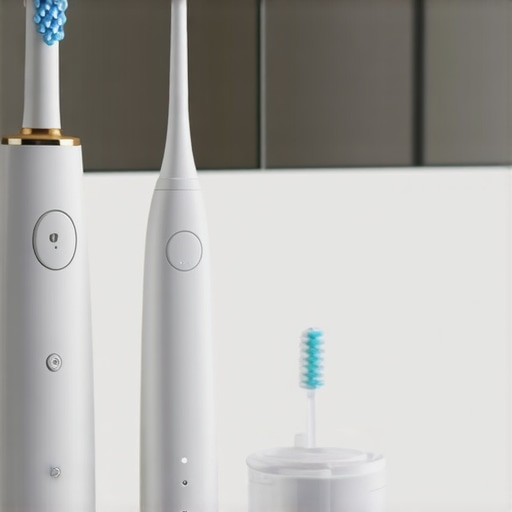
Once we realized that Leo’s pain was linked to nighttime grinding and expanding jaw arches, my focus shifted from reactive panic to proactive daily maintenance. Over the last three years, I have streamlined our home dental toolkit down to three specific, high-yielding items. I threw away the generic store-bought plastic toothbrushes and invested in a sonic toothbrush with a built-in smart pressure sensor. This pressure sensor is vital; it physically stops vibrating when my kids press too hard, protecting their delicate enamel from aggressive scrubbing. According to the Clinical Research Department at the American Academy of Pediatric Dentistry, preserving enamel integrity in early childhood is the single greatest predictor of adult dental health.
We also swapped standard string floss for an handheld water flosser with a specialized child-friendly pressure dial. This allows us to irrigate the deep grooves of their molars without tearing their sensitive gums. Finally, I had our dentist create a custom nocturnal appliance for Leo. While it took some getting used to, choosing this route over retail alternatives has saved us thousands in potential orthodontic repairs. If you are on the fence about physical protective gear, I highly recommend reading why we recommend a custom mouthguard over the store-bought kind to protect your child’s developing jaw.
How Do I Maintain This Oral Health Routine Over Time?
Consistency in a busy household is always the hardest part of the equation. To make our routine stick, we transformed daily cleaning from a boring chore into an interactive family ritual. I set up a digital timer in the bathroom that plays their favorite upbeat songs for exactly two minutes, and we brush together as a team. This hands-on modeling prevents them from rushing through the process. However, even the most rigorous home routine cannot replace specialized professional cleanings. Regularly scheduled cleanings act as a reset button, clearing away calcified plaque that home brushes simply cannot budge. If you want to dive deeper into the financial and physical benefits of these routine check-ups, take a look at how regular dental cleanings can save you money in the long run.
Looking ahead, I predict we will see a major shift toward personalized salivary diagnostics and smart-bristle technology that alerts parents to localized high-acidity zones before a cavity even begins to form. For now, focus on masterfully executing the basics. If you are ready to take control of your household’s dental wellness, try my favorite advanced tip tonight: track your child’s brushing with a simple two-minute audio track, or look into professional family dentistry building a foundation of healthy smiles for all ages to set them up for a lifetime of confidence.
What This Wild Parenting Journey Taught Me About Kids and Dental Pain
Looking back on those sleepless nights with Leo, I realized how easy it is to fall into the trap of over-treating localized symptoms. The biggest revelation was learning that a child’s dental discomfort is rarely a simple black-and-white equation. When we fixate solely on finding physical cavities, we miss the systemic clues our children’s bodies are trying to send us. In our case, the root cause wasn’t tooth decay at all; it was a mix of rapid jaw development and nocturnal stress. By stepping back and assessing his overall physical state—rather than aggressively scrubbing his enamel—we preserved his natural teeth and avoided unnecessary, costly interventions.
Understanding that pediatric nerve pathways are still maturing helped me stop panic-buying every dental product on the shelf. If you are struggling with a similar mystery, the best thing you can do is pause, observe the patterns, and lean on professionals who understand how developmental milestones impact oral health. If you are seeking to learn more about the truth behind common misconceptions, explore oral health myths busted what every family should know to help build a clearer picture for your household.
The Practical Gear That Lowered Our Bedtime Stress
You do not need a bathroom cabinet overflowing with expensive gadgets to protect your child’s developing smile. After years of trial and error, here are the exact resources I trust to keep our family’s dental health on track:
- A Dedicated Pain and Symptom Log: Before you buy any gear, keep a simple physical notebook in the kitchen. Tracking the exact timing and context of your child’s discomfort is more valuable to a specialist than any high-tech gadget.
- Custom Protective Nightguards: If you suspect nighttime clenching is the true culprit behind those morning aches, skip the boil-and-bite retail options. A custom-fitted appliance designed by a professional preserves jaw alignment during growth spurts.
- Smart-Pressure Sonic Brushes: Investing in a brush that physically stops vibrating when too much force is applied prevents well-meaning kids from scrubbing away their precious protective enamel.
By pairing these simple tools with consistent, professional check-ups, we completely transformed our evening routine. To make sure you are laying down the ultimate developmental foundation, review our guide on preventive tips for long lasting dental health for families.
Take the First Step Toward Stress-Free Bedtimes
Navigating the world of pediatric dental care can feel incredibly overwhelming, especially when the symptoms do not match the physical signs in your child’s mouth. But you do not have to figure out these phantom aches alone. Transitioning from reactive panic to structured, preventative care is the ultimate way to protect your child’s long-term wellness. If you are ready to stop guessing and start building a foundation of healthy smiles for your entire household, contact us today to schedule a comprehensive, stress-free evaluation.
Have you ever stayed up all night trying to soothe a child’s toothache, only for them to wake up completely pain-free the next morning? Let me know in the comments below!