
I remember sitting at my kitchen table three months after my surgery, bracing myself to take a sip of lukewarm coffee and feeling a throb that simply shouldn’t have been there. It wasn’t the sharp sting of a cavity; it was a deep, dull pressure that felt like my jaw was trying to evict its newest resident. For weeks, I convinced myself I was just being paranoid or that why your new dental implant feels different when you chew was just part of the ‘settling in’ process. I even made the rookie mistake of brushing more aggressively with a stiff brush, thinking I just had a bit of trapped food, which only made the inflammation worse. That mistake taught me a vital lesson: your body has its own language for rejection, and if you don’t learn the vocabulary, you risk losing an expensive and time-consuming investment. Today, I want to help you decode those whispers from your gums before they turn into a full-blown dental emergency. We are going to look at the subtle shifts in sensation and the physical markers that suggest your titanium post isn’t quite at home yet.
Listen to Your Jaw Before It Starts Screaming
When everything is going right, you should eventually forget the implant is even there. But when things go south, the signs can be surprisingly sneaky. One of the biggest red flags I missed early on was a sensation of ‘itchiness’ deep within the gum line. It sounds weird, right? But that phantom itch is often a sign of early-stage inflammation or a mild allergic reaction to the material. I’ve found that many people ignore this, thinking it’s just healing. In reality, understanding the truth about bone density and your dental implant success is crucial because if the bone doesn’t fuse perfectly—a process called osseointegration—the implant remains a foreign object that your immune system will eventually target. Have you ever felt a strange, rhythmic pulsing around your implant site that doesn’t seem to go away? Drop a comment or reach out; I’d love to hear if your experience mirrors what I went through.
Is all this worry about implant rejection just hype?
It is easy to get caught up in the horror stories you read online, but let’s look at the hard facts. According to the American Academy of Implant Dentistry, dental implants have a staggering success rate of approximately 98%. However, that remaining 2% represents thousands of patients who face challenges like peri-implantitis or mechanical failure. It isn’t just ‘hype’ when it’s your smile on the line. I used to think I was invincible because I followed the how to manage the first 48 hours after getting a dental implant guide to the letter, but late-term rejection can happen months or even years later. Usually, it stems from things we overlook, like shifting teeth or underlying health changes. While how dental implants can prevent your jawbone from shrinking is a massive benefit, that benefit only lasts if the environment remains healthy. If you notice your gums receding or looking darker near the base of the crown, it’s time to stop ‘monitoring’ it and start acting.
Maintaining an implant isn’t about working harder; it’s about working smarter. You need to treat the gum-to-metal seal like a delicate gasket in a high-pressure engine. If that seal breaks, bacteria flood the ‘engine room’ of your jawbone, leading to the very bone loss we are trying to avoid. To keep that titanium post anchored, you must become a guardian of the ‘perimucosal seal’—the point where your gum meets the crown.
Master the Daily Defense Routine
To ensure your implant stays seated, you must prioritize the health of the surrounding tissue above all else. Think of your implant as a high-performance anchor; it’s strong, but the environment around it is volatile. To keep it stable, you have to manage the ‘biofilm’—that thin, sticky layer of bacteria that loves titanium surfaces even more than natural enamel.
Why Soft Bristles Save Your Gums
During my first year with the implant, I was so paranoid about plaque that I used a ‘firm’ brush, thinking I needed to ‘scour’ the crown. I ended up with bleeding and a raw sensation that felt like a permanent burn. My dentist sat me down and explained why your gums recede faster if you use a hard-bristled brush. For an implant, recession is a death sentence because it exposes the threads of the post, creating a playground for infection. Switching to the best toothbrush texture for people with receding gums was a game-changer. You want soft, tapered bristles that can slide under the gum margin without scratching the titanium or irritating the delicate tissue. 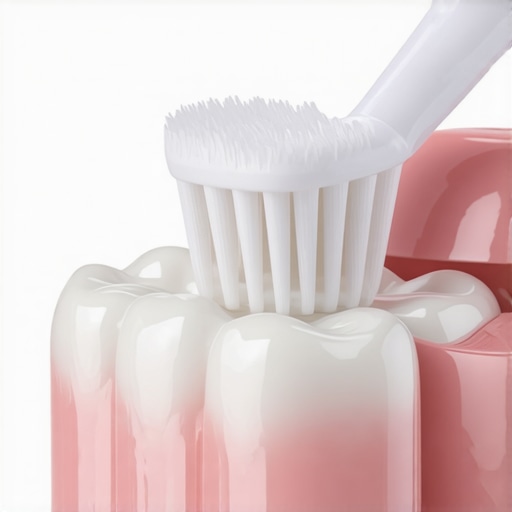
The Flossing Method That Protects the Seal
Standard flossing is great, but for implants, you need a more nuanced approach. The way the gum attaches to an implant is different from a natural tooth; it’s more like a tight cuff than a deep root. I’ve found that using specialized ‘implant floss’—which is thicker and more like yarn—or a high-quality water flosser is much more effective. When you follow gentle teeth cleaning best practices for sensitive gums, you focus on flushing out debris without snapping the floss against the gum tissue. I once snapped a piece of cheap floss so hard against my implant site that I caused a minor hematoma—a mistake that cost me three days of panic. Now, I advocate for a slow, circular motion that clears the ‘sulcus’ (the pocket around the tooth) without trauma.
Professional Checks Stop Issues Early
Even with the best home care, you can’t see what’s happening beneath the surface. This is where how regular teeth cleaning can prevent major dental issues comes into play. Professionals use specialized ultrasonic scalers or carbon-fiber instruments that won’t scratch your titanium. If you try to DIY a deep clean at home, you risk creating microscopic grooves on the post where bacteria will hide and thrive. Relying on the ultimate guide to teeth cleaning techniques and benefits ensures you understand that professional maintenance is about verifying the structural integrity of the bone-to-implant connection twice a year. If your dentist notices the slightest ‘pocket’ deepening, they can intervene before the bone starts to retreat.
While most people focus on the threat of bacteria, I have learned the hard way that mechanical failure is just as dangerous. There is a persistent myth that once an implant is in, it is basically a bionic part that can handle anything. This is a dangerous misconception. In reality, the way your teeth meet—your occlusion—is the invisible force that determines if your implant lasts ten years or two. If your bite is even a fraction of a millimeter off, you are essentially hammering that titanium post into your jawbone every time you chew. This lead to a revelation for me: you can have the cleanest mouth in the world and still experience failure if your bite alignment is neglected. This is often where oral health myths debunked what you need to know in 2025 comes into play, helping you see past the surface-level advice typically found in brochures.
Stop Blaming Bacteria for Every Ache
Many patients are told that peri-implantitis is the only enemy, but research in the Journal of Oral Implantology suggests that ‘biomechanical overload’ is a silent contributor to early crestal bone loss. When I first got my crown, I noticed a tiny clicking sound when I ate crusty bread. I ignored it, thinking it was just the new material. That was my first ‘oops’ moment. That click was actually my crown slightly shifting because the ‘fit’ wasn’t perfect. I was lucky I caught it before the constant vibration loosened the internal screw. This nuance is why maintaining oral health expert advice for a lifetime of healthy teeth involves more than just a toothbrush; it requires a deep understanding of how your jaw move as a whole unit.
How do you tell if your implant is loose or just ‘settling’ into the bone?
This is the question that keeps most implant patients up at night. The truth is, a healthy implant should never feel ‘loose.’ If you feel any movement, it is rarely the titanium post itself moving—if that happens, the implant has already failed—but rather the prosthetic crown or the abutment screw coming loose. However, even a loose screw can allow bacteria to seep into the internal chamber of the implant, leading to a foul taste or smell that no amount of cleaning can fix. If you ever feel like how to tell if your crown is too high for your bite is a question relevant to your current discomfort, you need a professional adjustment immediately. Have you ever felt a weird ‘hollow’ sensation when tapping on your implant? Let me know in the comments, as that was my first clue that something was structurally off.
The Hidden Danger of a High Bite
One of the most common traps is the ‘high crown’ syndrome. Because dental implants lack the periodontal ligament—the fleshy ‘cushion’ that surrounds natural teeth—they have zero shock-absorption. A natural tooth can sink slightly into the socket to accommodate a heavy bite; an implant cannot. It takes the full force of the impact directly into the bone. This is why you should be wary of aggressive whitening treatments or DIY cosmetic fixes that might alter the surface of your teeth and shift your bite. While the science behind teeth whitening achieve stunning results fast is fascinating, you must ensure that any cosmetic change respects the delicate balance of your existing dental work. Always remember that your implant is a guest in your jaw; treat it with the precision it deserves, and it will serve you for a lifetime.
I learned the hard way that a standard toothbrush is like trying to detail a sports car with a kitchen sponge. After my implant was fully loaded, I realized the manual approach just wasn’t cutting it for the hard-to-reach crevices between the crown and the gum line. I eventually invested in a high-quality water flosser, specifically the Waterpik Aquarius, because it offers a specialized Plaque Seeker tip designed specifically for implants and bridges. I use it every single night on setting 6—it provides enough pressure to flush the sulcus without compromising the perimucosal seal. This has been far more effective for me than standard string, which often snagged on the metal edges. If you’re still struggling with bleeding, checking out gentle teeth cleaning best practices for sensitive gums can help you refine your technique before you cause unnecessary trauma to the site.
How can I keep my dental work looking brand new for years?
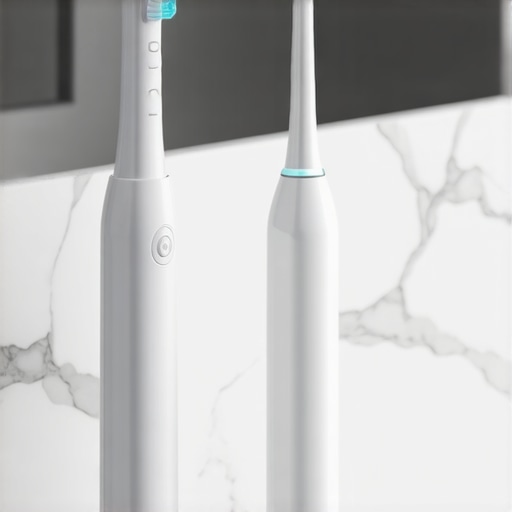
Consistency is the boring answer, but the tools make that consistency possible. Beyond the water flosser, I’ve found that using an oscillating electric brush with a pressure sensor is non-negotiable. I personally use the Oral-B iO series because it vibrates rather than just rotates, which feels much kinder to my cosmetic dentistry work. According to the Swiss Dental Academy, the gold standard for maintenance is now Guided Biofilm Therapy (GBT). This isn’t something you do at home, but rather a professional service where they use a warmed, pressurized spray of fine erythritol powder to remove 100% of the biofilm without ever touching your teeth with a metal instrument. It is a total game-changer for anyone with implants or extensive veneers because it eliminates the risk of scratching your titanium or porcelain. This is a core part of maintaining oral health expert advice for a lifetime of healthy teeth that many people overlook because they are stuck in the old-school scrape and polish mindset.
Looking ahead, I predict we are moving toward a proactive monitoring era. Within the next five years, I expect to see smart mouthguards that can detect the acidity of your saliva or the presence of specific inflammatory markers in real-time, syncing directly to your family dentistry provider’s dashboard. This would allow for intervention weeks before you ever feel a throb. For now, we have to rely on how regular teeth cleaning can prevent major dental issues to catch the early signs of wear. If you’ve invested in your smile, don’t let a $10 manual toothbrush be the reason it fails. I challenge you to swap out your standard floss for a water flosser for just two weeks; you’ll be shocked by what the string was leaving behind. If you have questions about which specific tip to use for your bridge or implant, you can always contact us to get a professional recommendation tailored to your specific hardware.
I remember sitting at my kitchen table three months after my surgery, bracing myself to take a sip of lukewarm coffee and feeling a throb that simply shouldn’t have been there. It wasn’t the sharp sting of a cavity; it was a deep, dull pressure that felt like my jaw was trying to evict its newest resident. For weeks, I convinced myself I was just being paranoid or that why your new dental implant feels different when you chew was just part of the ‘settling in’ process. I even made the rookie mistake of brushing more aggressively with a stiff brush, thinking I just had a bit of trapped food, which only made the inflammation worse. That mistake taught me a vital lesson: your body has its own language for rejection, and if you don’t learn the vocabulary, you risk losing an expensive and time-consuming investment. Today, I want to help you decode those whispers from your gums before they turn into a full-blown dental emergency. We are going to look at the subtle shifts in sensation and the physical markers that suggest your titanium post isn’t quite at home yet.
Listen to Your Jaw Before It Starts Screaming
When everything is going right, you should eventually forget the implant is even there. But when things go south, the signs can be surprisingly sneaky. One of the biggest red flags I missed early on was a sensation of ‘itchiness’ deep within the gum line. It sounds weird, right? But that phantom itch is often a sign of early-stage inflammation or a mild allergic reaction to the material. I’ve found that many people ignore this, thinking it’s just healing. In reality, understanding the truth about bone density and your dental implant success is crucial because if the bone doesn’t fuse perfectly—a process called osseointegration—the implant remains a foreign object that your immune system will eventually target. Have you ever felt a strange, rhythmic pulsing around your implant site that doesn’t seem to go away? Drop a comment or reach out; I’d love to hear if your experience mirrors what I went through.
Is all this worry about implant rejection just hype?
It is easy to get caught up in the horror stories you read online, but let’s look at the hard facts. According to the American Academy of Implant Dentistry, dental implants have a staggering success rate of approximately 98%. However, that remaining 2% represents thousands of patients who face challenges like peri-implantitis or mechanical failure. It isn’t just ‘hype’ when it’s your smile on the line. I used to think I was invincible because I followed the how to manage the first 48 hours after getting a dental implant guide to the letter, but late-term rejection can happen months or even years later. Usually, it stems from things we overlook, like shifting teeth or underlying health changes. While how dental implants can prevent your jawbone from shrinking is a massive benefit, that benefit only lasts if the environment remains healthy. If you notice your gums receding or looking darker near the base of the crown, it’s time to stop ‘monitoring’ it and start acting.
Maintaining an implant isn’t about working harder; it’s about working smarter. You need to treat the gum-to-metal seal like a delicate gasket in a high-pressure engine. If that seal breaks, bacteria flood the ‘engine room’ of your jawbone, leading to the very bone loss we are trying to avoid. To keep that titanium post anchored, you must become a guardian of the ‘perimucosal seal’—the point where your gum meets the crown.
Master the Daily Defense Routine
To ensure your implant stays seated, you must prioritize the health of the surrounding tissue above all else. Think of your implant as a high-performance anchor; it’s strong, but the environment around it is volatile. To keep it stable, you have to manage the ‘biofilm’—that thin, sticky layer of bacteria that loves titanium surfaces even more than natural enamel.
Why Soft Bristles Save Your Gums
During my first year with the implant, I was so paranoid about plaque that I used a ‘firm’ brush, thinking I needed to ‘scour’ the crown. I ended up with bleeding and a raw sensation that felt like a permanent burn. My dentist sat me down and explained why your gums recede faster if you use a hard-bristled brush. For an implant, recession is a death sentence because it exposes the threads of the post, creating a playground for infection. Switching to the best toothbrush texture for people with receding gums was a game-changer. You want soft, tapered bristles that can slide under the gum margin without scratching the titanium or irritating the delicate tissue.
The Flossing Method That Protects the Seal
Standard flossing is great, but for implants, you need a more nuanced approach. The way the gum attaches to an implant is different from a natural tooth; it’s more like a tight cuff than a deep root. I’ve found that using specialized ‘implant floss’—which is thicker and more like yarn—or a high-quality water flosser is much more effective. When you follow gentle teeth cleaning best practices for sensitive gums, you focus on flushing out debris without snapping the floss against the gum tissue. I once snapped a piece of cheap floss so hard against my implant site that I caused a minor hematoma—a mistake that cost me three days of panic. Now, I advocate for a slow, circular motion that clears the ‘sulcus’ (the pocket around the tooth) without trauma.
Professional Checks Stop Issues Early
Even with the best home care, you can’t see what’s happening beneath the surface. This is where how regular teeth cleaning can prevent major dental issues comes into play. Professionals use specialized ultrasonic scalers or carbon-fiber instruments that won’t scratch your titanium. If you try to DIY a deep clean at home, you risk creating microscopic grooves on the post where bacteria will hide and thrive. Relying on the ultimate guide to teeth cleaning techniques and benefits ensures you understand that professional maintenance is about verifying the structural integrity of the bone-to-implant connection twice a year. If your dentist notices the slightest ‘pocket’ deepening, they can intervene before the bone starts to retreat.
While most people focus on the threat of bacteria, I have learned the hard way that mechanical failure is just as dangerous. There is a persistent myth that once an implant is in, it is basically a bionic part that can handle anything. This is a dangerous misconception. In reality, the way your teeth meet—your occlusion—is the invisible force that determines if your implant lasts ten years or two. If your bite is even a fraction of a millimeter off, you are essentially hammering that titanium post into your jawbone every time you chew. This lead to a revelation for me: you can have the cleanest mouth in the world and still experience failure if your bite alignment is neglected. This is often where oral health myths debunked what you need to know in 2025 comes into play, helping you see past the surface-level advice typically found in brochures.
Stop Blaming Bacteria for Every Ache
Many patients are told that peri-implantitis is the only enemy, but research in the Journal of Oral Implantology suggests that ‘biomechanical overload’ is a silent contributor to early crestal bone loss. When I first got my crown, I noticed a tiny clicking sound when I ate crusty bread. I ignored it, thinking it was just the new material. That was my first ‘oops’ moment. That click was actually my crown slightly shifting because the ‘fit’ wasn’t perfect. I was lucky I caught it before the constant vibration loosened the internal screw. This nuance is why maintaining oral health expert advice for a lifetime of healthy teeth involves more than just a toothbrush; it requires a deep understanding of how your jaw move as a whole unit.
How do you tell if your implant is loose or just ‘settling’ into the bone?
This is the question that keeps most implant patients up at night. The truth is, a healthy implant should never feel ‘loose.’ If you feel any movement, it is rarely the titanium post itself moving—if that happens, the implant has already failed—but rather the prosthetic crown or the abutment screw coming loose. However, even a loose screw can allow bacteria to seep into the internal chamber of the implant, leading to a foul taste or smell that no amount of cleaning can fix. If you ever feel like how to tell if your crown is too high for your bite is a question relevant to your current discomfort, you need a professional adjustment immediately. Have you ever felt a weird ‘hollow’ sensation when tapping on your implant? Let me know in the comments, as that was my first clue that something was structurally off.
The Hidden Danger of a High Bite
One of the most common traps is the ‘high crown’ syndrome. Because dental implants lack the periodontal ligament—the fleshy ‘cushion’ that surrounds natural teeth—they have zero shock-absorption. A natural tooth can sink slightly into the socket to accommodate a heavy bite; an implant cannot. It takes the full force of the impact directly into the bone. This is why you should be wary of aggressive whitening treatments or DIY cosmetic fixes that might alter the surface of your teeth and shift your bite. While the science behind teeth whitening achieve stunning results fast is fascinating, you must ensure that any cosmetic change respects the delicate balance of your existing dental work. Always remember that your implant is a guest in your jaw; treat it with the precision it deserves, and it will serve you for a lifetime.
I learned the hard way that a standard toothbrush is like trying to detail a sports car with a kitchen sponge. After my implant was fully loaded, I realized the manual approach just wasn’t cutting it for the hard-to-reach crevices between the crown and the gum line. I eventually invested in a high-quality water flosser, specifically the Waterpik Aquarius, because it offers a specialized Plaque Seeker tip designed specifically for implants and bridges. I use it every single night on setting 6—it provides enough pressure to flush the sulcus without compromising the perimucosal seal. This has been far more effective for me than standard string, which often snagged on the metal edges. If you’re still struggling with bleeding, checking out gentle teeth cleaning best practices for sensitive gums can help you refine your technique before you cause unnecessary trauma to the site.
How can I keep my dental work looking brand new for years?
Consistency is the boring answer, but the tools make that consistency possible. Beyond the water flosser, I’ve found that using an oscillating electric brush with a pressure sensor is non-negotiable. I personally use the Oral-B iO series because it vibrates rather than just rotates, which feels much kinder to my cosmetic dentistry work. According to the Swiss Dental Academy, the gold standard for maintenance is now Guided Biofilm Therapy (GBT). This isn’t something you do at home, but rather a professional service where they use a warmed, pressurized spray of fine erythritol powder to remove 100% of the biofilm without ever touching your teeth with a metal instrument. It is a total game-changer for anyone with implants or extensive veneers because it eliminates the risk of scratching your titanium or porcelain. This is a core part of maintaining oral health expert advice for a lifetime of healthy teeth that many people overlook because they are stuck in the old-school scrape and polish mindset.
Looking ahead, I predict we are moving toward a proactive monitoring era. Within the next five years, I expect to see smart mouthguards that can detect the acidity of your saliva or the presence of specific inflammatory markers in real-time, syncing directly to your family dentistry provider’s dashboard. This would allow for intervention weeks before you ever feel a throb. For now, we have to rely on how regular teeth cleaning can prevent major dental issues to catch the early signs of wear. If you’ve invested in your smile, don’t let a $10 manual toothbrush be the reason it fails. I challenge you to swap out your standard floss for a water flosser for just two weeks; you’ll be shocked by what the string was leaving behind. If you have questions about which specific tip to use for your bridge or implant, you can always contact us to get a professional recommendation tailored to your specific hardware.
Why Your Intuition Is Often Faster Than an X-Ray
One of the biggest lessons I have learned is that you are the primary expert on your own mouth. Clinical exams are vital, but they only provide a snapshot in time. I have had moments where my X-rays looked perfect, yet I knew something was ‘off’—a tiny metallic taste or a slight change in the way my floss felt. Don’t let anyone brush off your concerns as anxiety. In the world of family dentistry, the best outcomes happen when the patient is vocal about these micro-changes. Remember, pain is a late-stage symptom; sensation is the early-stage signal. Trusting that ‘itch’ or ‘pulse’ can be the difference between a simple adjustment and a full surgical revision.
The Gear That Makes Maintenance Effortless
If you are serious about protecting your investment, you need to upgrade your toolkit. I don’t recommend these lightly; I use them because they actually solve the problems we’ve discussed. First, the Waterpik Plaque Seeker Tip is non-negotiable for anyone with implants. Unlike standard tips, it has three thin tufts of bristles that specifically target the junction where the crown meets the metal. Second, I suggest looking into TePe Interdental Brushes. They are plastic-coated so they won’t scratch your titanium, and they are perfect for mechanical biofilm removal in tight gaps. Finally, stay curious about revolutionary teeth cleaning techniques for 2025 like Guided Biofilm Therapy. These are the tools that transform oral care from a chore into a precision science.
The Future of Your Smile Starts with Today’s Routine
It is easy to get overwhelmed by the technicalities, but the goal is simple: keep the bone happy and the bacteria at bay. Your dental implant isn’t just a piece of metal; it’s a second chance at a functional, confident life. By staying ahead of the signs of rejection and committing to the right maintenance, you are doing more than just cleaning—you are preserving your future self’s ability to eat, speak, and smile without a second thought. Don’t be afraid to take charge of your dental health; the technology exists to support you, but you have to be the one to use it. Have you ever felt a strange sensation around your dental work that turned out to be a sign you needed to act? Let me know below so we can keep the conversation going.