
I sat in my kitchen, staring at a plate of tacos like they were a live grenade. Just three hours earlier, I had walked out of the clinic with a brand-new bridge, feeling like a million bucks. Then reality hit. My jaw felt heavy, my gums were tender, and the thought of any crunch sent a shiver down my spine. I actually ended up eating a bowl of lukewarm mashed potatoes that night, but I did it wrong—I added crispy bacon bits. Big mistake. One tiny shard of bacon got wedged, and I spent the next hour in a cold sweat, hovering over a mirror with a flashlight. Trust me, you do not want to be where I was.
Soft Foods Save Your Sanity and Your Investment
Getting a dental bridge is a massive leap forward in enhancing confidence with cosmetic dentistry, but that first week is a delicate dance. You have spent the time and money to fix your smile, so why gamble it on a baguette? The reason why this matters right now is simple: your bridge is currently held by temporary or freshly curing permanent cement, and your underlying abutment teeth are likely still sensitive from the preparation. I learned the hard way that rushing back to my normal diet did not just hurt; it made me anxious every time I opened my mouth. Today, I am going to share the exact menu that got me through my second bridge without a single panicked call to the office. We are solving the starving-but-scared-to-eat dilemma once and for all.
Is a strict soft-food diet really that necessary?
You might be tempted to think you can just chew on the good side and be fine. I tried that too. The problem is that your tongue and jaw are not as precise as you think they are, especially when you are still slightly numb or adjusting to the new hardware. One slip-up leads to a frantic search for the move to take if your dental bridge feels loose. We are going to avoid that panic by focusing on high-protein, high-flavor foods that require zero chomping. According to clinical guidelines from the American Dental Association, avoiding sticky or hard foods is critical because they can literally pull the bridge off the prepared teeth before the bond has fully matured. Have you ever had that heart-stopping moment where you bit down on something and felt a click that should not be there?
Comfort Food That Wont Break the Bank or the Bridge
Setting the stage for a successful recovery means being prepared before you even leave the dentist’s chair. If you wait until you are hungry to decide what to eat, you will likely make a poor choice. I remember sitting there, feeling the new porcelain with my tongue, and it felt like a foreign object. That sensation is normal, but it makes you hyper-aware of everything. My biggest mistake early on was not realizing that soft is a spectrum. I thought pasta was safe, but al dente penne can actually be surprisingly tough on a new bridge. You want mushy—the kind of food you could arguably eat with a spoon without using your teeth at all. This is not just about protecting the porcelain; it is about giving your nerves time to calm down. After all, how long you should really wait to eat after a procedure depends on the specific cement used, but the first 24 hours are always the most critical window for long-term success.
Heat and Cold Can Be Your Worst Enemies
Think of your newly prepared abutment teeth like a fresh bruise on your arm. Even a light touch can make you jump. In the dental world, that touch is temperature. Your nerves are on high alert because the enamel was reshaped to fit the bridge, and the cement is still settling into the microscopic pores of your teeth. During my first 48 hours, I made the mistake of trying a steaming bowl of tomato soup. The sharp zing that shot through my jaw felt like an electric shock. To avoid this, treat every meal like it is for a toddler—lukewarm is your new best friend. If you find that even room-temperature water is causing a localized jolt, you might be experiencing a common post-op sensitivity. Knowing how to stop cold water from triggering sharp nerve pain in one tooth can be a lifesaver during this transition period.
Does Your Meal Pass the Fork Test?
This is the golden rule I live by now. If you cannot mash the food into a complete paste with the back of a plastic fork using zero effort, it does not belong in your mouth. This means no ‘soft’ breads that can become gummy and pull on the bridge, and definitely no ‘tender’ meats that still require a grinding motion. I learned this lesson through a messy disaster involving a blackberry smoothie. I thought I was being healthy, but a single tiny seed got lodged right in the gap between my gum and the temporary pontic. I could not use a toothpick for fear of prying the bridge loose, and the irritation was maddening. If you ever find yourself in that spot, you need to know what to do when a piece of food is stuck deep in your gums without resorting to hardware store tools. 
Stop Thinking About Chewing and Start Blending
The secret to not feeling like you are starving is to prioritize protein-heavy liquids and purees. Greek yogurt, silken tofu blended into soups, and protein shakes are your heavy hitters. When you are healing, your body needs those nutrients to settle the inflammation around the gum line. Think of your bridge like a new fence post set in wet concrete; you wouldn’t lean on the fence until the concrete has dried, right? Your bridge needs that same respect. Much like the protocol for how to manage the first 48 hours after getting a dental implant, the goal is zero disturbance to the site.
Keep the Gunk Away Without Pulling the Bridge
Hygiene is the trickiest part of the ‘soft food’ phase. Soft foods like mashed potatoes or avocado tend to leave a film behind. You cannot just scrub it away with a hard-bristled brush because you risk catching the edge of the bridge. Instead, use a gentle salt-water rinse after every ‘meal.’ Do not swish violently—just tilt your head side to side. This keeps the area clean and reduces the risk of the ‘itchy’ feeling that comes with healing gums. Learning the move to clean under your dental bridge safely is something you should master now, even while things are tender, to ensure the long-term health of those supporting teeth.While we are on the subject of hygiene, there is a massive misconception I see everywhere: the idea that once a bridge is cemented, those teeth are ‘safe’ from ever having issues again. I used to think my porcelain bridge was like a suit of armor for the teeth underneath. It’s a common trap to assume that because the surface is artificial, the health of the structure is guaranteed. In reality, oral health myths debunked in recent years show that the margin where the bridge meets your natural gum line is actually the most vulnerable spot in your entire mouth. If you neglect this tiny gap, you are essentially building a mansion on a swamp.
The Cosmetic Dentistry Lie You Probably Believe
Everyone tells you that enhancing confidence with cosmetic dentistry is about the final reveal, the ‘before and after’ photo. But here is the contrarian truth: the success of your bridge has very little to do with the porcelain itself and everything to do with the 1mm of biological width where your gums meet the restoration. Most people focus on the ‘white’ part of their smile, but the ‘pink’ part—your gums—is what determines if that bridge lasts five years or twenty. If your gums are inflamed, the bone underneath can recede, leaving the roots of your anchor teeth exposed and prone to rapid decay.
What does a dark line at the gumline actually signify?
Many patients panic when they see a gray or dark shadow appearing near their restoration. While some think it’s just a shadow, the reason your gums look darker near your dental bridge is often related to the metal substructure of older bridges or, more concerningly, gum recession that exposes the junction between the tooth and the crown. This isn’t just an aesthetic ‘oops’; it’s a signal that the seal might be compromised. According to a study published in the Journal of Oral Rehabilitation, the primary cause of bridge failure is not the material fracturing, but rather recurrent caries (cavities) forming at the margins of the abutment teeth. 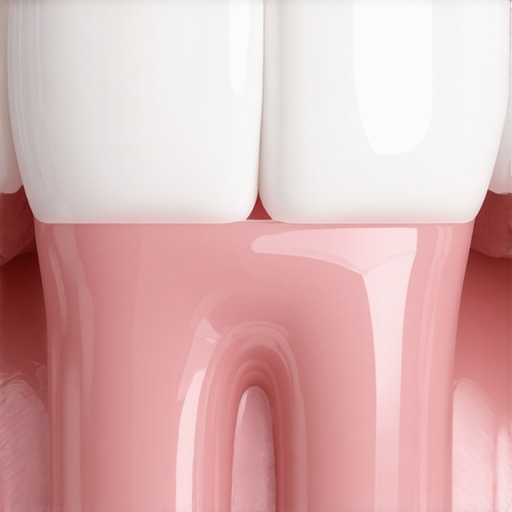
Avoid the Whitening Strip Trap
Here is a specific ‘oops’ factor I learned from a friend who tried to save a few bucks. After getting her bridge, she noticed her natural teeth looked a bit yellower in comparison. She reached for over-the-counter whitening strips. This is one of the most common mistakes people make with whitening strips. Porcelain does not whiten. All she did was create a massive contrast between her glowing natural teeth and her now ‘dull’ bridge, while the chemicals irritated the sensitive margins of her new dental work. If you want a brighter look, you have to whiten before the bridge is made, or commit to a full professional plan.
Longevity is a Team Sport
You might think you can skip a few professional cleanings because your bridge ‘feels solid.’ However, how regular teeth cleaning can prevent major dental issues is especially true for bridge wearers. A hygienist can reach the microscopic plaque buildup under the ‘pontic’ (the fake tooth) that your home toothbrush simply cannot touch. I’ve seen people lose their entire bridge because they thought they were saving money by skipping the dentist for two years. Don’t be that person. Have you ever fallen into this trap of thinking your dental work was invincible? Let me know in the comments!I used to think my manual toothbrush was enough until my hygienist showed me the hidden biofilm living under my bridge. It was a wake-up call that changed how I view [maintaining oral health expert advice for a lifetime of healthy teeth](https://gentlesmiledentist.com/maintaining-oral-health-expert-advice-for-a-lifetime-of-healthy-teeth). If you are serious about protecting your investment, you need a tool that handles the heavy lifting where a brush cannot reach. I personally swear by the Waterpik with the Plaque Seeker tip. It is the only thing that gets the pressure exactly right to flush out debris from the gap between the pontic and your gums without being abrasive to the porcelain. Most people skip this step because they find traditional flossing too difficult with a bridge, but that is exactly how you end up with [the reason your gums recede even if you have good habits](https://gentlesmiledentist.com/the-reason-your-gums-recede-even-if-you-have-good-habits). According to Dr. Gordon Christensen, a world-renowned expert and founder of Clinicians Report, a massive percentage of prosthetic failures are purely due to debris accumulation at the margins which leads to recurrent decay.
Ditch the Standard Floss for These Specialized Tools
To get the job done right, I use Oral-B Super Floss because that stiffened end is like a needle and thread for your mouth. It allows you to thread the floss directly under the fake tooth with zero fumbling. This is critical for [preventive tips for long-lasting dental health for families](https://gentlesmiledentist.com/preventive-tips-for-long-lasting-dental-health-for-families) who want to avoid the high cost of replacement hardware later on. I have found that neglecting this space for even two days leads to that tell-tale metallic taste or bad breath that no amount of mouthwash can fix. Using these specialized tools transforms your routine from a chore into a targeted strike against bacteria. 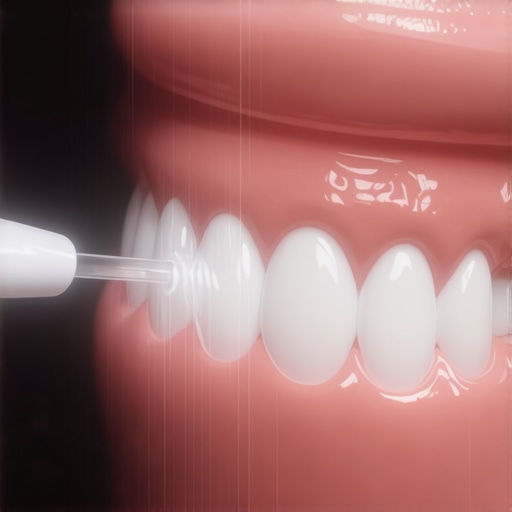
How do I maintain my new smile for decades?
The real secret to longevity is a partnership between your home care and professional intervention. Many people don’t realize that [how regular dental cleanings can save you money in the long run](https://gentlesmiledentist.com/how-regular-dental-cleanings-can-save-you-money-in-the-long-run) by catching ‘micro-leaks’ in the cement before they turn into full-blown infections. I make sure my hygienist uses an ultrasonic scaler—a tool that uses high-frequency vibrations to shatter tartar without scratching the porcelain. It’s far more effective than the manual scraping we are all used to. Looking ahead, I predict we are moving toward [cosmetic dentistry innovations you cant miss this year](https://gentlesmiledentist.com/cosmetic-dentistry-innovations-you-cant-miss-this-year) like bio-active crowns that actually release fluoride and calcium directly into the abutment teeth 24/7. This would effectively immunize the anchor teeth against decay. For now, the most advanced thing you can do is commit to a ‘bridge-safe’ diet and a rigorous cleaning protocol. If you haven’t yet, try using a water flosser on the lowest setting tonight specifically around the base of your bridge; the amount of hidden particles it clears away will convince you immediately that brushing alone is only half the battle.
The Brutal Truth I Learned After My First Bridge
After two procedures and a lot of trial and error, I realized that the honeymoon phase of a new smile is actually the most dangerous time for your investment. Here is the insider wisdom that usually gets skipped over in the waiting room. First, it is a marathon, not a sprint; even if you feel fine by day three, your underlying tissues are still reorganizing and settling into place. Second, the margin is everything. I used to obsess over the color matching, but the real battle for longevity is won or lost at the gumline. Finally, oral health myths busted what every family should know often overlook the fact that bridges actually require more maintenance than natural teeth, not less. You are never off the hook for flossing just because the visible part of the tooth is porcelain.
My Daily Arsenal for Keeping Things Pristine
If you want your bridge to last twenty years instead of five, you need to move beyond the standard toothbrush. These are the specific tools I personally trust and why they make the difference. A high-quality water flosser is non-negotiable because it flushes out the microscopic debris that manual tools simply cannot reach. I also swear by specialized threaded floss, which acts like a needle to navigate under the pontic without snagging. Combining these with an alcohol-free fluoride rinse provides a protective barrier for your anchor teeth without drying out your mouth. Ultimately, witnessing how to transform your smile the impact of cosmetic dentistry in 2025 involves realizing that professional oversight catches micro-leaks long before they become painful emergencies.
Step Into Your Most Confident Season Yet
You have already done the hard part—you showed up, navigated the procedure, and survived the soft-food phase. Now it is time to enjoy the payoff. By committing to a routine based on the ultimate guide to teeth cleaning techniques and benefits, you are ensuring that your new bridge becomes a seamless, permanent part of your life. Do not let the initial anxiety of maintenance hold you back; once these habits become second nature, you will forget the bridge is even there. This is your chance to lead with your smile again. Have you ever had a moment where you were terrified to bite into something after a dental procedure? Let me know your story in the comments below!