
Picture this: It is 7:00 PM on a Tuesday, and my eight-year-old, Max, just walked through the door with a heavy plaster cast on his dominant arm. He is tired, he is cranky, and he is holding a toothbrush like it is some ancient, confusing artifact. I realized right then that our carefully polished nightly routine was dead on arrival. I tried to step in and do it for him, but I was clumsy, he was defensive, and we ended up with toothpaste on the ceiling and a very frustrated kid. It felt like a total parenting failure. If you are staring at a similar situation, don’t panic. Today, I am going to share exactly how we transitioned from that messy disaster to a routine that actually works, ensuring your little one doesn’t end up with a mouth full of plaque just because their arm is out of commission.
Brushing Around the Cast without Losing Your Mind
Keeping a child’s mouth clean during a physical recovery is one of those hidden challenges of parenthood that nobody warns you about. Early on, I made the mistake of thinking we could just ‘coast’ for a few weeks and skip the thorough cleaning until the cast came off. Big mistake. Within ten days, Max’s gums were puffy and red, a classic sign that my laziness was inviting gingivitis. I quickly learned that following the protocol for cleaning your teeth when you have a broken arm is non-negotiable, even if it feels like a chore. We had to get creative with family dental care hacks to keep your kids smiling daily, like using a step stool for better leverage or switching to an electric brush to do the heavy lifting for his non-dominant hand. Have you ever tried to brush a kid’s teeth while they’re literally leaning away from you in a cast? It is an Olympic sport. [image placeholder]
Is a clean mouth really worth the battle?
It is easy to think that a few missed sessions won’t hurt, but the reality is that oral health is tied directly to the body’s ability to heal. According to the Centers for Disease Control and Prevention (CDC), nearly 20 percent of children aged 5 to 11 have at least one untreated decayed tooth, and an infection in the mouth can actually increase systemic inflammation, potentially slowing down the overall recovery process. You might worry that being too firm about brushing will cause more stress for your injured child, but the alternative—a painful cavity on top of a broken bone—is so much worse. We found that debunking common oral health myths helped us stay focused on the goal: a healthy recovery without any dental surprises. Using the best way to brush your teeth if you have a broken arm often means parents taking over the manual dexterity while the child focuses on just staying still. Have you struggled to keep your child’s routine consistent after an injury? It’s okay to admit it’s hard—we’ve all been there!
Master the Dentist Lean for Better Access
To get the job done properly, you have to stop trying to brush from the front. When I first tried to help Max, I stood face-to-face with him. All I saw was the back of his hand and a very defensive eight-year-old. The game-changer was having him sit on a low stool while I stood directly behind him, tilting his head back slightly against my stomach. This is what professionals call the ‘lap position’ or the ‘dentist lean.’ It gives you a bird’s-eye view of every molar and allows you to stabilize their jaw with your non-dominant hand. I remember one Tuesday night when Max was particularly squirmy; by using this ‘behind-the-head’ approach, I could actually see the logic in family dentistry tips that make oral care effortless and effective. It turned a ten-minute wrestling match into a two-minute precision strike. 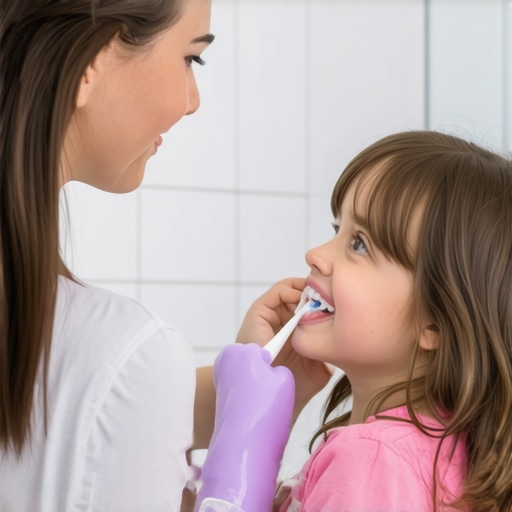
Switch to an Electric Brush to Do the Heavy Lifting
If your child is struggling to manipulate a manual brush with their non-dominant hand, stop forcing it. A high-quality electric toothbrush is your best friend right now. The vibrations do the scrubbing for you, which means your child only has to worry about holding the brush in the right place—or, more realistically, you only have to guide it. When we made the switch, I noticed Max felt a sense of autonomy again because he could ‘click’ the button himself. We started implementing the ultimate guide to teeth cleaning techniques and benefits to ensure we weren’t just moving the brush around aimlessly. The mechanical action of the brush handles the plaque removal far better than a frustrated kid trying to use their ‘weak’ hand. It is about working smarter, not harder, especially when you are already exhausted from managing doctors’ appointments.
Tackle Tight Spaces Without Making Things Worse
Flossing is usually the first thing to go out the window when an injury happens, but it is actually the most critical time to stay diligent. With a cast, manual flossing is nearly impossible for a child. I tried to use standard string floss on Max once, and it was a disaster—I nearly snapped the string against his gums because he jerked his arm. We switched to flossing picks or a water flosser, which are much easier to navigate one-handed. Learning how to stop your kids from getting cavities between their teeth is mostly about consistency, even when life is chaotic. We treated it like a game of ‘find the hidden food,’ making sure to hit those back molars where the cast usually gets in the way of a good reach. It is one of the top 5 secrets to maintaining perfect oral health as a family: never let a temporary setback lead to a permanent dental problem.
Keep the Cast Dry While You Scrub
The biggest logistical nightmare is the ‘splash zone.’ If you get that plaster or fiberglass wet, you are looking at skin irritation or an emergency trip back to the orthodontist. I found that wrapping a small hand towel around Max’s neck and over the top of his cast was the only way to prevent toothpaste-infused water from dripping down. It sounds simple, but in the heat of a bedtime routine, it is easy to forget. By staying organized and looking into smile bright revolutionary teeth cleaning techniques for 2025, we managed to keep his teeth white and his cast bone-dry. Focus on small, circular motions and keep a cup nearby for rinsing rather than letting them lean over the sink, which is a recipe for a soggy cast. It might feel like overkill, but preventing that damp-cast smell is worth every extra second of preparation.
Stop Settling for ‘Good Enough’ Hygiene During Recovery
Most parents believe that as long as they see some toothpaste bubbles, they are winning. But here is the contrarian truth: during an injury, your child’s oral environment is actually more hostile than usual. Research shared by the American Academy of Pediatric Dentistry (AAPD) suggests that physical stress and the resulting cortisol spikes can alter salivary flow and composition, making the mouth more acidic. This means those ‘missed spots’ aren’t just minor oversights; they are invitations for rapid-onset enamel erosion. I fell into the trap of thinking a quick thirty-second pass was fine because Max was in pain, but I was ignoring the invisible biofilm buildup that matures faster when saliva is less effective. We need to prioritize how regular teeth cleaning can prevent major dental issues even when life is turned upside down. 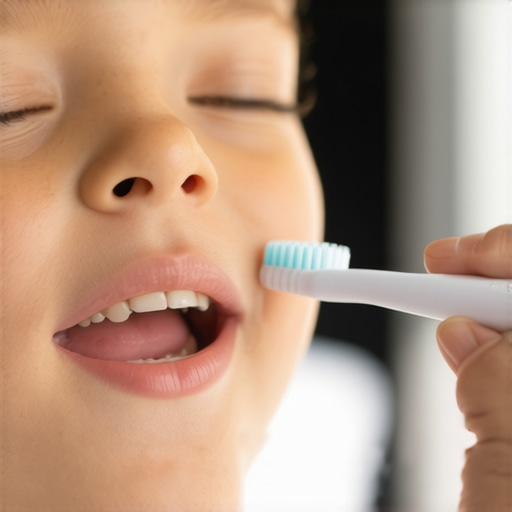
Can a broken bone actually change your child’s saliva chemistry?
It sounds like science fiction, but the systemic link between injury and oral health is a well-documented nuance that many families overlook. When the body’s resources are diverted toward bone repair, the localized immune response in the gums can sometimes take a backseat. This is where most people get it wrong—they think the teeth are isolated from the broken arm. In reality, maintaining top 5 secrets to maintaining perfect oral health as a family requires understanding that the whole body is connected. If you notice your child’s breath is particularly ‘off’ despite regular scrubbing, it might not be a lack of effort, but a shift in their microbiome. This is a crucial time to look into oral health myths debunked what you need to know in 2025 to ensure you aren’t fighting a losing battle against biology.
Avoid the Aggressive Scrubbing Trap
A common ‘oops’ factor I see with parents taking over the brushing is ‘over-compensation.’ Because we feel like we aren’t getting a perfect angle with the cast in the way, we tend to scrub harder to make sure we’re getting the job done. This is a massive mistake. Aggressive manual brushing can lead to permanent gum recession and sensitivity in as little as a few weeks of ‘helpful’ intervention. Instead of using force, use precision. We transitioned to preventive tips for long-lasting dental health for families by focusing on soft, vibrating motions rather than the back-and-forth sawing motion many of us grew up with. Have you ever fallen into this trap of ‘scrubbing away’ the stress only to realize you were being too rough? Let me know in the comments. Digging deeper into the ultimate guide to teeth cleaning techniques and benefits helped us realize that patience and the right angle are far more important than raw power during this recovery phase.
Invest in Tools That Compensate for One-Handed Struggles
It wasn’t just about the technique; I had to accept that our standard plastic toothbrushes weren’t going to cut it while Max’s arm was in a sling. I did some deep diving into clinical research and found that a water flosser is a non-negotiable tool for anyone with limited mobility. A study published in the Journal of Clinical Periodontology highlights that water flossing can be up to 50 percent more effective than traditional string floss for reducing gingival inflammation, especially when the user lacks the manual dexterity to ‘C-shape’ the floss around the gumline. For Max, this was a lifesaver. We weren’t just guessing anymore; we were using science-backed teeth cleaning techniques and benefits to ensure no plaque was left behind while he was essentially one-handed.
How do I maintain consistent oral health during a long recovery?
The key is consistency over perfection. When your child is dealing with a cast for six to eight weeks, you can’t expect every night to be a masterclass in hygiene. However, you can ensure that you are maintaining oral health with expert advice by setting non-negotiable ‘anchor’ times. For us, that meant the morning brush was his ‘practice’ session where he used his non-dominant hand, and the evening session was my ‘deep clean’ session. By splitting the responsibility, he kept his skills sharp without risking his dental health. We also leaned heavily on preventive tips for long-lasting dental health for families, like swapping out sugary bedtime snacks for water and xylitol-based treats that don’t feed the bacteria we were working so hard to brush away.
Smart Brushing is the New Standard for Busy Families
I predict that within the next few years, we are going to see a massive shift toward bio-feedback in children’s toothbrushes. We are already seeing the beginnings of this with apps that track brush coverage, but the next step is real-time saliva analysis to alert parents of rising acidity levels. Staying ahead of the curve with smile bright revolutionary teeth cleaning techniques for 2025 means embracing these smart tools now. For Max, an AI-enabled brush that buzzed when he pressed too hard or missed a section made him feel like he was playing a video game rather than doing a chore. It turned a point of friction into a point of pride. This technology isn’t just a gimmick; it is a way to scale your parenting efforts when you are already stretched thin by doctor appointments and physical therapy.
Why Professional Cleanings are Your Best Insurance Policy
Even with all the high-tech gadgets at home, I realized that I am not a dental hygienist. During a recovery period, your ‘home-brewed’ hygiene is under immense pressure. This is why I scheduled an extra mid-recovery check-up for Max. It turns out that how regular dental cleanings can save you money in the long run is especially true when an injury is involved. The professional removal of tartar that had started to build up behind his cast-side molars saved us from a costly filling down the line. If you are currently managing a child’s recovery, I strongly encourage you to try the ‘dentist lean’ position tonight—it will change your life. And if you haven’t seen a professional lately, reach out to us at our contact page to get a professional safety net in place for your family.
Lessons My Son’s Broken Arm Taught Me About Dental Resilience
Looking back on those six weeks with Max in a cast, I realized that the hardest part wasn’t the broken bone, but the daily battle to keep his smile clean. I learned that plaque is surprisingly opportunistic; it doesn’t wait for a cast to come off. One lightbulb moment was realizing that ‘good enough’ is a dangerous mindset when his body was already under stress. We had to embrace how regular teeth cleaning can prevent major dental issues even when it felt like just another chore on a long list of recovery tasks.
Another lesson? Don’t be afraid to take the lead. For the first few weeks, I tried to force Max to use his non-dominant hand for everything, thinking it would build ‘character.’ In reality, it just built frustration and missed spots. By stepping in and using the ‘dentist lean’ position, I protected his enamel and our relationship. We found that maintaining oral health with expert advice during this period actually gave him a sense of routine and comfort when everything else felt chaotic. [image placeholder]
The Essential Gear for One-Handed Bedtime Routines
If you are currently navigating this, you need more than just a standard toothbrush. Here are the tools that made the difference for us: first, a high-quality water flosser. It removes the need for manual dexterity and shows how to stop your kids from getting cavities between their teeth without the struggle of traditional string. Second, an electric toothbrush with a built-in pressure sensor ensured I wasn’t being too aggressive while helping him. I constantly referred back to the ultimate guide to teeth cleaning techniques and benefits to make sure we were hitting the right angles despite the sling. Finally, xylitol-based mints were our ’emergency backup’ for those nights when the pain was too high for a full scrub; they help neutralize acid and protect his teeth until the next morning.
You Can Handle This Short Term Dental Challenge
A broken arm is a temporary setback, but your child’s dental health is a lifelong asset. It is easy to feel overwhelmed by the extra work, but the effort you put in now saves you from dental emergencies later. Focus on the small wins, keep the cast dry, and remember that you are doing a great job in a tough situation. If you are worried about any buildup you’ve noticed during recovery, feel free to reach out via our contact page to set up a quick professional check-up. Have you ever had to manage a child’s hygiene routine through a major injury? I’d love to hear your survival tips in the comments below!