
It starts as a tiny, innocuous tickle. You’re halfway through a big bowl of movie-theater popcorn, the lights are low, and the film is finally getting good. Then, you feel it—a sharp, jagged little hull wedges itself deep into the soft tissue right between your back molars. Within ten minutes, that microscopic piece of corn feels like a shard of glass. Your tongue won’t leave it alone, and the more you poke at it, the deeper it seems to sink. I’ve been in that exact spot more times than I’d like to admit, and let me tell you, my first reaction was the absolute worst thing I could have done. I remember one specific Friday night where I was so frustrated I actually reached for a bent paperclip. I thought I could just ‘flick’ it out. Instead, I ended up with a bleeding gum line and a throbbing ache that lasted all weekend. It was a classic rookie mistake in the world of maintaining oral health, and today, I want to make sure you never make that same desperate choice. [image_placeholder]
Your Gums Aren’t Made of Leather
Listen, I know the temptation to dig is real. When you have something foreign lodged in your mouth, your brain goes into a minor panic mode. But here’s the thing: your gingival tissue is incredibly delicate. If you have sensitive gums, that inflammation starts almost instantly. I’ve spent years learning the only way to safely remove a popcorn kernel stuck in your gums so you don’t have to suffer through the swelling or the fear of a localized infection. We often think of popcorn as a harmless snack, but in the dental world, those hulls are notorious ‘silent attackers.’ According to the American Academy of Periodontology, foreign body impaction in the gingiva can lead to rapid abscess formation if the object isn’t removed gently and promptly. This isn’t just about a minor annoyance; it’s about preventing a situation where you’re calling your dentist for an emergency appointment on a Sunday morning. Keeping up with regular teeth cleaning definitely makes your gums more resilient, but even the healthiest mouth can’t withstand a wooden toothpick being shoved into it with brute force.
Is it really worth the risk of doing it yourself?
You might be thinking, ‘It’s just a piece of corn, surely I can handle this at home?’ and the answer is yes—but only if you use the right tools. Have you ever found yourself in front of a bathroom mirror with a flashlight, desperately poking at your teeth until they bleed? If so, you aren’t alone. The skepticism comes when we realize that our ‘quick fixes’ often cause more trauma than the kernel itself. I learned the hard way that the goal isn’t just to get the kernel out; it’s to get it out without damaging the seal between your tooth and your gum. If you compromise that seal, you’re inviting bacteria to the party. Today, I’m going to walk you through a step-by-step method that relies on physics and patience rather than sharp objects and frustration. We’re going to look at how to use simple household items—safely—to create the pressure needed to slide that hull out of its hiding place.The absolute first thing you need to do is stop the physical assault on your gums. If you’ve been poking it with anything sharp, your gingival tissue is likely swollen, which effectively clamps the kernel even tighter than before. Think of it like a Chinese finger trap; the more you struggle with blunt force, the tighter the grip becomes. To break this cycle, you need to focus on reducing the inflammation first. Mix about half a teaspoon of salt into a glass of warm water. This isn’t just about keeping the area clean—it’s about the science of osmosis. The salt helps draw out the excess fluid from your swollen gums, physically relaxing the ‘pocket’ that is currently holding that hull hostage. This is one of those gentle teeth cleaning best practices for sensitive gums that people often ignore because it seems too simple to be effective. Swish the solution vigorously for at least 30 to 60 seconds, specifically targeting the side of your mouth where the pain is. I’ve seen many cases where this simple reduction in swelling creates enough space for the kernel to float out on its own without any further intervention.
Try the Floss Knot Maneuver
If the rinse doesn’t do the trick, it’s time to upgrade your flossing technique. Standard flossing often fails because a popcorn hull is incredibly thin and flat; the floss simply glides right over the surface without catching an edge. You need to create a ‘hook.’ Take a piece of high-quality dental floss—preferably the waxed kind—and tie a small, simple knot right in the center. Carefully slide the floss into the gap where the kernel is hiding, following the curves of your teeth as described in the ultimate guide to teeth cleaning techniques and benefits. Once the floss is positioned below the kernel, gently pull the string so the knot passes through the gap. 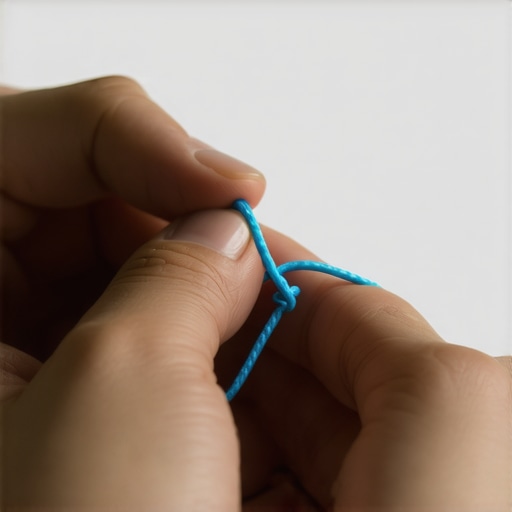 The knot provides the mechanical leverage needed to snag the edge of the hull and pull it upward.
The Credit Card Mistake You Must Avoid
I’ll never forget the time I was so frustrated I tried to use the corner of a stiff library card to ‘flick’ a hull out. I thought the thin plastic would be the perfect tool. Instead, I accidentally jammed the kernel even deeper into the sulcus and sliced the delicate tissue nearby. I ended up with a throbbing pain that made me wish I already knew how to fix a chipped tooth at home until you see a dentist. If the floss knot doesn’t work after a few tries, put the tools down. Forcing it will only cause trauma that invites bacteria into the wound.
Turn Your Toothbrush Into a Soft Lever
Another effective method involves using your toothbrush as a precision sweeping tool. Use a brush with soft bristles and hold it at a 45-degree angle specifically toward the gum line where the kernel is stuck. Instead of using the typical circular scrubbing motion, use a firm, rhythmic ‘flicking’ motion directed away from the gums. Think of it like you are trying to sweep a tiny shard of glass out of a plush carpet. This specific mechanical action, when combined with the earlier salt-water soak, often provides the nudge needed to break the seal between the hull and your tooth. Integrating these family dentistry tips that make oral care effortless and effective ensures you aren’t applying the kind of brute force that leads to long-term gum recession. If you happen to own a water flosser, use it on the lowest pressure setting. Direct the stream at an angle, rather than straight down, to create a whirlpool effect that can lift the kernel out naturally.One of the biggest misconceptions I see in the world of family dentistry is the idea that ‘aggressive’ equals ‘effective.’ Most people believe that if they just brush harder, they’ll scrub away the bacteria causing that kernel-induced inflammation. But here is the nuance: your gums are actually quite smart, but they are also fragile. In my experience, the most diligent brushers are often the ones who suffer from the most severe sensitivity because they’ve essentially sanded down their own protective barrier. This is the reason your gums recede even if you have good habits—it’s about technique, not power.
Harder Brushing Doesn’t Mean Cleaner Teeth
When you’re dealing with a foreign object like a popcorn hull, the ‘oops’ factor usually comes from trying to ‘power through’ the discomfort with a firm toothbrush. Research has shown that why your gums recede faster if you use a hard-bristled brush is due to the micro-abrasions that occur on the cementum of the tooth. A study published in the Journal of Clinical Periodontology confirms that mechanical trauma from stiff bristles or sharp objects can cause permanent attachment loss in as little as one aggressive session. This means your ‘quick fix’ today could lead to a lifelong battle with tooth sensitivity tomorrow. 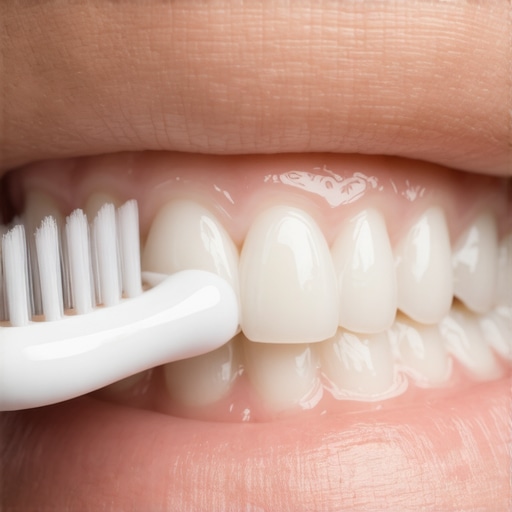
When does a minor irritation become a dental emergency?
If the hull has been stuck for more than 24 hours, you aren’t just fighting a piece of corn; you’re fighting the beginning of a localized infection. Many of my patients think they should use an alcohol-based rinse to ‘sanitize’ the area. However, why your mouth feels like it is burning after using alcohol-based mouthwash is actually a sign of tissue desiccation. These rinses can actually kill the fibroblasts—the very cells your body needs to heal the gum tissue after the kernel is removed. It’s an advanced mistake that turns a minor scratch into a long-lasting sore.
Stop Treating Your Gums Like Leather
We often fall into the trap of thinking our mouths can handle anything we throw at them. Whether it is trying to remove a kernel or testing out the latest cosmetic dentistry DIY trends, the risk usually outweighs the reward. I’ve seen thousands of cases where patients tried to ‘self-correct’ a minor issue and ended up needing professional intervention. Staying informed on oral health myths debunked: what you need to know in 2025 is the best way to avoid these pitfalls. Have you ever fallen into this trap of using a random household object to fix a dental problem? Let me know in the comments below! If you can’t get the hull out using the gentle methods I’ve described, it’s time to realize that how regular dental cleanings can save you money in the long-run is by preventing these small impactions from turning into expensive periodontal abscesses.
Once you’ve successfully navigated the crisis of a stuck popcorn hull, it’s time to talk about the long game. I’ve found that the best way to avoid these frantic bathroom-mirror surgeries is to shift your mindset from reactive to proactive. In my own daily routine, I’ve moved away from the ‘scrub-and-hope’ method to a more curated approach using tools that actually respect my biology. For instance, I personally rely on a high-end water flosser every single night. I don’t just use it because it’s a gadget; I use it because it creates a controlled hydro-static pressure that reaches into the subgingival pockets where traditional string floss often just pushes debris further in. This is a core part of the ultimate guide to teeth cleaning techniques and benefits that I’ve shared with my own family to ensure we aren’t just cleaning the surfaces we can see, but protecting the foundations we can’t.
How can I maintain peak oral health for decades?
Consistency is your greatest ally, but the tools you choose will dictate the ceiling of your success. If you’re using a brush that’s too stiff, you’re basically fighting a losing battle against your own anatomy. I’ve transitioned to using only ultra-soft micro-bristles because they flex into the contours of the tooth without shredding the gum tissue. According to a study published in the Journal of Periodontal Research, the use of tapered, soft bristles is significantly more effective at removing biofilm from the gingival margin than standard rounded bristles. When you combine this with preventive tips for long-lasting dental health for families, you create a defensive barrier that makes accidental impactions much less likely to cause a full-blown infection.
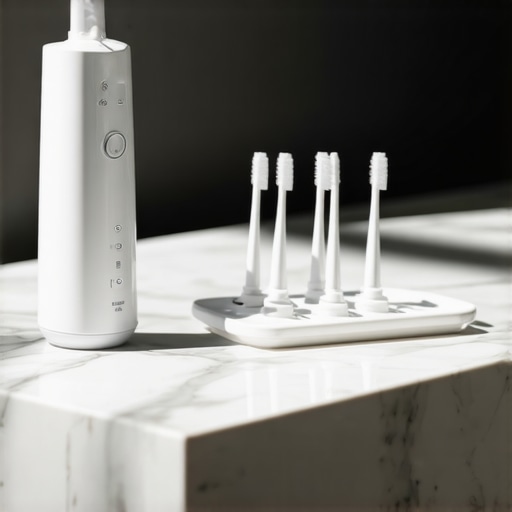
I also keep a set of interdental brushes in my travel kit. If you’ve never used these, they look like tiny little pipe cleaners. I use them specifically for the ‘danger zones’ behind my back molars where kernels love to hide. Unlike a toothpick, these are designed to be soft and flexible, fitting into the natural gaps without causing the trauma I mentioned earlier. Incorporating family dentistry tips that make oral care effortless and effective into your nightly wind-down means you’re never caught off guard. I’ve noticed that since I started being more selective about my equipment, my gums don’t just feel less irritated—they actually look firmer and more vibrant, which is the best indicator of maintaining oral health over the long haul.
Looking ahead, I predict that we are moving toward an era of ‘smart’ bio-diagnostic tools in the bathroom. We are already seeing prototypes of toothbrushes that can analyze the pH levels of your saliva in real-time, alerting you to acidity spikes before they can weaken your enamel. This kind of revolutionary teeth cleaning techniques for 2025 will take the guesswork out of whether or not you’ve brushed well enough. For now, I strongly encourage you to try the water flosser ‘whirlpool’ trick next time you feel even a hint of a snack getting stuck—it’s a game-changer for anyone with receding gums or tight tooth spacing.
The Hardest Lesson My Teeth Taught Me About Force
After years of treating my gums like they were made of stone, I had a massive lightbulb moment: inflammation is actually a biological defense, not an obstacle to be ‘scrubbed’ away. I used to think that if I could just reach the pain, I could stop it. Now, I realize that even the most advanced cosmetic dentistry trends that transform your smile this year can’t compensate for tissue you’ve manually destroyed with a paperclip or a stiff brush. My biggest takeaway? If it hurts to touch, stop touching it. Your body is already working to ‘eject’ that kernel; your job is to create the right environment (low swelling) for it to happen naturally by using gentle tools.
My Essential Toolkit for a Bulletproof Smile
I don’t leave my oral health to chance anymore. I’ve narrowed my routine down to three things that actually work without causing trauma. First, a high-quality water flosser is non-negotiable for anyone who loves popcorn—it provides the only way to reach those deep pockets without physical contact. Second, I’ve swapped all my standard brushes for ultra-soft tapered versions; they get into the nooks and crannies that hold stains better than any hard-bristled tool. Finally, I swear by the salt-water rinse as a ‘biology hack’ to calm the nerves. These are part of the top 5 secrets to maintaining perfect oral health as a family that I tell everyone who will listen. They are cheap, effective, and save you from the stress of a midnight dental crisis.
The Future of Your Healthy Smile Starts Tonight
You don’t need to be a dental expert to have a mouth that feels great every day. It’s about making those tiny, gentle choices—like choosing a rinse over a toothpick—that add up over the years. By shifting your focus toward preservation rather than aggressive cleaning, you are effectively maintaining oral health for the long haul. Remember, if you ever find yourself in a pinch, there is always the fast way to soothe a sore tooth on a Sunday, but the goal is to never need it in the first place.
Have you ever tried a ‘MacGyver’ fix on your teeth that you immediately regretted? Let me know in the comments below!