
My first real attempt at brushing my son’s teeth ended with me nearly losing a fingertip and him sporting a lopsided grin as he gnawed on the bristles like a tough piece of steak. I had spent hours reading family dentistry tips, but none of them prepared me for the sheer power of the ‘toddler lock-jaw.’ I was frustrated, he was stubborn, and we were both eventually covered in sticky, bubblegum-flavored paste. If you are currently locked in a nightly bathroom standoff, wondering if your child’s molars will ever actually feel a bristle again, I have been exactly where you are. I promise you, we can fix this without the tears—yours or theirs.
Stop the Chomping Before You Both Give Up
The biggest mistake I made early on was treating the toothbrush like a tool of compliance rather than a tool for health. I used to try and ‘ninja’ the brush in while he was laughing, which only led to him biting down harder and faster. It turns out, toddlers often bite because they are seeking sensory input or simply don’t have the coordination to keep their mouths open. A surprising fact from the American Academy of Pediatric Dentistry notes that a child’s biting reflex is often a natural response to the sensation of the brush, not necessarily a sign of defiance. It’s a stage of growth, not a character flaw. Have you ever felt like you were trying to brush the teeth of a tiny, very determined alligator? I certainly did, until I realized that my force was met with his resistance.
Is this biting actually worth the daily struggle?
You might be tempted to just give up for the night and hope for better luck tomorrow, but those baby teeth are the literal foundation for their future smile. Learning how to clean your child’s teeth when they have sensory processing issues or a strong biting reflex is vital for preventing early decay. I used to think a few skipped nights wouldn’t hurt, but then I saw how quickly plaque can dull that beautiful enamel. We are going to look at how to pivot from a power struggle to a game, ensuring your kid stays healthy while you keep your sanity. We might even find time to discuss the truth about fluoride varnish for toddlers once we actually get that mouth open long enough to see what is going on inside. It is time to stop the biting and start the cleaning.
Get the Angle Right for an Alligator
Positioning is 90% of the battle. When I first started, I tried to brush my son’s teeth while he was standing up, which gave him the high ground and a 360-degree range of motion to escape. Instead, try the ‘lap layout.’ Sit on the floor or a bed and have your child lie down with their head in your lap. This mimics the professional setup you would see during teeth cleaning at a clinic. It gives you a clear view of those hard-to-reach top molars and, more importantly, it stabilizes their head so they cannot whip it back and forth like a pendulum. I remember the first time I tried this; my son was so surprised by the change in perspective that he actually stayed still for a full thirty seconds—a record at the time.
Use a Second Toothbrush as a Strategic Decoy
If your child is a biter, give them something else to bite. This is one of my favorite family dental care hacks. Give them their own ‘dummy’ brush to hold and chew on while you work with the real one. It occupies their hands and their jaw. While they are busy gnawing on the decoy, you can slide your brush into the opposite side. It is like a shell game, but the prize is a cavity-free mouth. I once tried to use a frozen washcloth as the decoy when he was teething, and it worked wonders because it numbed the area while I worked. Keeping the routine consistent is one of the top 5 secrets to maintaining perfect oral health as a family.

Why Flavor Choice Beats Force Every Time
We often underestimate how sensitive a child’s palate is. If the toothpaste is too ‘spicy’ (which is toddler-speak for minty), they will clamp shut to protect themselves. Switching to a mild fruit flavor or even a flavorless gel can remove the sensory barrier. Once you have actually managed to get the paste in, you will eventually need to figure out how to teach a toddler to spit out their toothpaste so they are not swallowing excessive fluoride. I remember thinking he would never get it, until we started practicing ‘spitting like a whale’ in the backyard with plain water first. It turned a chore into a skill he was proud to show off.
The Lift the Lip Technique
Do not just brush what you see. Gently lift the upper lip to reveal the gum line. This is where the ‘sugar bugs’ hide and where decay usually starts in toddlers. Think of it like cleaning the tracks of a sliding glass door; if you skip the edges, the whole thing eventually gets stuck. I neglected this for months until our dentist showed me a tiny spot of demineralization that was forming right at the top. It was a wake-up call that ‘good enough’ was not going to cut it for long-term health. By using a gentle, circular motion right at the base of the tooth, you can sweep away the plaque that hides under the lip without causing discomfort.
Even if you master the “alligator angle” and the decoy brush, there is a deeper layer to family dentistry that most parents miss. I spent months thinking that as long as I scrubbed every surface twice a day, my son’s teeth would be invincible. But I was wrong. In fact, some of the most “dedicated” parents I know are often the ones surprised by a cavity at the six-month checkup. This happens because we focus so much on the mechanical act of brushing that we ignore the biological environment of the mouth.
Brushing Twice a Day Is Not a Magic Bullet
The common belief is that plaque is the only enemy. However, if your child is a nighttime mouth-breather, no amount of scrubbing will fully protect them. When the mouth stays open at night, it dries out, and saliva—the natural protector of enamel—disappears. This creates a highly acidic environment where bacteria thrive. I had to learn the impact of nighttime mouth breathing on your teeth the hard way when I noticed my son’s breath was still “morning-heavy” despite a perfect nighttime routine. If you are wondering why some kids get cavities despite brushing twice a day, it is usually a combination of oral pH and genetics, not just a missed molar.
Don’t Brush Right After Breakfast
Here is the “Oops” factor that nearly ruined my son’s front teeth: brushing immediately after he finished his morning orange juice. It seems logical—get the sugar off fast, right? Wrong. Acids in juice and fruit temporarily soften the enamel. If you brush right away, you are essentially scrubbing the acid into the tooth, causing premature wear. Most oral health myths debunked for 2025 emphasize that you should wait at least thirty to sixty minutes after eating acidic foods before picking up a brush. Knowing how long you should really wait to eat after a cleaning or a snack is a nuance that separates a beginner from an expert in home care.
#IMAGE_PLACE_HOLDER_C#
Is Saliva pH the Real Secret to Preventing Cavities?
Sophisticated oral care isn’t just about the brush; it’s about the chemistry. A study published in the Journal of Dental Research highlights that the buffering capacity of saliva—its ability to neutralize acid—is a critical defense mechanism. If your child has a “dry” mouth or high-sugar diet, their saliva cannot keep up. I used to think I could fix everything with a bit of “natural” baking soda, but the truth about using baking soda as a toothpaste is that it can be too abrasive for young, developing enamel. Instead, focus on hydration and remineralizing pastes. Even adults need to be careful; sometimes the reason your gums recede even if you have good habits is due to over-aggressive brushing or using products that are too alkaline or abrasive. Have you ever fallen into this “over-brushing” trap? Let me know in the comments. We are all learning this together, and shifting from “scrubbing hard” to “cleaning smart” is the best thing you can do for your family’s future smiles.
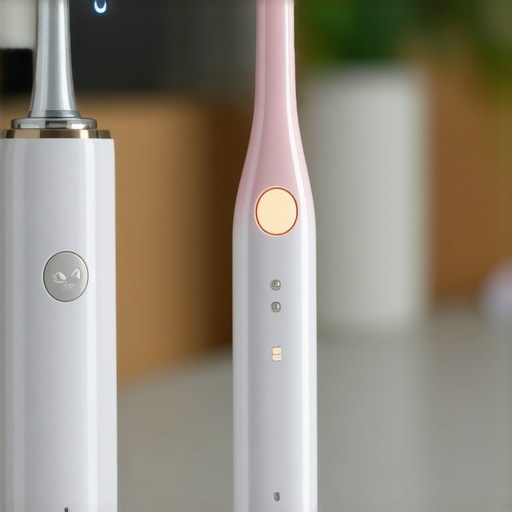
Transitioning from the ‘alligator’ phase to a sustainable routine requires more than just patience; it requires a tactical upgrade in your equipment. I used to be a purist about manual brushes, but the data eventually changed my mind and my son’s dental reports. According to a systematic review by the Cochrane Oral Health Group, powered toothbrushes provide a 21% reduction in plaque after three months of use compared to manual ones. For a child who only grants me sixty seconds of access before clamping down, I need every percentage point of efficiency I can get to ensure those molars stay pristine.
Upgrade Your Gear Before You Hit a Plateau
I personally transitioned my son to an oscillating-rotating brush because it does the mechanical work of ‘scrubbing’ while I simply focus on the ‘guiding.’ This shift is a huge part of maintaining oral health and expert advice for a lifetime of healthy teeth. If your child is sensitive to the vibration, start by letting them hold the handle while it is turned on, feeling the ‘tickle’ against their palm or cheek before it ever touches a tooth. It desensitizes the experience and turns a scary tool into a vibrating toy. We also started using a water flosser on the lowest setting, which my son finds hilarious rather than invasive, helping us tackle the gaps that even the best regular teeth cleaning can sometimes miss at home.
How do I maintain our progress when life gets hectic?
Consistency is the hardest tool to master, but it is the only one that guarantees results. I have found that ‘habit stacking’ works best—we brush while listening to a specific two-minute song or during the morning weather report. We have also integrated preventive tips for long-lasting dental health for families by making ‘teeth checks’ a standard part of our Sunday night routine. This is not just about cleaning; it is about observation. I am looking for new spots, changes in gum color, or even how his jaw is aligning as he grows. By normalizing these mini-inspections, the actual dentist visits become a breeze because nothing in the mouth is a mystery anymore.
Looking toward the future, I suspect we are moving toward a world where ‘smart’ brushes will not just track time, but will use integrated AI-driven sensors to detect early signs of demineralization in real-time before a cavity even forms. We are already seeing revolutionary teeth cleaning techniques for 2025 that involve bio-active pastes designed to rebuild enamel while your family sleeps. The daily ‘chore’ of brushing is slowly evolving into a high-tech, data-driven health session. If you are still struggling with a stubborn biter, my one advanced tip is this: stop trying to brush the entire mouth in one go. Focus on just one quadrant, take a five-second ‘breath break’ to reset the jaw, and move to the next. Breaking the task into four tiny wins makes it feel less like a battle and more like a shared victory. Try the quadrant method tonight and see if that ‘lock-jaw’ starts to loosen just a little bit.
Lessons from the Front Lines of Toddler Teeth Battles
Reflecting on those early days of dental warfare, I realized that the “lock-jaw” was rarely about defiance and almost always about over-stimulation. One of the biggest oral health myths busted for me was the idea that I had to be perfect every single night. In reality, a stressful, forced cleaning does more long-term damage to their attitude toward the dentist than a thirty-second “good enough” session does to their enamel. I also learned that family dentistry building a foundation of healthy smiles starts with modeling; now, I brush my teeth alongside him, and he mirrors my circular motions without even realizing he’s learning.
The Daily Toolkit That Actually Works
If you’re looking to upgrade your routine, I highly recommend looking into high-efficiency tools that reduce the time spent in the mouth while maximizing results. My personal “must-haves” include an oscillating electric toothbrush for its superior plaque removal and a gentle water flosser for those tight spaces. For those looking for teeth cleaning secrets to achieve a bright smile, consistency with a remineralizing paste is the real game-changer. I also trust the American Academy of Pediatric Dentistry’s guidelines on fluoride—it’s the single most effective tool we have against early decay. Using these preventive tips for long-lasting dental health for families has turned our bathroom from a battlefield into a bonding zone.
#IMAGE_PLACEHOLDER_E#
Your Path to a Lifetime of Healthy Smiles
It is easy to feel defeated when your child refuses to cooperate, but remember that you are playing the long game. Every time you patiently navigate a “bite” or turn a cleaning into a game, you are reinforcing the importance of lifelong oral health. You aren’t just cleaning teeth; you are building a habit that will save them from pain and expensive procedures decades from now. Don’t be afraid to start small—even a few seconds of quality cleaning is a victory worth celebrating. Which part of the nightly routine is currently your biggest hurdle? Let me know in the comments below!