
I still remember the day my braces came off. I was 17, and after thirty months of metal brackets and rubber bands, I felt like a movie star. I walked out of that office and immediately ate a bowl of popcorn with a massive grin. But then, I made a classic mistake: I treated my retainer like a suggestion rather than a requirement. Within six months, I noticed my bottom front teeth were starting to crowd again, staging a quiet, slow-motion rebellion. It felt like I was throwing thousands of dollars and years of patience right down the drain. If you are feeling that same creeping panic, take a breath. We are going to fix this.
Your Smile Has a Memory and It’s Surprisingly Long
Many people think the day the brackets come off is the finish line. In reality, it’s just the start of a new phase. Your teeth are anchored by periodontal ligaments, and these little fibers have a memory. They want to return to their original, crooked positions. I personally failed to realize that for the first year, those ligaments are incredibly flexible. By the time I tried to force my clear retainer back in after a week-long vacation, it didn’t even fit. I should have been focused on how to clean a clear retainer without using abrasive toothpaste and wearing it religiously instead of leaving it in my bedside drawer.
Is a lifetime of wearing retainers actually worth the hype?
It sounds like a marketing ploy by orthodontists, but it is the cold, hard truth. According to the American Association of Orthodontists, teeth continue to shift naturally as we age, even if you never had braces. If you don’t use your retention tools, your body’s natural aging process will slowly push those teeth out of alignment. Have you ever looked in the mirror and wondered if that one tooth was always just a tiny bit tilted?
Don’t Fall for the ‘Settling’ Trap
I used to tell myself my teeth were just ‘settling’ into a natural position. That’s a dangerous lie. While a tiny bit of movement is normal, visible shifting is a sign that your hard-earned results are at risk. I’ve seen people turn to diy clear aligner kits out of desperation to fix a relapse, only to cause permanent root damage. It is much easier to follow simple family dentistry tips that emphasize consistency over quick fixes. Today, we are going to walk through the exact steps to keep that smile locked in place so you never have to ask your dentist how to fix a small gap without spending months in braces for a second time.
Treat the First Six Months Like Wet Concrete
The first six months after your braces come off are the danger zone. Think of your jawbone like wet concrete that hasn’t quite cured yet; your teeth are held in place by that bone, and if you don’t brace them, they will drift. During my own post-braces journey, I initially thought wearing my retainer only at night was fine. I was wrong. My orthodontist had to remind me that preventive tips for long-lasting dental health for families often start with rigorous compliance in those early days. Aim for 22 hours of wear time for the first half-year, only taking it out to eat or brush. This gives the bone time to harden around the new positions of your roots.
Establish a Wear-it-or-Lose-it Routine
Consistency is the only thing standing between you and a second round of braces. I used to keep my retainer case in my pocket at all times. If it wasn’t in my mouth, it was in the case. This simple habit prevented me from accidentally throwing it away in a cafeteria napkin—a mistake that costs hundreds of dollars and weeks of unprotected shifting.
Clean Your Tools Without Scratching the Finish
While you’re wearing that retainer constantly, you have to keep it pristine. One of the top 5 secrets to maintaining perfect oral health as a family is avoiding cross-contamination and bacterial buildup on dental appliances. I once tried to save time by scrubbing my clear retainer with a gritty whitening toothpaste. Big mistake. I scratched the surface so badly it became a magnet for plaque and looked like cloudy plastic. Instead, use a soft-bristled brush and non-abrasive soap. If you have sensitive teeth, you should also look into gentle teeth cleaning best practices for sensitive gums to ensure your oral environment stays healthy while your mouth adjusts to the constant presence of a retainer. 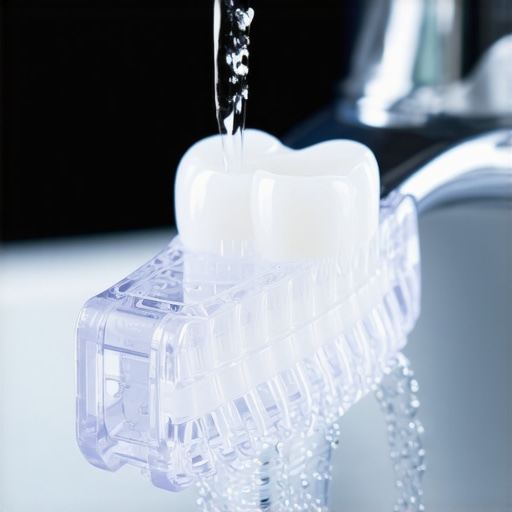
Professional Visits Are Your Financial Safety Net
Beyond your own daily habits, you need a professional fail-safe. It’s easy to think that if your teeth look straight, everything is fine. However, plaque loves to hide in the tiny gaps between your teeth and your retainer. Understanding how regular teeth cleaning can prevent major dental issues is crucial because a hygienist can spot the early signs of shifting or gum inflammation that you might miss in the bathroom mirror. I found that scheduling my cleanings every six months acted as a reset button for my discipline. It’s a small time investment that protects a multi-thousand-dollar smile. Plus, knowing how long you should really wait to eat after a cleaning ensures the fluoride treatments and deep scaling actually have time to work their magic on your enamel.
Stop the Abrasive DIY Habits Before They Start
Finally, be wary of DIY shortcuts. In my quest for a perfectly white smile to match my newly straight teeth, I almost fell for the ‘all-natural’ hype. I learned the hard way that the truth about using baking soda as a toothpaste is that it can be incredibly damaging if used incorrectly. It acts like liquid sandpaper, stripping away the very enamel that keeps your teeth strong and white. Stick to the protocols your dentist provides; they aren’t just suggestions, they are the blueprints for a lifetime of confidence.We’ve spent a lot of time talking about what you should do, but let’s talk about the counterintuitive habits that are secretly wrecking your enamel. Many people think they are being extra healthy by scrubbing their teeth immediately after a meal. This is a massive mistake. When you consume something acidic—like a morning coffee or a fruit salad—your enamel temporarily softens. If you jump straight into brushing, you are essentially sandpapering your teeth while they are at their weakest. I learned this the hard way when my dentist pointed out thinning enamel on my incisors. It’s why you should never brush immediately after drinking orange juice or other acidic beverages. Give your saliva at least thirty minutes to remineralize the surface. According to a study cited by the American Dental Association, the mechanical action of brushing on acid-softened enamel significantly increases the rate of tooth wear. This is a level of nuance that most quick-fix health clips on social media completely ignore.
Stop Sawing Your Gums Into Submission
Then there’s the issue of aggressive flossing. We are told to floss every day, but doing it with too much force can lead to permanent damage to your interdental gums. You aren’t trying to saw a log; you’re gently hugging the tooth. I’ve seen patients who were so dedicated to their hygiene that they actually created clefts in their gum tissue by snapping the floss too hard. It’s a classic example of how a good intention, when executed with the wrong technique, can lead to a cosmetic nightmare. 
Why does my gum line keep receding even though my hygiene is perfect?
If you are noticing recession despite a three-times-a-day routine, you might be suffering from toothbrush abrasion. One of the biggest oral health myths debunked for my readers is that more pressure equals cleaner teeth. Using a hard-bristled brush or a horizontal scrubbing motion instead of gentle, circular strokes can cause the tissue to retreat, exposing the sensitive root. This is why following expert advice for a lifetime of healthy teeth usually starts with switching to an extra-soft brush.
Don’t Let Your Cosmetic Goals Overpower Your Health
Even in the world of aesthetics, there is a fine line between a beautiful upgrade and a dental error. For instance, many people rush into smile makeovers without considering the proportions of their face, leading to the mistake that makes new veneers look like chicklets. A true expert knows that the most beautiful smile is one that still looks biologically authentic. Have you ever fallen into the trap of over-brushing or aggressive flossing thinking it was better for you? Let me know in the comments.
Ditch the Guesswork with a Pressure-Sensitive Brush
To avoid the gum recession I mentioned earlier, I’ve switched entirely to an electric toothbrush with a built-in pressure sensor. I personally use the Oral-B iO series because it flashes a red ring the second I press too hard. It’s a literal stoplight for your dental health. For someone who used to scrub their teeth like they were cleaning a grout line, this technology was a game changer. The American Dental Association (ADA) has highlighted that oscillating-rotating electric toothbrushes can reduce plaque and gingivitis significantly more than manual brushing when used correctly. If you’re serious about maintaining oral health through expert advice for a lifetime of healthy teeth, investing in a brush that corrects your bad habits in real-time is the smartest move you can make. It takes the ‘human error’ out of the equation.
Why Your Tongue Scraper Beats Your Mouthwash Every Time
We’ve been conditioned to think that a quick swish of minty liquid is the gold standard for fresh breath, but that’s mostly just masking odors. I’ve found that why your tongue scraper is more effective than mouthwash for fresh breath comes down to mechanical removal. Mouthwash can’t penetrate the biofilm where bacteria hide on the back of your tongue. Using a stainless steel scraper every morning takes ten seconds and removes the actual source of sulfur-producing bacteria. It’s a low-tech tool that delivers high-tech results for your social confidence.
How do I maintain my dental results over the next decade?
Consistency is the obvious answer, but the practical answer is building a fail-proof environment. This means keeping a water flosser on the counter rather than tucked in a drawer. I recommend the Waterpik Aquarius because it offers adjustable pressure, which is vital if you are following gentle teeth cleaning best practices for sensitive gums. High-pressure flossing can be just as damaging as aggressive manual flossing if you aren’t careful. For parents, implementing family dental care hacks to keep your kids smiling daily often starts with making these tools accessible and fun to use rather than a chore hidden away in a medicine cabinet.
The Smart Tech Wave is Just Beginning
Looking ahead, I predict we are about to see a massive shift toward AI-integrated dental monitoring. We are already seeing cosmetic dentistry innovations you cannot miss this year that use digital scanning to predict how your teeth will shift over five years. Soon, your toothbrush will likely sync with your dentist’s office to flag early signs of enamel wear or localized inflammation before you even feel a twinge of pain. This proactive approach is exactly how regular dental cleanings can save you money in the long run, as it catches problems while they are still cheap and easy to fix.
Professional Maintenance is Your Insurance Policy
Even with the best home setup, you cannot skip the professional chair. There are certain types of tartar that only a hygienist’s ultrasonic scaler can remove. Understanding how regular teeth cleaning can prevent major dental issues is about recognizing that your home care is the defense, but your dentist is the technician who keeps the machinery running. I’ve seen firsthand how a single missed appointment can lead to a ‘snowball effect’ of plaque buildup that eventually requires much more invasive work. I challenge you to try the ’30-minute rule’ this week: wait at least half an hour after eating anything acidic before you brush. It’s a simple, high-impact habit that preserves your enamel for the long haul.I still remember the day my braces came off. I was 17, and after thirty months of metal brackets and rubber bands, I felt like a movie star. I walked out of that office and immediately ate a bowl of popcorn with a massive grin. But then, I made a classic mistake: I treated my retainer like a suggestion rather than a requirement. Within six months, I noticed my bottom front teeth were starting to crowd again, staging a quiet, slow-motion rebellion. It felt like I was throwing thousands of dollars and years of patience right down the drain. If you are feeling that same creeping panic, take a breath. We are going to fix this.
Your Smile Has a Memory and It’s Surprisingly Long
Many people think the day the brackets come off is the finish line. In reality, it’s just the start of a new phase. Your teeth are anchored by periodontal ligaments, and these little fibers have a memory. They want to return to their original, crooked positions. I personally failed to realize that for the first year, those ligaments are incredibly flexible. By the time I tried to force my clear retainer back in after a week-long vacation, it didn’t even fit. I should have been focused on how to clean a clear retainer without using abrasive toothpaste and wearing it religiously instead of leaving it in my bedside drawer.
Is a lifetime of wearing retainers actually worth the hype?
It sounds like a marketing ploy by orthodontists, but it is the cold, hard truth. According to the American Association of Orthodontists, teeth continue to shift naturally as we age, even if you never had braces. If you don’t use your retention tools, your body’s natural aging process will slowly push those teeth out of alignment. Have you ever looked in the mirror and wondered if that one tooth was always just a tiny bit tilted?
Don’t Fall for the ‘Settling’ Trap
I used to tell myself my teeth were just ‘settling’ into a natural position. That’s a dangerous lie. While a tiny bit of movement is normal, visible shifting is a sign that your hard-earned results are at risk. I’ve seen people turn to diy clear aligner kits out of desperation to fix a relapse, only to cause permanent root damage. It is much easier to follow simple family dentistry tips that emphasize consistency over quick fixes. Today, we are going to walk through the exact steps to keep that smile locked in place so you never have to ask your dentist how to fix a small gap without spending months in braces for a second time.
Treat the First Six Months Like Wet Concrete
The first six months after your braces come off are the danger zone. Think of your jawbone like wet concrete that hasn’t quite cured yet; your teeth are held in place by that bone, and if you don’t brace them, they will drift. During my own post-braces journey, I initially thought wearing my retainer only at night was fine. I was wrong. My orthodontist had to remind me that preventive tips for long-lasting dental health for families often start with rigorous compliance in those early days. Aim for 22 hours of wear time for the first half-year, only taking it out to eat or brush. This gives the bone time to harden around the new positions of your roots.
Establish a Wear-it-or-Lose-it Routine
Consistency is the only thing standing between you and a second round of braces. I used to keep my retainer case in my pocket at all times. If it wasn’t in my mouth, it was in the case. This simple habit prevented me from accidentally throwing it away in a cafeteria napkin—a mistake that costs hundreds of dollars and weeks of unprotected shifting.
Clean Your Tools Without Scratching the Finish
While you’re wearing that retainer constantly, you have to keep it pristine. One of the top 5 secrets to maintaining perfect oral health as a family is avoiding cross-contamination and bacterial buildup on dental appliances. I once tried to save time by scrubbing my clear retainer with a gritty whitening toothpaste. Big mistake. I scratched the surface so badly it became a magnet for plaque and looked like cloudy plastic. Instead, use a soft-bristled brush and non-abrasive soap. If you have sensitive teeth, you should also look into gentle teeth cleaning best practices for sensitive gums to ensure your oral environment stays healthy while your mouth adjusts to the constant presence of a retainer.
Professional Visits Are Your Financial Safety Net
Beyond your own daily habits, you need a professional fail-safe. It’s easy to think that if your teeth look straight, everything is fine. However, plaque loves to hide in the tiny gaps between your teeth and your retainer. Understanding how regular teeth cleaning can prevent major dental issues is crucial because a hygienist can spot the early signs of shifting or gum inflammation that you might miss in the bathroom mirror. I found that scheduling my cleanings every six months acted as a reset button for my discipline. It’s a small time investment that protects a multi-thousand-dollar smile. Plus, knowing how long you should really wait to eat after a cleaning ensures the fluoride treatments and deep scaling actually have time to work their magic on your enamel.
Stop the Abrasive DIY Habits Before They Start
Finally, be wary of DIY shortcuts. In my quest for a perfectly white smile to match my newly straight teeth, I almost fell for the ‘all-natural’ hype. I learned the hard way that the truth about using baking soda as a toothpaste is that it can be incredibly damaging if used incorrectly. It acts like liquid sandpaper, stripping away the very enamel that keeps your teeth strong and white. Stick to the protocols your dentist provides; they aren’t just suggestions, they are the blueprints for a lifetime of confidence.We’ve spent a lot of time talking about what you should do, but let’s talk about the counterintuitive habits that are secretly wrecking your enamel. Many people think they are being extra healthy by scrubbing their teeth immediately after a meal. This is a massive mistake. When you consume something acidic—like a morning coffee or a fruit salad—your enamel temporarily softens. If you jump straight into brushing, you are essentially sandpapering your teeth while they are at their weakest. I learned this the hard way when my dentist pointed out thinning enamel on my incisors. It’s why you should never brush immediately after drinking orange juice or other acidic beverages. Give your saliva at least thirty minutes to remineralize the surface. According to a study cited by the American Dental Association, the mechanical action of brushing on acid-softened enamel significantly increases the rate of tooth wear. This is a level of nuance that most quick-fix health clips on social media completely ignore.
Stop Sawing Your Gums Into Submission
Then there’s the issue of aggressive flossing. We are told to floss every day, but doing it with too much force can lead to permanent damage to your interdental gums. You aren’t trying to saw a log; you’re gently hugging the tooth. I’ve seen patients who were so dedicated to their hygiene that they actually created clefts in their gum tissue by snapping the floss too hard. It’s a classic example of how a good intention, when executed with the wrong technique, can lead to a cosmetic nightmare.
Why does my gum line keep receding even though my hygiene is perfect?
If you are noticing recession despite a three-times-a-day routine, you might be suffering from toothbrush abrasion. One of the biggest oral health myths debunked for my readers is that more pressure equals cleaner teeth. Using a hard-bristled brush or a horizontal scrubbing motion instead of gentle, circular strokes can cause the tissue to retreat, exposing the sensitive root. This is why following expert advice for a lifetime of healthy teeth usually starts with switching to an extra-soft brush.
Don’t Let Your Cosmetic Goals Overpower Your Health
Even in the world of aesthetics, there is a fine line between a beautiful upgrade and a dental error. For instance, many people rush into smile makeovers without considering the proportions of their face, leading to the mistake that makes new veneers look like chicklets. A true expert knows that the most beautiful smile is one that still looks biologically authentic. Have you ever fallen into the trap of over-brushing or aggressive flossing thinking it was better for you? Let me know in the comments.
Ditch the Guesswork with a Pressure-Sensitive Brush
To avoid the gum recession I mentioned earlier, I’ve switched entirely to an electric toothbrush with a built-in pressure sensor. I personally use the Oral-B iO series because it flashes a red ring the second I press too hard. It’s a literal stoplight for your dental health. For someone who used to scrub their teeth like they were cleaning a grout line, this technology was a game changer. The American Dental Association (ADA) has highlighted that oscillating-rotating electric toothbrushes can reduce plaque and gingivitis significantly more than manual brushing when used correctly. If you’re serious about maintaining oral health through expert advice for a lifetime of healthy teeth, investing in a brush that corrects your bad habits in real-time is the smartest move you can make. It takes the ‘human error’ out of the equation.
Why Your Tongue Scraper Beats Your Mouthwash Every Time
We’ve been conditioned to think that a quick swish of minty liquid is the gold standard for fresh breath, but that’s mostly just masking odors. I’ve found that why your tongue scraper is more effective than mouthwash for fresh breath comes down to mechanical removal. Mouthwash can’t penetrate the biofilm where bacteria hide on the back of your tongue. Using a stainless steel scraper every morning takes ten seconds and removes the actual source of sulfur-producing bacteria. It’s a low-tech tool that delivers high-tech results for your social confidence.
How do I maintain my dental results over the next decade?
Consistency is the obvious answer, but the practical answer is building a fail-proof environment. This means keeping a water flosser on the counter rather than tucked in a drawer. I recommend the Waterpik Aquarius because it offers adjustable pressure, which is vital if you are following gentle teeth cleaning best practices for sensitive gums. High-pressure flossing can be just as damaging as aggressive manual flossing if you aren’t careful. For parents, implementing family dental care hacks to keep your kids smiling daily often starts with making these tools accessible and fun to use rather than a chore hidden away in a medicine cabinet.
The Smart Tech Wave is Just Beginning
Looking ahead, I predict we are about to see a massive shift toward AI-integrated dental monitoring. We are already seeing cosmetic dentistry innovations you cannot miss this year that use digital scanning to predict how your teeth will shift over five years. Soon, your toothbrush will likely sync with your dentist’s office to flag early signs of enamel wear or localized inflammation before you even feel a twinge of pain. This proactive approach is exactly how regular dental cleanings can save you money in the long run, as it catches problems while they are still cheap and easy to fix.
Professional Maintenance is Your Insurance Policy
Even with the best home setup, you cannot skip the professional chair. There are certain types of tartar that only a hygienist’s ultrasonic scaler can remove. Understanding how regular teeth cleaning can prevent major dental issues is about recognizing that your home care is the defense, but your dentist is the technician who keeps the machinery running. I’ve seen firsthand how a single missed appointment can lead to a ‘snowball effect’ of plaque buildup that eventually requires much more invasive work. I challenge you to try the ’30-minute rule’ this week: wait at least half an hour after eating anything acidic before you brush. It’s a simple, high-impact habit that preserves your enamel for the long haul.
The Hardest Lessons I Learned About Oral Chemistry
- The “stomach sleeper” trap is real: I realized that sleeping with my face pressed firmly into a pillow for years was putting eight hours of constant lateral pressure on my jaw, subtly encouraging my teeth to shift regardless of my retainer.
- The missing piece of the puzzle is often the one nutrient most people lack for healthy tooth enamel. Focusing on Vitamin K2 and D3 helped me stabilize my enamel density in ways topical treatments never could.
- pH balance matters more than scrubbing: Keeping my mouth alkaline by rinsing with water after coffee was far more effective for my long-term health than trying to brush away every stain immediately.
My Essential Toolkit for Lasting Results
Building a fail-proof oral health routine requires tools that remove human error. I personally swear by the Oral-B iO for its pressure-sensing technology, which is the gold standard for avoiding oral health myths debunked in 2025. I also trust the Waterpik Aquarius for its ability to reach where traditional floss cannot, and a simple stainless steel tongue scraper to keep my oral microbiome in check. These aren’t just gadgets; they are the foundation of family dental care hacks to keep your kids smiling daily and ensuring your results last a lifetime.
Your Smile is a Living Investment
At the end of the day, your teeth are the only parts of your body that do not heal themselves. Unlike skin or bone, enamel doesn’t grow back once it’s gone. Taking a proactive stance today isn’t just about the aesthetics of a straight smile; it is about protecting your functional health for decades to come. Remember, how regular dental cleanings can save you money in the long run is by catching the tiny issues before they become expensive emergencies. Treat your oral health with the respect it deserves, and your smile will remain your greatest asset. What was the most surprising thing your dentist ever told you about your brushing habits? Let me know below!