
I’ll never forget the Sunday brunch where my dentures decided to take a dive into my sourdough toast. I had applied enough adhesive to secure a brick wall, but that didn’t stop the clicking. It was the moment I realized that more glue wasn’t the answer. If you’ve ever felt that humiliating slip-and-slide during a conversation, you know exactly what I’m talking about. It’s a visceral, panic-inducing sensation that makes you want to stop talking altogether. We’re going to solve that mystery today, because you deserve to eat, talk, and laugh without a backup plan.
The Real Reason Your Adhesive is Quitting on You
It’s a bitter pill to swallow, but here’s the truth: your jawbone is a use it or lose it kind of organ. When you lose your natural teeth, the bone underneath starts to shrink. This process, known as resorption, changes the entire landscape of your mouth. According to the American College of Prosthodontists, your jawbone can lose up to 25% of its width in the first year alone after tooth loss. This is why dental implants can prevent your jawbone from shrinking, but for many of us, we’re already dealing with the fallout of traditional plates. Early on, I made the mistake of thinking my dentures were clicking while I talked simply because I wasn’t using enough extra-strength cream. In reality, my gums had changed shape, and the adhesive simply couldn’t bridge the gap anymore. No amount of gooey pink paste can compensate for a base that no longer matches the contour of your mouth.
Will I ever be able to eat a steak without fear again?
It’s the question that keeps us up at night, right? We fear that we are doomed to a lifetime of mashed potatoes and soft bread. But the problem isn’t usually the product—it’s the fit. When your ridge flattens out, the adhesive has nothing to grab onto. It’s like trying to tape a flat piece of paper to a bowling ball; it just won’t stay. This lack of stability is often why your dentures are causing sore spots on your gums. Have you ever reached a point where you’ve tried three different brands of glue in one day just to get through a meal? I’d love to hear about your most frustrating moment with denture slips. Today, we’re going beyond the tube and looking at how implants restore the shape of your entire face and why a professional reline might be the hero you actually need to stop the slipping once and for all.
Stop Drowning Your Dentures in Adhesive
The first rule of denture survival is that you can’t glue a dirty plate. Think of it like painting a rusty car; no matter how expensive the paint is, it is going to flake off eventually because the foundation is compromised. I remember my first month with plates. I used to apply the adhesive like I was icing a cake—thick, gloppy, and frankly, a mess. When I bit down, it oozed out the sides like a jelly donut. Not only was it gross, but it actually made the dentures slide more because there was no friction. You need a clean slate. This is why the ultimate guide to teeth cleaning techniques and benefits applies even to prosthetics; removing biofilm is the only way to ensure the glue actually touches the acrylic.
Dry Surfaces Create a Stronger Vacuum Seal
Before you even touch that tube of cream, grab a clean towel. A wet denture is the natural enemy of a strong bond. When you apply adhesive to a damp surface, you’re essentially creating a lubricated slide. Pat the denture completely dry, and do the same for your gums if you can. By drying the ‘landing zone,’ you allow the adhesive to create a vacuum seal rather than a temporary sticky patch. If you are struggling with sensitive areas during this process, gentle teeth cleaning best practices for sensitive gums can help you manage the tissue without causing further irritation. 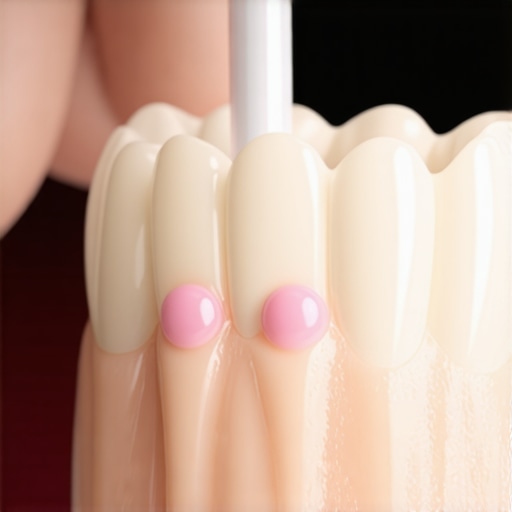
The Pea-Sized Secret to a Clean Bite
Instead of squeezing long ribbons of paste, use the ‘Pea Method.’ Place three small dots—one in the center and two on the back ridges. When you bite down, these dots spread naturally to cover the surface area without overflowing. This technique prevents the ‘squish’ factor and keeps the adhesive away from the edges where it’s likely to wash away during a meal. It’s a precision game, not a volume game.
When to Trade the Tube for a Professional Reline
If you find yourself reapplying glue three times a day, your denture is no longer the problem—your jaw is. A professional reline is where the dentist adds a new layer of material to the inside of your plate. It’s like getting a suit tailored after you’ve lost weight. Without it, you’re just wearing ‘hand-me-down’ teeth that used to fit a different version of you. This constant movement is often why your dentures are causing sore spots on your gums. Relining fills the voids created by bone loss and restores that snug, ‘snap-in’ feeling that adhesive simply cannot replicate.
Why Implants Are the Ultimate Anchor
For those of us tired of the daily chemistry experiment, dental implants are the only way to stop the ‘clicking’ at the source. Unlike traditional plates that sit on top of the gums, implants act as artificial roots. They anchor the prosthetic directly to the bone, which provides a level of stability that no amount of cream can match. This technology is vital because dental implants restore the shape of your entire face by preventing the bone from collapsing inward. While why your new dental implant feels different when you chew might be a concern initially, the long-term benefit of being able to eat a crisp apple without a backup plan is worth the transition.While we have been focusing on the mechanics of keeping dentures in place, there is a deeper nuance many people overlook when they finally transition back to a full, confident smile. Most patients assume that once they achieve that ‘Hollywood white’ glow, their oral health journey is over. This is a dangerous misconception. In my years of navigating the world of restorative care, I have seen incredibly white teeth that were structurally failing and slightly yellowed teeth that were as strong as iron. We need to stop equating shade with strength. This is one of the biggest oral health myths debunked in recent years; the natural color of your dentin is actually slightly yellowish, and chasing a ‘paper-white’ look can sometimes mask underlying issues like thinning enamel.
Why does my smile look dull even after a professional cleaning?
It is a question that catches many by surprise. Often, the ‘dullness’ you see is not a surface stain—it is the loss of enamel thickness. As enamel thins due to age or acidity, the darker dentin underneath shows through more prominently. If you try to fix this by layering on more over-the-counter chemicals, you are actually making the problem worse. A study published in the Journal of Dentistry highlights that high concentrations of hydrogen peroxide can alter the microhardness of enamel if not professionally monitored and applied. This is why understanding the science behind teeth whitening is crucial; it is about managed oxidation, not just bleaching the life out of your smile. 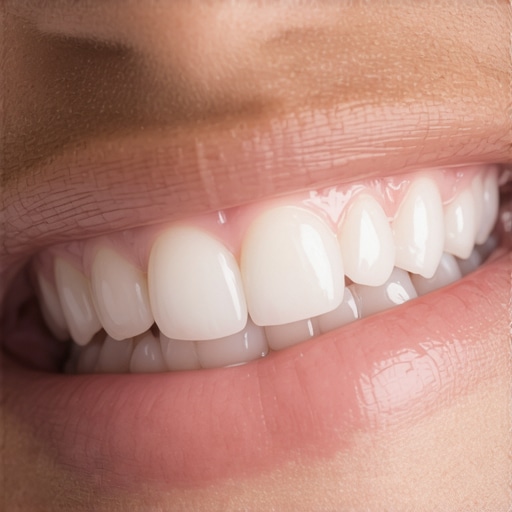
Avoid the ‘Scrub Harder’ Trap to Save Your Enamel
Here is the ‘oops’ factor that ruins more smiles than sugar ever will: the belief that manual force equals cleanliness. I have met patients who used firm bristles and abrasive charcoal pastes, thinking they were being ‘thorough.’ Instead, they were literally sawing away at their gum line. This aggressive approach is often the reason your gums recede even if you have good habits. Once that delicate tissue is gone, it does not just grow back like a haircut. You are left with exposed roots that are far more susceptible to decay and painful temperature shocks. Furthermore, if you are using at-home kits without a dentist’s supervision, you might be making the most common mistakes people make with whitening strips, such as overlapping the strip onto your gum tissue, which leads to chronic inflammation. Have you ever noticed your teeth looking slightly translucent or ‘see-through’ at the edges after a whitening treatment? That is a major red flag that you have crossed the line from cosmetic enhancement to structural damage. Have you ever fallen into this trap? Let me know in the comments.Once I stopped trying to ‘power-scrub’ my way to health, I had to look at my toolkit. For years, I thought a standard plastic brush and a string of waxed floss were enough. They aren’t. If you want to keep your restorative work—whether it’s dentures, implants, or veneers—looking like day one, you need to upgrade your hardware. The gap between ‘adequate’ care and ‘optimal’ care is where most dental emergencies happen.
Ditch the Manual Struggle for a High-Pressure Stream
I’ll be honest: I used to hate flossing. It felt like a chore, and I’d often skip it ‘just for tonight,’ which inevitably turned into a week. Everything changed when I switched to a water flosser. Instead of fighting with a piece of string that shredded between my teeth, I started using a targeted stream of water that gets into the nooks and crannies around my bridge that floss simply couldn’t reach. This is especially vital because maintaining oral health expert advice for a lifetime of healthy teeth often highlights that plaque hides in the most inaccessible spots. For those with dentures, using a water flosser on your natural gums after removing your plates is a game-changer for increasing circulation and removing microscopic debris. 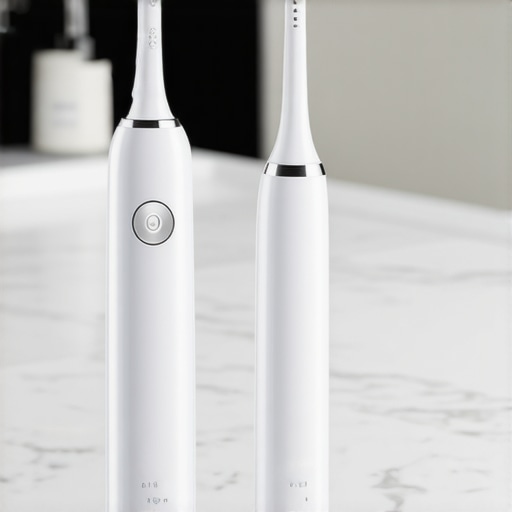
Your Brush Should Be Smarter Than Your Phone
I used to think ‘smart’ toothbrushes were a gimmick until I saw my own brushing data. Most of us brush too hard or for far too short a time. I personally use a brush with a pressure sensor that flashes red if I’m pressing too hard—a feature that saved my receding gum line from further damage. According to a landmark study in the Cochrane Database of Systematic Reviews, powered toothbrushes lead to an 11% reduction in plaque at one month and a 21% reduction after three months compared to manual brushing. We are moving toward a future where your bathroom mirror will likely use AI and infrared sensors to scan your teeth for early signs of decay before you even feel a twinge. Staying ahead of these revolutionary teeth cleaning techniques for 2025 is the difference between a quick check-up and an expensive emergency surgery.
How do I maintain a professional-grade clean between visits?
The secret isn’t just the tools; it’s the timing and the chemistry of your mouth. Beyond the high-tech gadgets, I’ve started using interdental brushes—tiny little pipe cleaners for your teeth. They are far more effective at clearing out the ‘biofilm’ that forms in the gaps where even a water flosser might miss. If you are managing a household, sharing these top 5 secrets to maintaining perfect oral health as a family ensures that everyone stays out of the dentist’s chair for repairs. It’s also about understanding how regular teeth cleaning can prevent major dental issues like gum disease that can destabilize your expensive cosmetic work. The next generation of oral care won’t just be about cleaning; it will be about data. We are seeing the emergence of ‘tele-dentistry’ sensors embedded in high-end electric brushes that can detect changes in saliva acidity. Imagine getting a notification on your phone that your pH balance is off before a cavity even has a chance to form. This level of preventive tips for long-lasting dental health for families is where the industry is heading. I challenge you tonight: instead of the usual 30-second dash, set a timer for two full minutes and focus specifically on the gum line. It will feel like an eternity, but your enamel will thank you. We’ve covered the tools and the techniques, but there’s one final piece of the puzzle: the long-term structural integrity of your smile.
The Brutal Lessons I Learned the Hard Way
Reflecting on my journey from that messy sourdough brunch to today, I’ve realized that the biggest hurdles weren’t the products, but the misconceptions I held. First, I had to accept that more adhesive is never a substitute for a good fit. If you are constantly reapplying, you are fighting a losing battle against physics. Second, I learned that oral health myths debunked in recent years prove that aggressive cleaning is actually a recipe for disaster. If you feel like you need to ‘scrub’ the stains off, you’re likely destroying your foundation. Lastly, I realized that the reason your gums recede even if you have good habits is often down to mechanical force—switching to a gentler, smarter approach was the only way to save my remaining tissue.
What’s Actually Worth Your Money in the Dental Aisle
You don’t need a shelf full of chemicals; you need a few high-quality tools that do the heavy lifting for you. I personally rely on a high-pressure water flosser because it reaches the bacteria that a toothbrush simply cannot touch, especially around prosthetic borders. I also swear by interdental brushes for that ‘squeaky clean’ feeling between visits. For families, preventive tips for long-lasting dental health for families usually start with choosing a brush with a pressure sensor. It’s the single best investment I’ve made to prevent over-brushing. If you’re looking for maintaining oral health expert advice for a lifetime of healthy teeth, start with a toolkit that prioritizes tissue health over surface shine. #IMAGE_PLACE_HOLDER_E#
Make Your Next Meal a Victory
The transition from struggling with slipping plates to a stable, confident smile is more than just a physical change; it’s a return to your social life. Whether you choose to pursue implants or simply commit to better maintenance, the goal is the same: a mouth that doesn’t dictate your mood. By embracing family dentistry building a foundation of healthy smiles for all ages, you ensure that every member of your household avoids the pitfalls of late-stage restorative work. You deserve to laugh without holding your breath and eat without a backup plan. What is the one food you’ve been avoiding because of your dental concerns? Let me know in the comments below!