
I remember sitting across from my Uncle Joe at Thanksgiving and noticing something unsettling. It wasn’t just that he had lost a few teeth over the years; his entire face seemed to be caving in on itself. His jawline, once strong and defined, looked fragile, and his lips appeared thinner than I remembered. At the time, I chalked it up to the natural process of aging. It wasn’t until I faced my own dental emergency years later that I learned the truth: your jawbone is essentially a use it or lose it part of your body. When you lose a tooth and don’t replace the root, your body decides that section of bone is no longer needed and begins to dissolve it. I made the classic mistake of thinking a simple bridge was the end-all-be-all solution, ignoring the fact that the bone underneath was still starving for stimulation.
Your Jawbone Needs a Job to Stay Strong
Most people think of teeth as isolated tools for chewing, but they are actually anchors that keep your facial structure intact. When you chew, the roots of your teeth send signals to your jawbone, telling it to stay dense and healthy. Without that constant pressure, the bone begins to resorb. According to the American Association of Oral and Maxillofacial Surgeons, you can lose up to 25% of your bone width in the first year after tooth loss alone. This isn’t just about aesthetics; it’s about the foundation of your mouth. I’ve seen so many neighbors opt for quick fixes only to find their dentures feel looser in the afternoon because the bone they sit on is literally shrinking away. This is where the bone preserving power of implants after major tooth loss becomes a total game-changer. They act like artificial roots, tricking your body into keeping that bone right where it belongs.
Is this whole bone loss thing just a sales pitch?
I get the skepticism. It sounds like a scary story dentists tell to get you to buy the more expensive option. I used to be a skeptic too. I thought, “Surely my body isn’t that dramatic.” But the science of Wolff’s Law—which basically says bone adapts to the loads under which it is placed—doesn’t lie. If you don’t use it, you lose it. In my early days of researching what to expect from cosmetic dentistry, I focused way too much on the white part of the smile and not enough on the foundation. If I had known then that the truth about bone density and your dental implant success was so closely linked to acting fast, I would have skipped the bridge and gone straight for the implant. Have you ever noticed your face shape changing after losing a tooth, or are you worried that your current solution isn’t doing enough to protect your jaw?
Today, we are going to dive deep into why implants are the only way to truly stop this vanishing bone act. We’ll look at the bone grafting process if you’ve already lost some ground and why modern technology makes this way easier than it used to be. Let’s get into the nitty-gritty of keeping your smile—and your face—solid for the long haul.
Start With a Clear Map of Your Jaw
You can’t build a skyscraper on a swamp, and you certainly can’t place a dental implant without knowing exactly what’s happening beneath the surface of your gums. The first step isn’t just a quick peek; it’s a detailed deep dive. We’ve moved past the days of biting into cold, messy putty that makes you want to gag. Now, why we use digital scans instead of goopy impression trays is simple: surgical precision. These scans show us the exact height, width, and density of your bone in three dimensions. If I had done this ten years ago, I would have seen the tiny recession starting long before it became a visible problem. It’s about catching the ‘vanishing act’ before the curtain even goes up, ensuring the placement is safe and avoids any nerve pathways or sinus cavities.
Rebuilding the Foundation When You’ve Waited Too Long
If you’ve already lost some bone, don’t panic. You aren’t necessarily disqualified from getting implants. I remember a patient, Sarah, who came in after five years of wearing a partial bridge that never felt quite right. Her bone had thinned out significantly because that bridge wasn’t doing anything to stimulate the jaw. We had to perform the bone grafting process to give her a ‘shelf’ strong enough to hold an implant. It’s essentially a transplant of bone material that encourages your body to grow new, living bone in that spot. It’s like adding fertilizer to a garden bed before you plant the seeds; it gives the roots something to grab onto. While it adds a few months to the timeline, it is the difference between an implant that lasts a year and one that lasts a lifetime.
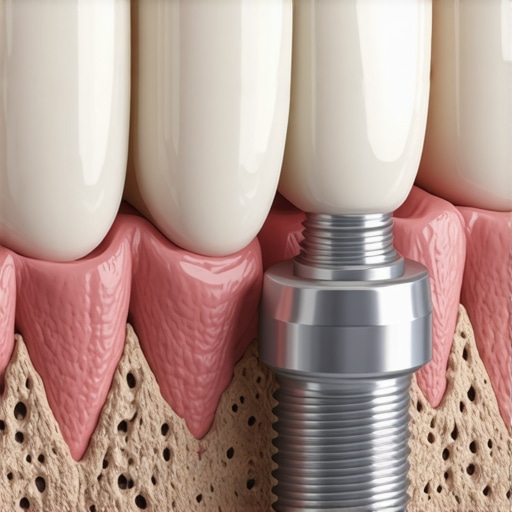
How These Titanium Anchors Actually Trick Your Body
The magic happens through a process called osseointegration. Because dental implants are made of biocompatible materials like titanium, your bone doesn’t see them as a foreign object. Instead, it treats the implant like a natural tooth root. The bone literally grows around the threads of the implant, locking it in place through a biological bond. There is even a specific the bone density trick for faster dental implant integration that involves using specific techniques to stabilize the site immediately. When I saw my first post-op X-ray after my own procedure, I was floored. You couldn’t see a gap between the metal and the bone; they had become one single unit, providing the stimulation necessary to stop future bone loss dead in its tracks.
Keep Your New Foundation Rock Solid for Decades
Once the implant is in, you aren’t off the hook. Think of an implant like a high-performance sports car—it’s built to last, but if you never change the oil, it’s going to break down. Even though the implant itself can’t get a cavity, the gums and bone around it can still suffer from ‘peri-implantitis,’ which is basically gum disease for implants. This is why how regular teeth cleaning can prevent major dental issues is just as important for your fake teeth as it is for your real ones. You need professional tools to reach the nooks and crannies that a standard brush might miss. I make it a point to stick to my six-month schedule religiously now, because I know exactly how much work went into saving that bone foundation in the first place. When you focus on maintaining oral health through consistent care and specialized flossing, you’re protecting a very expensive and life-changing investment from the bacteria that want to dissolve your bone all over again.
I’ve spent years watching people chase the ‘perfect’ smile, and I have to tell you: the biggest mistake is equating brightness with health. Everyone wants that ultra-white glow, but in my experience, a blindingly white smile often masks systemic issues. If you are masking deep stains with bleach while your gums are receding, you’re building a house on quicksand. The truth is, some of the healthiest teeth have a natural, slightly off-white hue because of the thickness of the dentin underneath. There’s a massive trap people fall into when trying to save a buck—the ‘natural’ whitening hack. I see patients all the time who have destroyed their protective layer by following trends. Specifically, the danger of using baking soda to whiten your enamel every day is that it’s incredibly abrasive. It doesn’t just remove stains; it sands down your teeth. Once that enamel is gone, it’s gone for good. According to a study published in the Journal of the American Dental Association (JADA), abrasive home treatments can lead to increased tooth sensitivity and a higher risk of decay because the porous dentin becomes exposed.
Why do some smiles look ‘fake’ even with expensive work?
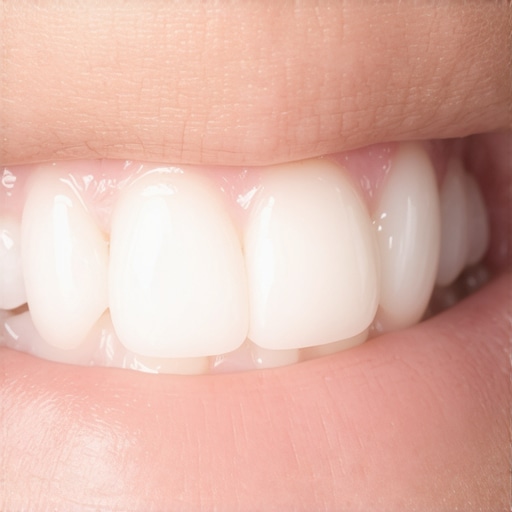
It usually comes down to a lack of anatomical nuance. When people look for what to expect from cosmetic dentistry, they often focus on the shade of white. But the real secret is translucency and ‘incisal edges.’ Natural teeth aren’t opaque blocks; they let light through at the tips. I often point out the subtle bonding error that makes your smile look artificial: if the material is too thick or the shape is too symmetrical, the brain instantly flags it as ‘fake.’ Modern techniques like contouring veneers the future of cosmetic dentistry revealed allow us to mimic the way a real tooth reflects light, which is far more important for a ‘natural’ look than just picking the whitest ceramic on the chart.
This same level of nuance applies to the whole family. I hear parents express frustration about why some kids get cavities despite brushing twice a day. The ‘oops’ factor here is often ‘grazing’—allowing kids to snack on acidic or sugary foods throughout the day, which keeps the mouth in a constant state of acid attack. No amount of brushing can compensate for a 24/7 sugar bath. It’s about the frequency of exposure, not just the quality of the cleaning. When you understand the ultimate guide to teeth cleaning techniques and benefits, you realize that professional intervention is about more than just plaque; it’s about recalibrating the oral environment. Have you ever fallen into this trap of thinking more brushing or whiter teeth meant everything was fine? Let me know in the comments.
Keep Your Investment Working Long After the Appointment
I’ve learned the hard way that a beautiful smile is a living, breathing entity. It isn’t a ‘set it and forget it’ piece of hardware. Whether you’ve invested in implants or you’re focusing on preventive tips for long-lasting dental health for families, the real work happens in the bathroom mirror every morning. We often think of dental care as a chore, but I prefer to think of it as asset management. If you don’t maintain the equipment, the system fails. This is especially true if you are maintaining oral health after significant procedures. You aren’t just cleaning teeth; you are protecting the integrity of your jawbone and the longevity of your restorations.
The Gadgets That Actually Earn Their Counter Space
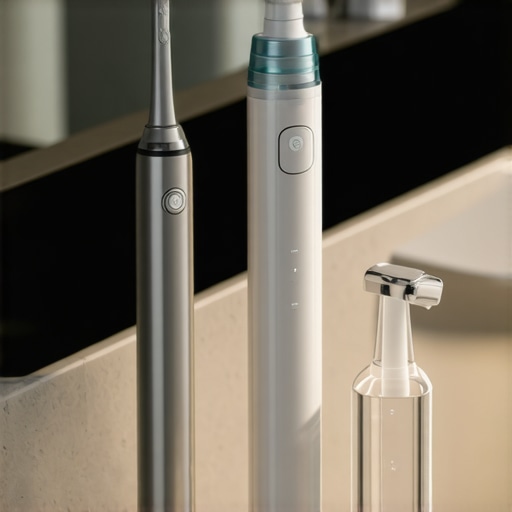
People ask me all the time if those expensive electric toothbrushes are worth the hype. Personally, I won’t go back to manual. I use a high-frequency sonic brush because the 31,000 vibrations per minute create a fluid dynamics effect that pushes cleaning bubbles deep between the teeth and along the gum line where a manual bristle simply can’t reach. This is vital when considering the best toothbrush texture for people with receding gums. A Cochrane Database of Systematic Reviews study confirmed that powered toothbrushes provide a 21% reduction in plaque after three months of use compared to manual brushing. It’s about efficiency and precision, not just force. I also swear by a dedicated tongue scraper. Most people think mouthwash is the silver bullet for bad breath, but why your tongue scraper is more effective than mouthwash for fresh breath is simple: it physically removes the sulfur-producing bacteria rather than just masking the smell for twenty minutes.
How can I maintain my dental work over the long haul?
Consistency is the only ‘secret’ that actually works. You have to treat your dental checkups like a high-stakes business meeting. I’ve noticed that why your breath stays fresh longer after professional cleaning isn’t just about the tools we use, but the reset it provides for your oral microbiome. For those with complex work, I recommend using a water flosser on a medium setting. It’s much gentler than string floss for those who have sensitive areas, and it’s a staple in gentle teeth cleaning best practices for sensitive gums. I predict that in the next five years, we will see ‘smart’ brushes that don’t just track where you brush, but actually analyze your saliva for biomarkers of inflammation or early-stage decay in real-time. We are moving toward a future of bio-integrated dentistry where your toothbrush acts as a daily health screen. For now, the most advanced thing you can do is master the ultimate guide to teeth cleaning techniques and benefits. I challenge you to try one specific upgrade this week: swap your manual brush for a sonic one or commit to a tongue scraper for seven days straight. Your gums will feel the difference before you even see it in the mirror.
The Hardest Lesson I Learned About Jawbone Health
Looking back, I realize that I spent years treating my dental visits like an oil change—something to be checked off the list and forgotten. But the real breakthrough came when I understood that oral health isn’t a passive state; it’s an active defense. First, I learned that bone loss is a quiet thief; you don’t feel the resorption happening until your face shape has already begun to shift. Second, investing in maintaining oral health through implants is significantly cheaper and less painful than trying to fix a collapsed jaw later. Finally, I realized that family dentistry building a foundation of healthy smiles for all ages starts with the parents setting the standard for proactive care.
The Gear I Actually Keep on My Bathroom Counter
I’ve tested dozens of products, but only a few have survived the “daily use” test. I swear by my high-end sonic toothbrush because it does the heavy lifting my manual brush simply couldn’t touch. To stay ahead of the curve, I keep an eye on revolutionary teeth cleaning techniques for 2025 to ensure my routine isn’t stuck in the past. I also rely on a high-quality water flosser, which is a lifesaver for cleaning around my implants without irritating the tissue. Lastly, I always check oral health myths debunked what you need to know in 2025 to make sure I’m not falling for the latest “natural” trend that could actually erode my enamel.
Your Path to a Permanent Foundation Starts Today
Deciding to prioritize your jawbone health is one of the kindest things you can do for your future self. Whether you are exploring the impact of cosmetic dentistry in 2025 or simply looking to improve your family’s routine, remember that every choice you make today ripples through the years. Don’t let your foundation vanish simply because you didn’t know the rules of the game. A solid, healthy smile is more than just an aesthetic choice; it’s the anchor for your confidence and your health.
Have you noticed any subtle changes in your face shape or gum line since losing a tooth? Let me know below.