
It started with a tiny, high-pitched whistle and ended with me carrying a screaming four-year-old out of the clinic while the entire waiting room stared in silent judgment. I was mortified. We were there for a simple check-up, a routine part of our family dentistry routine, but the second that dental suction—the one the hygienist jokingly called ‘Mr. Thirsty’—touched his lower lip, it was game over. The roar of the vacuum wasn’t just noise to my son; it was a physical assault on his senses. I realized then that my ‘just get through it’ approach was a total failure. I had spent so much time worrying about the tools themselves that I forgot about the environment. If you’ve ever felt that panic rise in your chest as your child starts to back out of the chair, I’ve got you. Today, we are going to fix this. I am going to show you exactly how to transform that scary vacuum into a manageable, everyday sound.
The Day I Realized Volume Isn’t the Only Problem
For a long time, I made the classic mistake of thinking my kid was just being ‘difficult.’ I would tell him to ‘brave up’ or promise a sugary treat if he just sat still—which, ironically, isn’t great for maintaining oral health. That was my biggest blunder. I was treating a sensory overload like a behavioral tantrum. It wasn’t until I started researching how to clean your child’s teeth when they have sensory processing issues that I realized the vibration and the localized sound of suction can feel like a jet engine firing up inside a small mouth. According to the STAR Institute for Sensory Processing, nearly 1 in 6 children experiences sensory challenges that make everyday sounds feel agonizing. When you are in that chair, that suction isn’t just background noise; it is an invasive, vibrating monster. But here is the good news: I have spent the last three years trial-and-erroring my way through appointments to find what actually works. Today, I am sharing the exact toolkit I use to keep the peace and keep those teeth sparkling.
Is all this extra prep work actually worth the effort?
You might be wondering if it is easier to just wait until they grow out of it or hope for a ‘good day.’ Trust me, I have tried the ‘hope and pray’ method, and it usually results in a half-finished cleaning and a very stressed-out dental team. Investing twenty minutes of prep at home can save you two hours of heartache at the office. We are going to talk about everything from heavy-duty noise-canceling headphones to the ‘hand-over-hand’ technique. Sometimes, despite our best efforts, the environment is just too much. That is when I started looking into how we use nitrous oxide to help children stay calm as a temporary bridge while we built up his tolerance. It isn’t about taking the easy way out; it is about lowering the sensory ceiling so they can actually learn that the dentist is a safe place. Have you ever had to walk out of an appointment halfway through because the noise was just too much for your little one? You aren’t alone, and you aren’t a failure for it. Let’s dive into the practical ways we can muffle that roar and get back to building healthy smiles without the tears.
Bring the Scary Tools into Your Living Room
The biggest mistake I made was letting the first time my son heard a high-powered suction be in a cold, sterile office. You have to normalize the noise before you even put the keys in the ignition. I started by using a small, battery-operated milk frother near his cheek. It’s got that same high-pitched hum and subtle vibration. We called it the ‘tickle stick.’ By turning it into a game at the kitchen table, we were practicing family dentistry tips that make oral care effortless and effective without the pressure of a clinical setting. Eventually, I moved up to a handheld dust vacuum. I’d let him hold it, feel the air pull against his hand, and listen to the motor. It sounds silly, but that exposure therapy is the secret sauce for teeth cleaning techniques and benefits sticking for the long haul.
The Gear That Actually Muffles the Roar
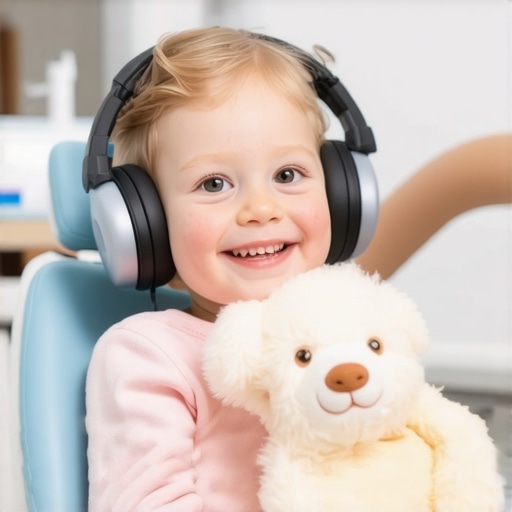
Sometimes, no amount of home games can overcome a sensitive ear. That is when you bring in the heavy hitters. I spent a small fortune on different earplugs before realizing that over-the-ear, noise-canceling headphones are the gold standard. They don’t just dampen the sound; they create a physical barrier between your child and the perceived threat. If your child is particularly sensitive to the vibration in their jaw—which can feel like a mini-earthquake during gentle teeth cleaning best practices for sensitive gums—try a weighted lap pad. The deep pressure helps ground their nervous system so they aren’t in a state of high alert. I remember a specific Tuesday when my son, Leo, was having a total meltdown over the high-speed polisher. I placed my heavy winter coat over his legs to act as a makeshift weighted blanket, and his heart rate visibly slowed. It wasn’t high-tech, but it worked to stabilize his sensory input when he felt like he was losing control.
Establish a ‘Kill Switch’ for the Vacuum
Control is the ultimate antidote to anxiety. I taught my son that he was the boss of the suction. We worked out a deal with our hygienist: if he raised his left hand, the vacuum went to sleep immediately. No questions asked. This simple boundary is one of the best secrets to maintaining perfect oral health as a family because it builds trust between the child and the provider. If you are worried about the cost of these longer, interrupted sessions, remember that how regular dental cleanings can save you money in the long run is largely about avoiding the need for traumatic sedation or major repairs later. A three-minute break now is much cheaper than an emergency room visit later. We also started using a ‘show-tell-do’ approach. The hygienist would suction water out of a cup first, then his hand, then his mouth. Seeing the physics of it made it a tool rather than an invasive weapon. This is also a great time to ask about revolutionary teeth cleaning techniques for 2025 that use quieter, air-driven motors instead of the old-school rattlers that vibrate through the bone.
How to Handle the Vibration Aftershock
One thing people don’t talk about is the weird tingling sensation that lingers after the suction is done. For a kid with sensory issues, that feeling is just as bad as the noise itself. I found that giving him something crunchy to eat—like a cold carrot stick or a crisp apple slice—right after the ‘all clear’ helps ‘reset’ the nerves in the gums. However, always check with your dentist on how long you should really wait to eat after a cleaning before you hand over the snacks, especially if fluoride was applied. In our case, the distraction of the crunching sound inside his own head cancelled out the leftover buzzing sensation. It’s all about sound management, both inside the mouth and out.
Why simply ignoring the noise backfires for sensitive kids
Most advice you’ll find online tells you to just ‘distract’ the child or tell them it’s almost over. I’m going to be a bit controversial here: I think that’s terrible advice. When we tell a child whose nervous system is screaming ‘danger’ to simply ignore it, we are gaslighting their physical experience. In my years of navigating this, I’ve found that the ‘ignore it’ method actually heightens the cortisol response because the child feels they have to be hyper-vigilant since the adults aren’t acknowledging the threat. This is one of the biggest oral health myths debunked—the idea that sensory discomfort is just ‘in their head.’ It is a physiological reaction. Instead of ignoring it, we need to lean into the physics of the sound.
Does your child’s gag reflex stem from sound instead of touch?
Here is a nuance many parents miss: the connection between the high-pitched whine of the suction and a hyper-active gag reflex. For many, the vibration of the suction tool against the teeth travels through the jawbone directly to the inner ear, which can trigger a nausea response. If you’ve noticed your child gagging the moment the vacuum turns on, it might not be the physical tool touching their throat; it’s a vestibular reaction. This is where the benefit of sedation for patients with a strong gag reflex can be a game-changer, not as a permanent crutch, but as a way to decouple that sound-nausea connection while they are young. A study in the Journal of Clinical Pediatric Dentistry found that children with sensory processing disorders often show elevated heart rates even before a procedure begins, simply from the ambient noise of the office.
The trap of the ‘skip and try later’ strategy
When the meltdown happens, the easiest ‘oops’ to fall into is walking away and deciding to wait another six months. While it feels like the compassionate choice, the risk of skipping your child’s six-month dental checkup is more than just missing a cavity. You are effectively reinforcing the ‘avoidance loop.’ The next time you walk into that office, the anxiety will be twice as high because the last memory was an escape. Instead of leaving, I advocate for ‘micro-goals.’ Maybe we don’t do the full cleaning today, but we sit in the chair with the vacuum on for 30 seconds. This builds what I call ‘dental resilience.’ It’s a core part of preventive tips for long-lasting dental health for families: the goal isn’t a perfect cleaning every time, it’s a slightly more comfortable child every time.
We also need to look at the gear we use at home. I once tried a high-frequency electric toothbrush thinking it would ‘desensitize’ my son, but it actually made him more sensitive because it was the wrong kind of vibration. Always test the ‘buzz’ against your own jawbone first. Have you ever fallen into this trap of trying to push through only to have it backfire? Let me know in the comments. We are all learning as we go. By focusing on the sensory-first approach, we aren’t just getting through an appointment; we are ensuring that family dentistry remains a positive pillar of their healthcare for life.
Beyond the ‘tickle stick’ phase, I’ve had to level up our tech to keep our progress from stalling. If you really want to scale this dental resilience, you need a dedicated kit that stays in the car or a specific ‘dentist bag.’ My secret weapon isn’t a toy; it’s a high-fidelity earplug like the Loop Engage Kids. Unlike foam plugs that just muffle everything into a muddy mess, these specifically target the high-frequency ‘screech’ of the suction while still allowing my son to hear the hygienist’s instructions. This is crucial for preventive tips for long-lasting dental health for families because if they can’t hear the ‘stop’ signal or the praise, they feel more isolated in their fear. The American Occupational Therapy Association (AOTA) emphasizes that a ‘sensory diet’—a personalized plan of physical activities and tools—is most effective when integrated into the routine well before the actual stressor occurs. By using these earplugs during loud car rides or movie nights, the dentist’s office becomes just another place where we use our ‘cool gear’ rather than a place of torture.
The Specific Gear I Pack in Our Dental Go-Bag
Aside from the earplugs, I always bring a high-vibration electric toothbrush, but not for cleaning. We use it on the outside of his jaw and cheek during the procedure. This is a tactic called ‘distractive vibration.’ The brain can only process so many signals at once; by flooding the sensory pathway with a familiar, rhythmic vibration on the skin, the sharp, irregular vibration of the dental tools inside the mouth gets dialed down in the brain’s priority list. This is how we’ve managed to stay consistent with how regular teeth cleaning can prevent major dental issues without needing full sedation every six months. I also recommend ‘The Dentist’ app by Toca Boca or similar role-play software. It sounds simple, but letting a child ‘operate’ on a character with a loud virtual vacuum gives them a sense of digital mastery that translates into physical bravery.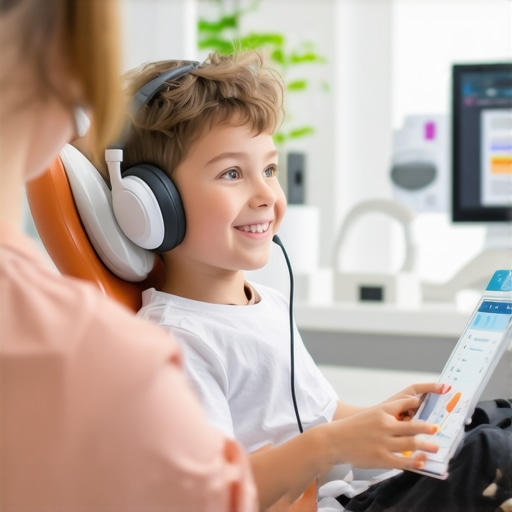
How can we keep these sensory wins working for years?
The biggest challenge is maintenance. Sensory needs change as kids grow, and what worked for a four-year-old might feel ‘babyish’ to a ten-year-old. I keep it working by constantly tying their comfort to their growing autonomy. As he got older, we started discussing more complex care, like how to tell if your child needs sealants on their molars, and I let him choose which sensory tools he still needed and which he was ready to ‘retire.’ This transition is where long-term results are born. We aren’t just surviving the suction anymore; we are preparing for a future where he might want to explore cosmetic dentistry innovations you cant miss this year without a panic attack. Maintenance is about evolving the toolkit, not just repeating the same tricks. If your child starts rejecting the headphones, try switching to a pair of stylish blue-light glasses to handle the overhead LEDs. It’s about staying one step ahead of their developing nervous system.
Look Forward to Silent Tech and AI-Driven Calming
The future of the dental office is looking—and sounding—much quieter. I predict that within the next five years, we will see ‘Active Noise Cancellation’ integrated directly into the headrests of dental chairs. We are already seeing the beginning of this with smile bright revolutionary teeth cleaning techniques for 2025 that utilize electric motors instead of air-driven turbines. These new motors provide more torque with significantly less high-pitched whine. We’re also moving toward augmented reality (AR) glasses that don’t just show a movie, but use AI to ‘mask’ the dental tools in the child’s field of vision, replacing the scary suction wand with a magical wand or a cartoon character in real-time. My advanced tip for you this week: Buy a set of high-fidelity earplugs and let your child wear them while you vacuum the living room. Let them be the ‘boss’ of the noise at home first. Once they realize they have the power to mute the world, the dentist’s office loses its teeth.
The Quiet Reality Behind the Suction-Induced Meltdown
After years of navigating these sensory waters, I’ve realized that the noise of the suction is often the first domino to fall in a total neurological collapse. The biggest lightbulb moment for me was acknowledging that my son wasn’t being defiant; he was physically incapable of processing the input. When I stopped viewing the appointment as a test of behavior and started treating it as a physiological challenge, our results changed overnight. I learned that bravery isn’t the absence of fear, but the presence of the right tools to manage it. Silence in the office isn’t my metric for success anymore—trust is. If he needs to wear earplugs just to get through a basic cleaning, that is a massive victory for his long-term maintaining oral health. Remember, the power of a stop signal isn’t just a gesture; it’s his only source of agency in a world that feels overwhelmingly loud and invasive.
My Top Picks for a Tear-Free Dental Bag
If you are ready to build your own toolkit, these are the resources that rescued our routine. I highly recommend the Z-Vibe oral motor tool for home desensitization; it helps a child get used to vibration in a safe space. For distraction, The Dentist app by Toca Boca allows them to play with the sounds of the office on their own terms. You should also check out our guide on how to manage dental anxiety without using heavy drugs for holistic strategies that complement your physical gear. I personally trust high-fidelity earplugs like Loop Engage Kids because they filter out the screech without making the child feel isolated from the conversation. Lastly, never underestimate a simple weighted lap pad—it’s the ultimate grounding tool for a nervous system on edge.
#IMAGE_PLACEHOLDER_E#
Reclaiming the Dental Chair for Your Little One
It might take several attempts before your child feels comfortable, and that is perfectly okay. We are playing the long game here. Every small exposure and every successful game of tickle stick is a building block for their future confidence. You are actively working to debunk oral health myths that claim dental visits must be a source of stress. By adopting a sensory-first mindset, family dentistry becomes a positive pillar of your child’s well-being rather than a traumatic event. You’ve got the tools and the plan; now you just need to take that first small step together. What is the one thing your child hates most about the dental environment? Let’s brainstorm some solutions in the comments below.