
I still remember the first time a patient literally fainted before I even picked up a mirror—not a needle, just a tiny little mirror—because the sheer association of the dental office triggered a full-blown panic attack. It is a visceral, heart-pounding fear that most people brush off as just being nervous, but for someone with an extreme needle phobia, it is a physical wall that stops them from ever seeking care. I have seen it a thousand times in my career, and honestly, I made a huge mistake early on by thinking I could just talk people through it. I used to believe that a gentle voice and a hand on the shoulder were the only tools needed to manage dental anxiety. I was wrong. Some fears are wired so deeply into the nervous system that willpower alone is not enough. Today, I want to show you how we have moved past the just deal with it era of dentistry. We are going to talk about how IV sedation acts as a reset button for your brain, allowing you to get the care you need without the trauma of the needle prick.
Why White-Knuckling the Dental Chair Just Does Not Work
If you have spent years avoiding the dentist because the thought of a syringe makes your vision go blurry, you are not alone. According to data from the Cleveland Clinic, nearly 36% of people experience fear regarding dental treatment, with a significant portion suffering from a true, paralyzing phobia. This is not a character flaw; it is a physiological response. When you try to tough it out, your body stays in a state of high alert, which actually makes you more sensitive to pain and makes the procedure much harder for everyone involved. I have found that even the most basic regular teeth cleaning can feel like a marathon for a phobic patient.
Is IV sedation actually worth the hype?
It really is, and here is why: it bypasses the fight or flight response entirely. Unlike nitrous oxide, which just takes the edge off, how IV sedation helps patients is by providing a deeper level of relaxation where you are technically awake but essentially indifferent to what is happening. You will not care about the needles. You will not care about the sounds. In fact, most of my patients do not remember the procedure at all. It is the ultimate tool for reclaiming your oral health in 2025 without the mental scarring. Have you ever cancelled an appointment at the last minute because the anxiety just became too much to handle? Trust me, I have been there on the receiving end of those calls, and there is a better way to get your smile back on track.
Step into a world where the drill sound simply disappears
Think of IV sedation like a dimmer switch for your nervous system. Instead of being plunged into total darkness like general anesthesia, we are just turning the lights down low enough that your brain stops registering the ‘threat’ of the dental chair. When you arrive, we do not just jump straight into the procedure. We start by ensuring you are comfortable, often using topical numbing agents before the IV is even started. This is the secret to gentle teeth cleaning for those who have spent decades avoiding the office. Once the sedative enters your bloodstream, the ‘fight or flight’ response—that tight feeling in your chest and the urge to bolt—simply evaporates.
The real-time sequence of a sedation appointment
The process is remarkably efficient. Once you are in a state of deep relaxation, we can perform several procedures in a single visit that would normally take three or four separate appointments. For patients with a high sensitivity to touch, the benefit of sedation for patients with a strong gag reflex cannot be overstated. It stops the involuntary muscle spasms that make dental work so difficult. While you are resting, we can implement teeth cleaning secrets that would be impossible to execute if you were tensing your jaw or jumping at every sound. You remain conscious and able to respond to basic instructions, but the emotional weight of the experience is gone.
Why we pack multiple treatments into one session
One of the most effective ways to use this ‘reset’ is to combine maintenance and aesthetics. I once had a patient named Elena who needed significant work but her phobia was so paralyzing she had not seen a dentist in twelve years. We used IV sedation to handle a deep cleaning and several cosmetic dentistry innovations all at once. Because she was so relaxed, her body did not produce the usual stress hormones that lead to post-operative swelling. It was a complex morning for my team, managing the logistics of different materials, but for Elena, it was a ‘blink and you miss it’ experience. She went from decade-long avoidance to a fully restored smile in about three hours. This approach is a cornerstone of modern family dentistry, ensuring that parents can get the care they need without the trauma that might discourage their children from seeking care later. Using these preventive tips for long-lasting dental health alongside sedation allows us to stop the cycle of ’emergency-only’ visits and move toward a lifetime of oral health.
While patients like Elena represent the transformative power of sedation, there is a dangerous trap I see people fall into once they finally overcome their fear: the ‘Aesthetic Fallacy.’ Many believe that if their teeth look white and straight, their oral health must be perfect. This is a myth that keeps many people from getting the deep-level care they actually need. In my experience, a bright white smile can often act as a mask for underlying issues like silent gum recession or bone loss. We need to look past the surface of cosmetic dentistry innovations you can’t miss this year and focus on the biological foundation. If you are only chasing a whiter shade, you might be ignoring the very structures that keep your teeth in your mouth.
White Teeth Aren’t Always Healthy Teeth
The biggest ‘oops’ factor I encounter is the over-reliance on at-home whitening when the gums are actually in distress. Using harsh chemicals on a mouth that has not had a professional assessment is one of the most common mistakes people make with whitening strips. If you have thinning enamel, those kits can cause irreversible sensitivity and nerve pain. I always tell my patients that the safest way to whiten teeth if you have thin enamel starts with a clinical cleaning, not a box from a drugstore. Have you ever fallen into this trap of prioritizing color over health? Let me know in the comments. We have all been tempted by a quick fix, but your enamel is a non-renewable resource.
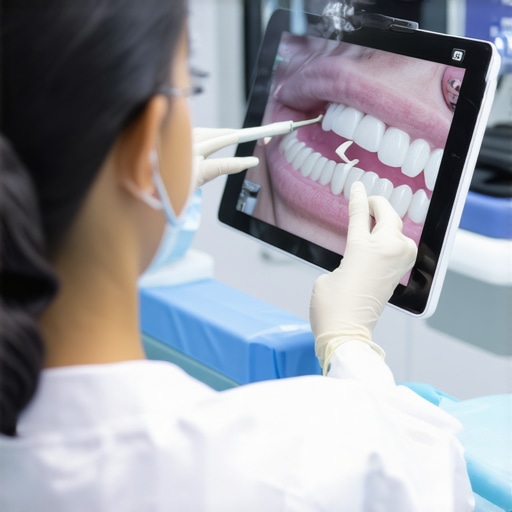
Beyond the color, we have to talk about the ‘hidden’ hygiene. Even if you have ‘perfect’ habits, you might find that the reason your gums recede is often linked to factors outside your control, such as genetics or nighttime grinding. This is where how regular teeth cleaning can prevent major dental issues becomes less about ‘scrubbing’ and more about ‘debridement’—the removal of bacterial colonies that your toothbrush simply cannot reach, no matter how hard you try. In fact, aggressive brushing often does more harm than good, leading to the very recession you are trying to avoid.
Can a professional cleaning really impact your heart health?
This is the level of nuance most people miss. Modern research has moved past the idea that the mouth is an isolated system. According to a landmark study published in the Journal of Periodontology, there is a direct, causal link between the chronic inflammation found in periodontal disease and an increased risk of cardiovascular issues. This is why I treat regular dental cleanings as a way to save you money in the long run; you aren’t just paying for a polish, you are paying for an insurance policy against systemic inflammation. When we use IV sedation to perform a deep cleaning, we aren’t just making you comfortable; we are giving ourselves the time and access needed to thoroughly disrupt those inflammatory bio-films. After the procedure, knowing how long you should really wait to eat after a cleaning is vital for letting the tissues settle and begin the healing process. This is maintaining oral health with expert advice for a lifetime—not just for a photo op.
I am often asked what I use in my own bathroom. It is not a secret, but it is definitely not the cheap plastic brush you get in a hotel. I have transitioned my practice to favor Guided Biofilm Therapy (GBT) because it is the most precise way to handle maintaining oral health with expert advice for a lifetime. This method uses the EMS Airflow, a device that feels like a high-tech power washer for your teeth. It uses a warmed stream of water and erythritol powder to disrupt bacterial colonies at a microscopic level. I advocate for this specific tool because it removes the ‘invisible glue’ bacteria use to anchor themselves, all without a single metal scraper touching your enamel. If you want to understand why this matters, look into the ultimate guide to teeth cleaning techniques and benefits.
Why your manual brush is essentially a relic
At home, I strictly recommend oscillating-rotational electric brushes with built-in pressure sensors. Why? Because most patients I see with gum issues are actually ‘over-brushers.’ They are too enthusiastic, which leads to physical trauma of the soft tissue. The sensor is a non-negotiable feature that flashes red the moment you apply too much force. For my patients already dealing with sensitivity, I always emphasize finding the best toothbrush texture for people with receding gums. It is about working smarter, not harder. This philosophy is one of the top 5 secrets to maintaning perfect oral health as a family. If you are still using a manual brush, you are essentially trying to clean a carpet with a broom when you could be using a high-end vacuum.
How do I maintain professional results over time?
Maintenance is where most people fail because they view dental health as a series of events rather than a continuous process. According to Dr. Niklaus P. Lang, a world-renowned expert in periodontology, the key to long-term success is the consistent disruption of the ‘biofilm’ before it has the chance to calcify into tartar. Once you have invested in cosmetic dentistry innovations you can’t miss this year, you must protect that investment. This means cleaning under your hardware correctly. For example, if you have a retainer, you need to know how to clean a clear retainer without using abrasive toothpaste, which can create microscopic scratches that harbor bacteria and dull the shine of your smile.
Where the next decade of dentistry is headed
The trend I am seeing for 2025 and beyond is the shift toward Bio-interactive Materials. We are moving away from inert fillings and toward materials that actively release minerals like calcium and phosphate to ‘re-grow’ tooth structure from the inside. I predict that within the next ten years, we will treat small cavities with specialized gels rather than drills. This evolution is already being hinted at in the latest cosmetic dentistry trends that transform your smile this year. We are entering an era of ‘Precision Dentistry’ where AI-driven scans detect mineral loss before a hole even forms. This is why regular dental cleanings can save you money in the long run; we are catching issues at the molecular level. I encourage you to try a ‘disclosing tablet’ test tonight—it is a cheap, old-school tool that stains the plaque on your teeth bright purple, showing you exactly where you are missing. It is a humbling but necessary reality check for your home care routine.
The Hardest Lesson I Learned About Overcoming Dental Dread
In my twenty years of clinical practice, the most profound realization I have had isn’t about a specific drill or a new filling material; it’s that fear is the primary obstacle to longevity. Many patients think their ‘bad teeth’ are genetic, but often, it’s just the years of avoidance that allow small issues to snowball into emergencies. I’ve learned that once we remove the physical sensation of anxiety—which is exactly how IV sedation helps patients—the biological healing can finally begin. It’s a literal reset for your relationship with healthcare. I have also realized that transparency is the best medicine. When I started explaining the ‘why’ behind our techniques, patients felt more in control, proving that maintaining oral health with expert advice for a lifetime is a partnership, not a lecture.
The Exact Tools I Keep in My Own Bathroom Cabinet
I am often asked what I trust for my own family, and I keep it simple but high-tech. First, I use an oscillating-rotational brush with a pressure sensor—it’s the single most effective way to prevent the over-brushing that leads to recession. Second, I always keep a bottle of disclosing solution; it’s an incredible visual tool to show my kids where they are missing, and it’s one of the top 5 secrets to maintaining perfect oral health as a family. For books and deeper reading, I highly recommend ‘The Mouth-Body Connection’ by Dr. Gerald Curatola; it completely changed how I view systemic inflammation. These resources are the foundation of my home care because they focus on data and results, not marketing hype or pretty packaging.
Your Path to a Fear-Free Dental Future
The dental chair shouldn’t be a place of judgment or pain. As we look at the cosmetic dentistry innovations you can’t miss this year, remember that the most beautiful smile is one that is supported by a healthy, inflammation-free body. Whether you are coming in for a simple checkup or exploring advanced sedation options, you are taking a courageous step toward your overall well-being. My goal is to ensure you feel heard and safe every step of the way. If you are ready to stop letting anxiety dictate your health, contact us today to discuss how we can customize a plan for you. What is the biggest thing holding you back from booking your next dental visit? Let me know in the comments below.