
I vividly remember sitting in my car for twenty minutes, hands gripped so tight on the steering wheel my knuckles were ghost-white, debating whether I could just drive home and pretend I forgot the appointment. I wasn’t there for a major surgery; it was just a routine check-up. But for someone like me, even the thought of gentle teeth cleaning felt like preparing for battle. I used to think the only way through was a heavy prescription sedative that would leave me drooling on my couch for six hours afterward. Boy, was I wrong. Today, I am sharing how I reclaimed my peace of mind and my oral health by using techniques that do not involve a chemical fog. We are going to tackle the fear together and find a way to make your next visit genuinely manageable without relying on heavy drugs.
Rethink Your Relationship with the Dentists Chair
The first time I tried to manage my nerves naturally, I failed miserably. I tried to meditate while the hygienist was mid-scaling, but I had not prepared my environment or my team. My biggest mistake early on was thinking I had to be a silent, stoic patient. I did not tell the staff I was terrified, which is a common trap discussed when oral health myths are busted; you do not have to just tough it out. My silence led to a panic attack in the chair because I felt trapped and unheard. Now, I know that transparency is the best sedative. According to Harvard Health Publishing, controlled diaphragmatic breathing can actively trigger the bodys relaxation response, physically lowering your heart rate even when you are under stress. It is not just wishful thinking; it is biology. By combining these physical cues with the right support, you can stay present and calm.
Does natural anxiety management really work for someone this scared?
I hear you. You are thinking, sure, a few deep breaths work for some people, but my heart feels like it is going to explode the second I hear a drill. I was that person. I even struggled with managing dental anxiety during a root canal, which is basically the final boss of dental fears. The secret is not one magic trick, but a combination of small, sensory adjustments. For instance, many modern offices now understand that weighted blankets provide a grounding effect that calms the nervous system without a single pill. By focusing on what you can control—your breath, your comfort items, and your communication—the procedure becomes background noise rather than a traumatic event. Have you ever felt so overwhelmed that you had to cancel an appointment at the very last minute? You are not alone, and we are going to fix that today.
Give Yourself an Emergency Brake with Hand Signals
Think of a hand signal as your personal emergency brake on a high-speed train. The feeling of helplessness is often what fuels the fire of anxiety. When I finally worked up the courage to get a filling last year, I made a pact with my dentist: if my left hand goes up, the drill stops immediately, no questions asked. I actually used it within the first five minutes because I felt a sneeze coming on. Knowing that I held the power to pause the procedure at any second dropped my heart rate instantly. This simple communication tool turns you from a passive participant into an active partner in your care. It is a cornerstone of family dentistry building a foundation of healthy smiles for all ages, ensuring that everyone from toddlers to seniors feels in control. If you are nervous about your first visit, you can even discuss these signals during your initial contact us session.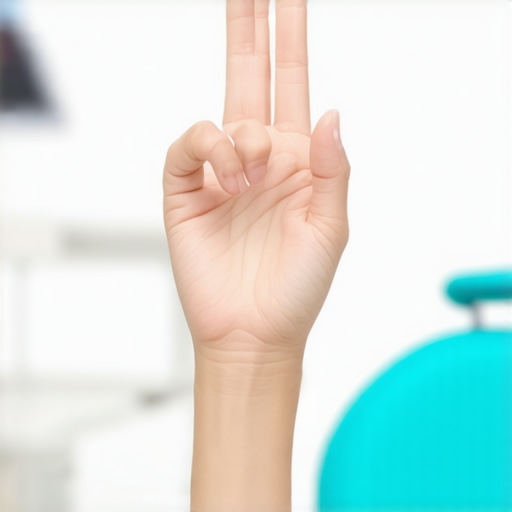
Hack Your Senses to Stay Grounded
Your brain can only process so much sensory input at once. You can use this to your advantage by crowding out the ‘scary’ dental sounds and smells with positive ones. I started bringing noise-canceling headphones and a playlist of heavy bass lo-fi beats; the vibration of the music actually helped mask the high-pitched hum of the tools. Some patients find that weighted blankets provide a grounding effect that mimics a therapeutic hug, which tells your nervous system it is safe. It is like wearing armor against the environment. Even something as small as a fidget toy in your pocket gives your hands a task, preventing you from white-knuckling the armrests. These sensory shifts are particularly helpful during more intensive sessions, like managing dental anxiety for a long root canal appointment, where the duration of the procedure is the biggest hurdle.
Watch Your Pre-Appointment Fuel
What you put in your body before you arrive is just as important as the mental prep. I used to chug a double espresso to ‘wake up’ for my morning appointments, which was like pouring gasoline on a fire. Caffeine mimics the physical symptoms of a panic attack—shaky hands, racing heart, and shallow breathing. Switch to herbal tea or just water. Additionally, knowing how long you should really wait to eat after a cleaning helps you plan your day so you aren’t arriving on an empty, grumbling stomach, which only adds to your irritability.
Manage the Aftermath Naturally
The anxiety doesn’t always vanish the moment you leave the chair. Sometimes the ‘what if’ fear shifts toward the recovery phase. If you’ve had a more involved session, knowing the best way to manage pain after a deep scaling procedure—such as using cold compresses or salt-water rinses—can prevent a late-night spiral of worry. By focusing on these concrete, physical steps, you move from a state of emotional reaction to one of logical execution. You aren’t just ‘getting through it’; you are mastering the process.
Stop Scrubbing Your Way to Gum Recession
One of the most persistent oral health myths is the idea that more pressure equals a cleaner mouth. In my early days of trying to be the ‘perfect’ patient, I used a hard-bristled brush and went to town. My dentist eventually had to point out that I was literally sawing away at my gum line. This is a classic ‘advanced’ mistake: mistaking abrasion for hygiene. The American Dental Association notes that improper technique can lead to permanent enamel wear and root exposure. Instead, focus on brushing without damaging receding gum lines by using a soft touch and circular motions. We often talk about building a foundation of healthy smiles, but you cannot build a house on receding foundations.
Is that post-coffee brush actually melting your enamel?
It sounds counterintuitive, right? You finish a glass of orange juice or a cup of coffee and your first instinct is to scrub away the acid and stains. However, this is where many people fall into a significant ‘trap.’ When you consume acidic foods or drinks, your enamel undergoes a temporary demineralization process. If you brush immediately, you are essentially brushing away the softened layers of your teeth. Research highlighted by the Journal of the American Dental Association (JADA) suggests that waiting 30 to 60 minutes allows your saliva to remineralize the surface. This is why you should never brush your teeth immediately after eating fruit. It is a nuance that separates basic care from expert-level preservation.
The Aesthetic Trap of Opaque Veneers
When we move into the realm of cosmetic dentistry innovations, the biggest mistake I see is the pursuit of ‘perfectly white’ teeth at the expense of natural anatomy. If you go too white and too opaque, you end up with veneers that look like chicklets. Natural teeth have a subtle translucency at the edges—they are not solid blocks of color. Expert providers now use contouring veneers to mimic the way light passes through real enamel. If your goal is enhancing confidence, you want a smile that looks like yours, only better, not like a set of porcelain tiles.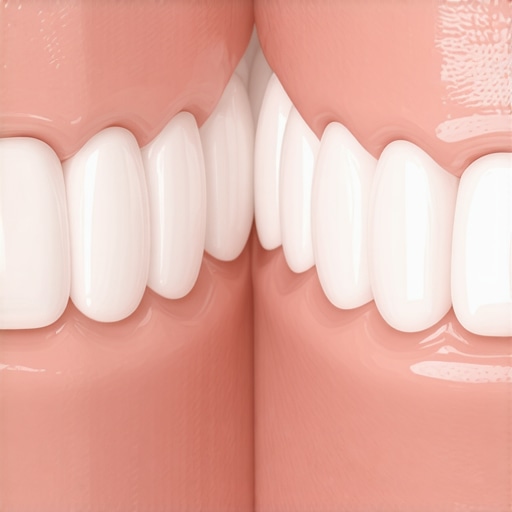
Balance Your Daily Routine Without Overdoing It
Even in family dental care hacks, the secret is consistency over intensity. We see parents getting aggressive with fluoride varnish for toddlers or forcing heavy scrubbing, but the goal should be a gentle, sustainable habit. Whether you are looking for gentle teeth cleaning or exploring transformative trends, remember that your mouth is an ecosystem, not a kitchen floor to be scoured. Have you ever fallen into the trap of thinking ‘harder is better’ with your dental care, or maybe regretted a whitening treatment that went too far? Let me know in the comments. If you are unsure about your current routine, feel free to contact us for a personalized plan.
Upgrade Your Arsenal for a Lifetime of Results
Transitioning from a fearful patient to a proactive one required me to stop relying on cheap, manual tools and start looking at my bathroom counter as a small-scale dental lab. If you are serious about maintaining oral health, you need to stop guessing. I personally switched to a high-end electric toothbrush with a pressure sensor because, as I mentioned earlier, I have a habit of scrubbing too hard. The sensor flashes red when I am being too aggressive, which is the best way to practice brushing without damaging receding gum lines. It takes the ego out of the equation and replaces it with data.
How do I keep my results from fading over the years?
Consistency is the boring but necessary answer, but the tool that changed the game for me was the water flosser. If you find string flossing tedious, a water flosser makes family dentistry tips feel effortless. It reaches into the deep pockets of the gums where a brush simply cannot go. According to a meta-analysis published in the Cochrane Database of Systematic Reviews, powered toothbrushes, especially those with oscillating-rotating technology, show a statistically significant reduction in plaque and gingivitis compared to manual brushing over both short and long-term periods. This isn’t just a luxury purchase; it is a clinical upgrade for your mouth’s longevity.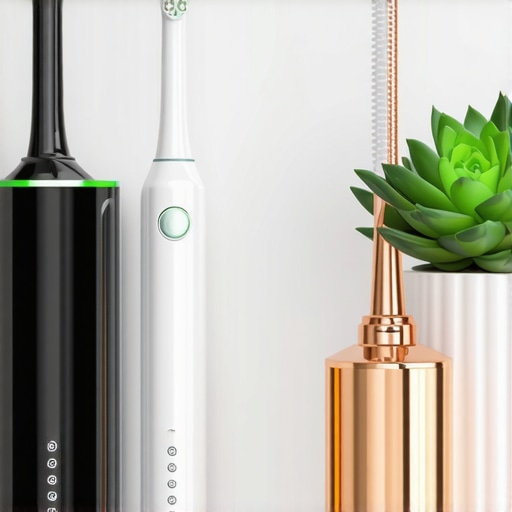
Maintain Your Cosmetic Investment Without the Stress
If you have recently explored enhancing confidence with cosmetic dentistry, the last thing you want is for those results to dull. Whether you have chosen contouring veneers or a professional whitening treatment, your daily habits will dictate the lifespan of that work. One tip I live by is using a tongue scraper every morning. I realized that a tongue scraper is more effective than mouthwash because it physically removes the biofilm that causes staining and breath issues rather than just masking it with alcohol-based scents.
Watch for the Digital Shift in Dental Care
Looking ahead, the days of uncomfortable, chalky impressions are numbered. We are seeing a massive shift toward digital workflows. I predict that within the next five years, every routine gentle teeth cleaning session will begin with a 3D intraoral scan. This allows you to see a time-lapse of your own teeth moving or wearing down over years. Offices are already using digital scans instead of goopy impression trays to increase accuracy for crowns and aligners. This transparency makes preventive tips for long-lasting dental health much easier to follow because you can actually see the problem areas in high-definition before they become painful emergencies. By catching small issues early, regular teeth cleaning can prevent major dental issues that would otherwise cost thousands of dollars later. If you are ready to take the next step in your dental journey, I highly recommend trying a water flosser for 30 days—it is the single most effective change you can make today. If you have questions about which tech is right for you, do not hesitate to contact us for a professional recommendation.
The Hardest Lessons My Teeth Taught Me the Long Way
Reflecting on my journey, the most painful realization was not the dental chair—it was how much I lost by waiting. I used to believe that if my gums did not hurt, I was perfectly fine. This is one of the biggest oral health myths debunked in my own life through expensive lessons. I also learned that silence is my worst enemy in the clinic. If you do not speak up about your specific fears, your dentist cannot help you navigate them. Most importantly, I realized that maintaining oral health is a marathon of tiny, gentle habits, not a sprint of aggressive scrubbing. When I shifted from being a victim of my anxiety to an advocate for my own comfort, the entire experience transformed.
The Small Gear That Makes a Massive Difference
You do not need a medical degree to upgrade your dental game; you just need better tools that respect your anatomy. I rely on a few key items that have kept me out of the emergency chair for years. First, a water flosser is non-negotiable for making family dentistry tips actually work in a busy schedule. Second, I cannot overstate how much weighted blankets provide a grounding effect for those of us who feel flighty the moment the chair reclines. Finally, I have swapped my mouthwash for a physical tool, as a tongue scraper is more effective than mouthwash for tackling the root cause of bad breath. These tools are the bridge between simply surviving the dentist and thriving with a healthy smile.
#IMAGE_PLACEHOLDER_E#
Your Future Smile is Worth One Small Step
Taking control of your dental visits is an act of deep self-kindness. Whether you are starting with a simple gentle teeth cleaning or you are finally ready to look into cosmetic dentistry innovations, the key is to move at a pace that feels safe. You have the tools, the knowledge, and the permission to ask for what you need. Your long-lasting dental health is a gift to your future self. Have you ever felt that a specific tool or trick finally broke the cycle of dental dread for you? Let me know below.