
I’ll never forget the time I nearly knocked a tray of instruments out of my dentist’s hand. It wasn’t because I was angry or even particularly scared of the drill. My throat simply decided that the tiny x-ray sensor was a mortal enemy that needed to be expelled immediately. I spent years feeling like a ‘difficult’ patient, apologizing through tears while trying to stop a toothbrush gag reflex that made even basic morning hygiene a chore. I once made the huge mistake of trying to ‘power through’ a deep cleaning with zero assistance, only to end up so distressed I couldn’t go back for two years. That’s a lot of plaque buildup, folks. But then I discovered the ‘magic’ of sedation. Today, we’re going to look at how we can finally turn off that overactive alarm system in your throat so you can get the care you need without the trauma. Have you ever had to cut a dental appointment short because your body just wouldn’t cooperate?
Stop Fighting Your Own Body at the Dentist
I used to think my gag reflex was a character flaw. I’d try all the tricks: breathing through my nose, humming, even putting salt on my tongue. Nothing worked. It turns out, for those of us with a hypersensitive reflex, it’s not a matter of willpower; it’s a physiological response. This is why recommending oral sedation for gag reflexes has become a total game-changer for my family and me. According to a study published in the Journal of the American Dental Association, a significant percentage of adults experience gagging severe enough to prevent routine care, which often leads to complex issues down the road. By utilizing the benefit of oral sedatives, your muscles relax and that ‘intruder alert’ in your brain gets a much-needed nap. It allows your dentist to work efficiently and, more importantly, allows you to sit there without feeling like you’re fighting for every breath during a standard teeth cleaning.
Is Oral Sedation Actually Worth the Hype?
You might be thinking, ‘Do I really need to be drugged just for a cleaning?’ I asked myself the same thing. I worried about feeling out of control or ‘loopy’ for days. But here is the reality: the stress of gagging causes your heart rate to spike and your cortisol to skyrocket. That is far harder on your body than a mild sedative. Whether it is a routine checkup or major restorations while you nap, sedation bridges the gap between ‘I can’t do this’ and ‘That wasn’t bad at all.’ It transforms the dental office from a place of combat into a place of healing. In the next section, we’ll dive into exactly how these sedatives work and what you can expect during the process.
How Sedation Rewires Your Brain’s Panic Response
Think of your gag reflex like a hypersensitive smoke detector. For most people, it only goes off when there is an actual fire. For those of us with a strong reflex, the mere sight of a dental mirror is like a piece of burnt toast that sets the whole alarm system screaming. Oral sedation works by lowering the sensitivity of that alarm. It targets the GABA receptors in your brain, which are essentially the ‘brakes’ of your nervous system. When these brakes are applied, the frantic signal from your throat to your brain—the one that says ‘something is back here, spit it out!’—gets muffled. This shift is what makes recommending oral sedation for gag reflexes so effective; it doesn’t just make you sleepy, it physically recalibrates your body’s boundaries.
The One Pill That Changes the Entire Appointment
The process usually starts an hour before you even arrive at the office. You take a prescribed sedative, and by the time you are escorted into the chair, the world feels a bit softer. I remember a specific Tuesday when I had to get a scan for a new guard. Normally, the thought of someone poking around my molars would make my stomach do flips. But that day, after the sedative took hold, I sat there and watched the clouds out the window. When the assistant used the digital scanner, I felt it, but the ‘intruder alert’ never fired. It was the first time I didn’t have to apologize for my body’s reactions. This level of relaxation is why many choose major restorations while you nap, as it allows the dentist to move quickly without triggering a physical fight.
Why Your Muscles Finally Stop Tensing Up
When you are nervous, your neck and jaw muscles tighten instinctively. This tension actually narrows the airway and makes the gagging sensation even worse. It is a vicious cycle: you worry about gagging, your muscles tighten, and then you actually gag. Sedation breaks this loop by forcing the skeletal muscles into a state of deep rest. It is like the difference between trying to thread a needle while riding a roller coaster versus doing it at a quiet desk. This physical stillness allows for gentle teeth cleaning best practices for sensitive gums to be followed accurately, as the hygienist isn’t fighting against a moving target. Even things like teeth cleaning techniques and benefits become more accessible because you aren’t constantly swallowing or gasping for air.
What to Expect When the Meds Kick In
You won’t feel ‘knocked out’ like you would under general anesthesia. Instead, you’ll feel like you’ve just had the best night of sleep in your life and haven’t quite woken up yet. You can still answer questions and follow instructions, but the emotional ‘weight’ of the procedure is gone. For those of us who have skipped appointments because of fear, this is a bridge to better health. Without that constant battle, regular teeth cleaning can prevent major dental issues that would otherwise require much more invasive surgery later on. I’ve found that even my family benefits from this approach, using family dentistry tips that make oral care effortless to ensure everyone stays on track without the drama of a heightened reflex.Let’s dig deeper into what’s actually happening when you finally make it into that chair. Most people assume that the ‘grittier’ the cleaning, the better the result. In my experience, I’ve seen more damage caused by patients trying to be ‘too clean’ than by those who are slightly more relaxed.
Stop Scrubbing Your Gums into Oblivion
We are often taught that more pressure equals a cleaner mouth, but that’s a dangerous myth. I’ve seen people literally wear away their gum tissue because they thought they could ‘power through’ plaque. This is why I always warn about the case against aggressive flossing; you aren’t just removing debris, you are potentially traumatizing the delicate interdental papilla. 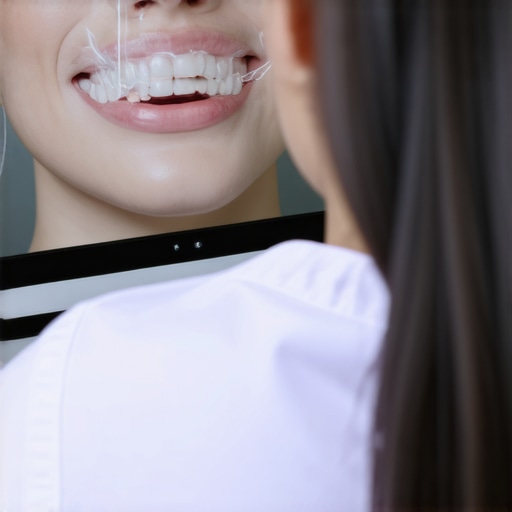
The Chemical Trap Hidden in Your Morning Juice
Another huge mistake is the timing of your oral care. If you just finished a glass of OJ or a fruit smoothie, the acid has temporarily softened your enamel. If you brush immediately, you’re basically sandpapering your teeth while they’re at their most vulnerable. This is why you should never brush immediately after drinking orange juice. Instead, rinse with water and wait thirty minutes to let your saliva naturally remineralize the surface.
Why does my mouth feel like sandpaper despite drinking enough water?
This is a question I get from patients who are doing everything ‘right’ but still feel discomfort. It’s often not about hydration, but about the quality and flow of your saliva. According to a study published in the Journal of Clinical Periodontology, chronic oral dryness can drastically alter your biofilm, making you more prone to decay regardless of how often you brush. If you’ve ever thought, ‘why does my mouth feel like sandpaper every morning,’ it might be time to look at systemic factors or sleep habits rather than just your water intake. This nuance is crucial because regular teeth cleaning can prevent major dental issues by managing that problematic biofilm before it hardens into tartar.
The DIY Trap That Actually Scratches Your Enamel
I also see a lot of people trying to save money or be ‘healthier’ with home remedies. While it sounds ‘natural,’ the truth about using baking soda as a toothpaste is that it can be incredibly abrasive if used incorrectly. You might get a temporary brightening effect, but you are slowly stripping away the very enamel that protects your teeth from sensitivity and internal decay. Have you ever fallen into this trap or used a ‘natural’ hack that actually made your teeth feel more sensitive? Let me know in the comments below.
Put Down the Manual Brush and Let the Sensor Save Your Gums
After years of trial and error, I’ve realized that the best tool in my cabinet isn’t a fancy charcoal powder—it’s a high-quality electric toothbrush with a visible pressure sensor. I personally use the Oral-B iO series because it uses micro-vibrations rather than just oscillating, which feels significantly better for my sensitive spots. The real ‘secret sauce’ is that little ring of light that turns red when you press too hard. It’s the only way to ensure you are following gentle teeth cleaning best practices for sensitive gums without even thinking about it. When you stop manual scrubbing, you stop the mechanical recession that eventually leads to expensive grafting. If you want to scale this for your whole household, check out these top 5 secrets to maintaining perfect oral health as a family to get everyone on the same page.
Why Digital Scans Beat the Goop Every Single Time
If your dentist is still using those metal trays filled with cold, wet putty, it might be time to ask about an upgrade. I’ve found that why we use digital scans instead of goopy impression trays isn’t just about comfort; it’s about micro-millimeter precision. I recently saw the iTero Element 5D in action, which according to technical documentation from Align Technology, uses Near-Infrared Imaging (NIRI) to aid in the detection of interproximal caries above the gingiva in real-time. This means your dentist can see a cavity forming between your teeth before an X-ray even picks it up. This level of detail is exactly how regular teeth cleaning can prevent major dental issues before they require a drill.
How can I maintain my results between professional cleanings?
Consistency beats intensity every time. I’ve learned that ‘maintaining’ isn’t about a once-a-week deep scrub; it’s about high-quality daily habits like using a water flosser. A study published in the Journal of Dental Research highlights that water flossing can be up to 29% more effective than traditional string floss for removing plaque in difficult-to-reach areas. By integrating family dentistry tips that make oral care effortless, such as keeping the flosser right in the shower, you remove the friction that usually leads to skipping the habit. Remember, how regular dental cleanings can save you money in the long run is largely dependent on how well you manage your ‘home-base’ hygiene.
The Future of Your Mouth is Smarter Than You Think
Looking toward 2025 and beyond, I predict we are going to see a massive shift toward AI-integrated oral care. We are already seeing revolutionary teeth cleaning techniques for 2025 that involve smart-paste technology—formulas that change color to highlight exactly where plaque is still hiding on your enamel. This isn’t science fiction; it’s the next step in expert advice for a lifetime of healthy teeth. If you really want to take control of your smile today, I challenge you to swap your manual brush for an electric one for just thirty days. You will feel the ‘squeaky clean’ difference within the first week. If you’re ready to see how these tools can transform your specific situation, don’t wait for a toothache to start—reach out and contact us to schedule a high-tech walkthrough of your smile.
The Reality Check Most Dental Patients Overlook
Reflecting on my journey from a ‘difficult’ patient to someone who actually looks forward to the dentist, I’ve realized a few things that aren’t usually in the pamphlets. First, your body’s gag reflex is a protection mechanism, not a personal flaw you need to apologize for. Second, oral health myths debunked often show us that the ‘tough it out’ mentality only leads to more expensive problems later. Finally, using the benefit of oral sedatives is an act of self-care, not a sign of weakness; it’s about giving your nervous system the permission it needs to relax. #IMAGE_PLACEHOLDER_E#
Tools That Make My Daily Routine Actually Effortless
I’ve stopped trying every ‘natural’ hack and started focusing on science-backed essentials. My favorite toolkit includes a high-end electric toothbrush with a pressure sensor to avoid gum trauma and a water flosser that reaches where string simply cannot. I also highly recommend looking into the one nutrient most people lack for healthy tooth enamel, which is often vitamin K2, to strengthen your teeth from the inside out. When you combine these habits with a provider focused on family dentistry building a foundation of healthy smiles, the whole household stays ahead of the curve.
Take Back Your Chair and Your Confidence
You don’t have to live in fear of the dental chair anymore. By embracing modern technology and gentle sedation, you can prioritize your oral health without the trauma of the past. Remember, how regular dental cleanings can save you money in the long run is a reality when you finally stop avoiding the office. Have you ever felt that surge of panic at the dentist, and what was the one thing that helped you get through the appointment? Let me know in the comments below!